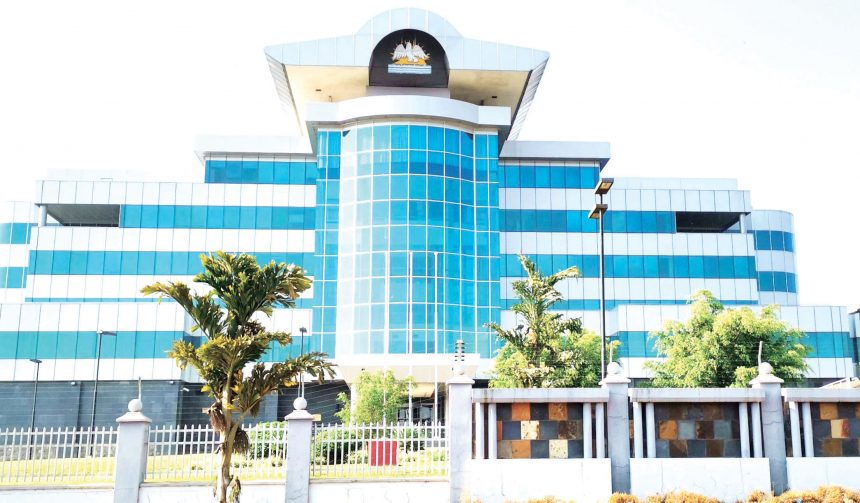
A latest Bank Lending Survey by the Reserve Bank of Malawi (RBM) has shown that most banks observed a rise in credit demand among households, small and medium enterprises, and large enterprises in the first six months of this year.
RBM conducted the survey from June 20 to 28 2024 to obtain and analyse commercial banks’ perceptions of risks affecting the banking system and developments in Malawi’s credit market.
According to survey results released on Monday, the surge in demand was primarily driven by worsening market conditions such as foreign exchange shortages, adverse weather, cumulative currency depreciation, tight monetary policies and persistent inflation.
These factors, according to the survey results, have eroded household disposable income and heightened the need for additional working capital among SMEs and large enterprises.
- Advertisement -

“As a result, both existing and new customers sought extra financing from banks to mitigate the impact of rising costs. Additionally, many banks have started to expand their consumer lending portfolios, particularly targeting civil servant loans, due to the lower inherent risk.
- Advertisement -
“Civil servants are considered low-risk borrowers because of their job security and because loan repayments are deducted directly from their salaries,” reads the survey report.
Looking ahead to December 2024, the survey says banks anticipate a sustained rise in demand for loans and credit lines among households, SMEs and large enterprises.
It notes that persistent inflationary pressures are expected to continue eroding purchasing power, thereby straining business operations.
“This will likely lead to an increased need for credit to support working capital requirements,” the survey says.
- Advertisement -
Further, the survey says most banks reported an increase in non-performing loans (NPLs) across households, SMEs and large enterprises during the review period, attributed to the unstable macroeconomic environment.
Most banks, according to the survey, expect NPLs to rise across all economic agents from June to December 2024, primarily due to the anticipated continued deterioration in macroeconomic conditions, including rising inflation and interest rates, declining disposable incomes, the effects of local currency realignment, and persistent forex shortages.

Glasgow-based economist Velli Nyirongo said on Tuesday that the increase in credit demand across households, SMEs, and large enterprises indicates a growing need for liquidity, driven by deteriorating market conditions.
According to Nyirongo, foreign exchange shortages, adverse weather patterns, cumulative currency depreciation, tight monetary policies and persistent inflation have all compounded the economic pressures on various sectors.
He said, for households, this has translated into diminished disposable income, while for SMEs and large enterprises; the need for additional working capital has become critical to navigate rising operational costs.
“This uptick in credit demand signals two key dynamics within the Malawian economy. Firstly, the worsening external and internal economic factors have pushed businesses and individuals alike to seek financing as a means to cushion themselves against the macroeconomic shocks.
“The growing reliance on bank lending suggests that many economic actors are operating under constrained financial circumstances, with borrowing serving as a lifeline to maintain operations or meet personal financial obligations.
“However, this also implies that debt levels are rising, which, in the long term, could lead to heightened financial vulnerabilities if the underlying economic challenges persist,” Nyirongo said.
He added that the shift by banks towards expanding their consumer lending portfolios, particularly civil servant loans, highlights a strategic response to mitigate credit risk.
Blantyre-based economist Marvin Banda said the risk inherent in the banking sector was leading to lending strategies that are crippling the private sector.
According to Banda, the macroeconomic crises the nation is reeling from are manifesting in penalizing the private sector borrowing because they belong to the high end risk spectrum as compared to the public sector which is why even public sector employees are benefiting from government affiliation.
“However, irrespective of the fact that high interest rates should deter borrowing by increasing the risk premium, on average more than 60 percent of bank profitability is owed to interest payments where for example 76.1905 percent of banking credit was constricted by the public sector in the second quarter.
“Yet this culminated in a measly US$173.2 million (0.7 months of imports) down from $306.6 million (1.2 months of imports) reported at the close of the corresponding quarter of 2023.
“This means that the private sector players will continue to fight for small piece of the pie and also typifies that the credit that is contracted by the government is not productive for the economy where 47.92 percent of public debt is contracted by the central government and the remainder by SOEs are market rates which pushes up the interest rates,” Banda said.
Looking ahead, Banda proposes that monetary autonomy needs to prove their independence from fiscal policy.
“The RBM is making superficial efforts to deleverage it by letting some government debt mature; it is frustrating its own efforts and adding fiscal indiscipline by increases in ways and means advances of K198.5 billion and drawdown of government deposits of K91.8 billion in the second quarter of 2024.
“The effectiveness of curtailing the government’s access to Ways and Means has great advantages as it is typically RBM’s commitment to a tight monetary policy. The Domestic Liquidity- Reserve Requirement needs to be promoted to become the tool of choice for monetary policy because it is the most effective in taming broad money (M2) without hurting the real economy by fiddling with the interest rate.
Raising the Liquidity Reserve Requirement greatly disincentives the creation of deposits by commercial banks which can be exploited by the government and SOE’s. It reduces the interest share of profits which means that the banks would be forced to take on greater risk and lend to the private sector,” Banda said.