





By Ephraim Nyondo, contributor:
James Chirwa, 82, retired from the civil service in 2004 and, typical of his generation, chose to settle in his home village of Chikwina, a remote area in Nkhata Bay District.
At that time, if his four children, who all live in the cities, wanted to send him money, he had to travel to Mzuzu at least once a month to transact with the bank.
Alternatively, if the amount was manageable, he could walk to the Post Office to receive the funds via telegram.
However, as time passed, the Post Office began to decline and it could take over a month to clear his funds.
- Advertisement -
With his health deteriorating and the transport system from Chikwina to Mzuzu becoming increasingly difficult due to poor roads, Chirwa faced challenges in accessing money.
If his children or any relatives did not physically travel to Chikwina to deliver the money, it meant financial hardship for him.
This led to inadequate food at home, no payment for his farm workers, no fertiliser and a painful retirement experience.
Chirwa had these years of difficulties, but not anymore.
- Advertisement -
- Advertisement -
“Once Airtel Money started in my area, all my financial woes disappeared,” he says.
The octogenarian is referring to the introduction of mobile money—a technology that allows people to receive, store, transfer money or make payments through a mobile phone, independent of the traditional banking network.
He is also referring to mobile banking, which involves using a mobile phone to access banking services and execute financial transactions.
Today, Chirwa uses Airtel Money and, as an NBS Bank account holder, he also has access to Easy Mobile technology.
Through these services, he can process every financial transaction within Chikwina without having to travel long distances.
What Chirwa is experiencing is a revolution in how Malawians are adopting and using information and communication technology (ICT) in their financial lives, a phenomenon technically referred to as Digital Financial Services (DFS).
Experts define DFS as a broad range of financial services accessed and delivered through digital channels, including payments, credit, savings, remittances and insurance.
As everything turns digital globally, Malawi has not been left behind. In fact, Malawi 2063, the country’s long-term development plan, places particular emphasis on ICT as one of its enablers.
This is why Chirwa’s story reflects Malawi’s progress in adopting and using ICT in financial services.
But how many people in a country of over 20 million share Chirwa’s hopeful experience?
Recently, the Malawi Communications Regulatory Authority (Macra) released the 2023 National Survey on Access and Use of Information and Communication Technologies by Households and Individuals in Malawi.
The report states that, despite being an enabler of Malawi 2063, the use and adoption of ICT services in the country remain low.
However, there is positive news regarding DFS.
The survey results indicate that 45.1 percent of individuals across the country use these services, an increase from 36.1 percent reported in 2019.
An analysis by place of residence shows that the proportion of individuals using digital financial services in urban areas is higher, at 73 percent, compared to rural areas, where Chirwa lives, at 39.5 percent.
Furthermore, the survey shows that by gender, males have a higher usage rate at 47.6 percent, up from 33 percent in 2019, compared to females at 39.6 percent, up from 27.7 percent in 2019.
In terms of digital channels, the survey results indicate that mobile money is the most utilised type of digital financial service, at 99.6 percent.
This is followed by mobile banking (5.1 percent). Internet banking, which includes electronic transactions with a bank via the internet, was the least used DFS at 0.9 percent, a trend consistent with that recorded in 2019.
Focusing on the services most commonly used, the results show that sending or withdrawing money is the most frequently used digital financial service.
The survey also explored the main challenges encountered when using digital financial services.
The results show that poor connectivity is the most significant issue, affecting 54.9 percent of users in 2023, compared to 36.7 percent in 2019.
This is followed by the non-availability of cash by agents, reported by 39.6 percent of users in 2023, compared to 15.2 percent in 2019 and high transaction costs, which affected 29.9 percent of users in 2019.
The report also identifies why some Malawians do not use digital financial services.
The main reasons are a lack of money to transact (64.8 percent, up from 55.1 percent in 2019), having no one to transact with (35.7 percent, up from 11.4 percent) and not having a device to use for transactions (33.1 percent, up from 18.9 percent in 2019).
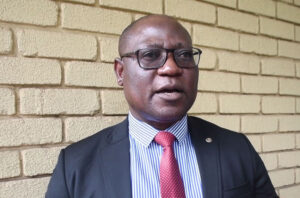
With these results, Reserve Bank of Malawi Deputy Governor William Matambo is confident that Malawi is progressing towards a cashless society.
“So, we are moving towards a cashless society. If I were to use a benchmark, I would say we are now crossing the 60 percent mark,” Matambo said.
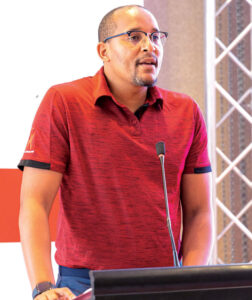
However, despite strides in digital financial services, Macra Director-General Daud Suleman insists more work is needed to achieve an inclusive digital economy.
“The cost of internet services and devices remains high, but we have initiated various projects to address issues of internet affordability, such as subsidised internet packages and community access centres, to ensure inclusivity across socio-economic strata,” Suleman says.
He adds that to address the digital divide and the disparity in digital services uptake in rural areas and marginalised communities, Macra has intensified educational campaigns focusing on digital literacy and the benefits of ICT.
Suleman also indicates that Macra is investing in infrastructure, particularly in underserved rural areas like Chikwina.
“Through the Universal Service Fund, we are undertaking several programmes and projects to promote the availability of services in marginalised, underserved and unserved communities,” he explains.
Through these efforts, perhaps more Malawians, regardless of age and location, can have experiences similar to Chirwa’s.