By Wezzie Gausi:
For 38-year-old Hamida Hussein, having six children means six mouths to feed at her home in Dzaleka Refugee Camp.
Some days, there is simply not enough.
The mother has learnt to stretch whatever food reaches the household, but she struggles to meet her children’s needs when food is scarce and money is difficult to find.
“Sometimes the food is not enough for all of us,” Hussein says. “I have six children. They need to eat, they need clothes and there are many other things they need. Life here is very difficult.”
- Advertisement -
Hussein is raising her children in a camp that is struggling with a population far beyond what it was built to accommodate.
Dzaleka was originally established for about 12,000 people. UNHCR says the camp now holds more than five times its intended capacity.
Its 2025 report puts Malawi’s refugee and asylum-seeker population at about 60,500, with women and children making up the majority.
The pressure is evident in the camp, where homes stand close together and children play around crowded living spaces. In some sections, poor waste disposal and sanitation remain challenges.
- Advertisement -
- Advertisement -
Families share limited services, while mothers must find ways of feeding their children based on what is available rather than what is nutritious.
For Hussein, this is home.
For 29-year-old Brenda Khamil and her five children, it is home too.
Khamil worries about what her children eat and the surroundings in which they are growing.
“I have five children and taking care of them here is not easy,” she says. “As a mother, you want your children to eat good food. You want them to be healthy and live in a clean place, but we do not always have those things.”
The challenges facing women and children at Dzaleka are compounded by limited access to basic resources, including food, sanitation and reproductive health services.
The situation has been worsened by dwindling humanitarian funding.
UNHCR reported in 2025 that it had received only 12 percent of the $26.3 million it required to adequately support refugees and asylum seekers in Malawi as of March 31.
Funding shortages affected healthcare, food assistance, livelihoods and other programmes.
Its latest annual report says living conditions for displaced people deteriorated in 2025 as humanitarian funding declined, while rising food prices added pressure on refugee households.
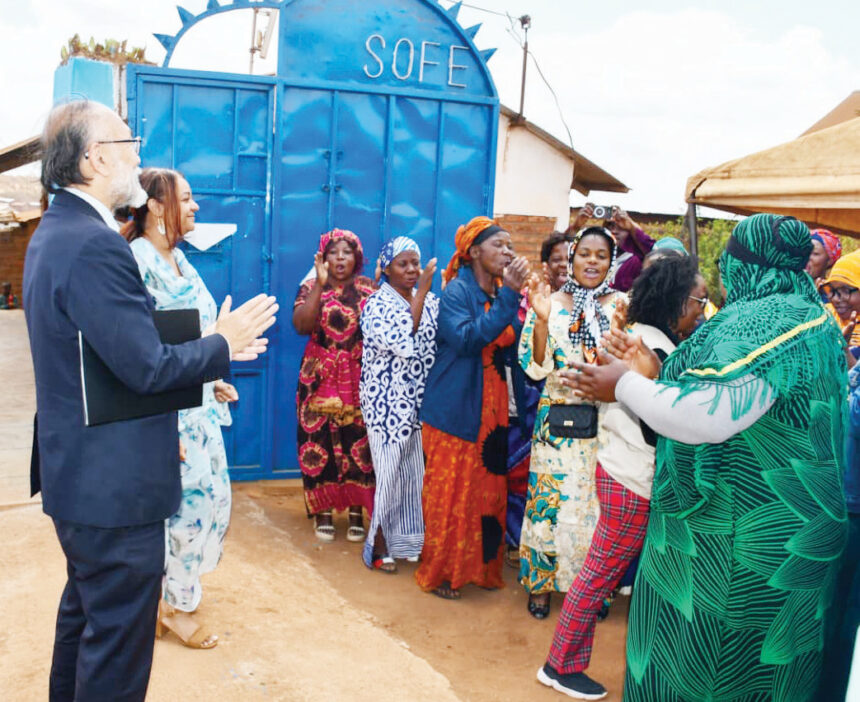
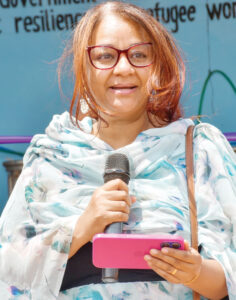
UN Women Country Representative Fatma Abdelkarim Mohamed says women at Dzaleka should be given opportunities that allow them to provide for themselves and their families.
“When women are given the right opportunities and support, they can grow businesses, support their families and contribute positively to their communities,” Mohamed says.
One such effort is a project supported by Japan through UN Women targeting 300 refugee women with climate-resilient agriculture and livelihood activities.
Japan has provided $106,666 for the initiative, which includes a bio-fertiliser production unit and is expected to run until February 2027.
Commissioner for Refugees General Ignacio Maulana acknowledges the challenges facing the camp.
“There are a lot of problems in the camp,” Maulana says.
He says government welcomes interventions that can improve conditions for refugees, particularly programmes that allow people to improve their livelihoods.
“Anything you can do to make life of people here comfortable is welcome,” he says.
For Centre for Human Rights and Rehabilitation Executive Director Michael Kaiyatsa, the conditions at Dzaleka raise questions about basic human rights.
“What is happening at Dzaleka is a violation of human rights. Women and children cannot continue living without adequate food, proper sanitation and other basic necessities,” Kaiyatsa says.
He argues that government cannot leave responsibility for the camp largely to humanitarian organisations, particularly when those organisations are themselves facing funding problems.
“Government and organisations should come together and create a good environment for these women and children. They need to be provided with necessities that allow them to live a dignified life,” he says.
The conditions also raise questions about progress towards the Sustainable Development Goals.
SDG 2, Zero Hunger, calls for access to safe, nutritious and sufficient food throughout the year, with particular attention to children, pregnant women and breastfeeding mothers.
SDG 3 calls for healthy lives and well-being, while SDG 5 seeks equality and empowerment for women and girls.
SDG 6 calls for adequate sanitation and hygiene for everyone, specifically recognising the needs of women, girls and people living in vulnerable situations.
At Dzaleka, the goals translate into basic needs for families such as those of Hussein and Khamil.
Hussein needs to feed six children. Khamil has five children to care for while living in a camp where food, sanitation and other services remain under pressure.
The deadline for achieving the SDGs is 2030, but families at Dzaleka continue to face immediate needs for food, healthcare, livelihoods and decent living conditions.