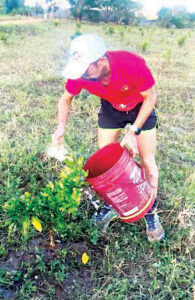
Food and Agriculture Organisation (Fao) Malawi recently completed a mid-term field assessment and praised the overall progress of the fruit introduction project.
Led by Chinese senior agricultural expert Liang Suiquan, the team successfully domesticated high-quality citrus varieties from China and built the “11215” localized framework covering variety introduction, technical training, demonstration construction and local capacity building, delivering tangible technical and income gains for local smallholder farmers.
Launched in October 2024, the second-phase programme deployed seven Chinese specialists to Malawi, covering fruit horticulture, vegetable cultivation, farm machinery and livestock veterinary services.
Liang, with two previous African agricultural assistance assignments, is permanently stationed at Bvumbwe
Agricultural Research Station. He coordinates the whole workflow of citrus, mango and apple introduction, seedling breeding, demonstration planting and nationwide technical outreach.
- Advertisement -
The project is carried out in three orderly stages: pilot testing, scaled demonstration and nationwide model replication.
In October 2024, knowing Malawi’s short optimal grafting window, Liang selected scions of nine premium citrus varieties from Yichang, Hubei Province of China, to launch seedling trials.
Long-distance shipment without proper moisture control left the scions wilted, making local technicians doubtful about survival rates.
To solve two long-standing local pain points—graft survival below 40 percent and only 20 percent bud usage– Liang created and rolled out the “One Scion, Three Grafting Methods” technique.
- Advertisement -
- Advertisement -
In this case, each single scion is split into three parts by wood maturity, matching three grafting ways, pushing bud utilisation to 100%. He also designed a three stage seedling nursing system: rootstock grown in open fields, grafted saplings healed in simple plastic greenhouses for 30 days, then hardened outdoors. This method lifted graft survival steadily above 85 percent, producing 960 qualified grafted saplings in total.
In February 2025, healthy saplings were transplanted to trial orchards across Bvumbwe, growing robustly under joint daily management by Chinese and Malawian technicians.
In September 2025, thanks to Liang’s coordination skills, an official delegation from Malawi’s Ministry of Agriculture, Irrigation and Water Development toured the mature citrus industrial base in Yichang, China.
The group highly recognized China’s citrus varieties, cultivation techniques and complete industrial chain, laying a solid ground for long-term bilateral fruit industry cooperation.
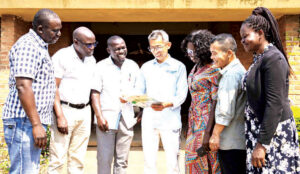
A series of field outreach activities were held the same month to raise local farmers’ awareness of new high-yield fruit varieties.
Charles Malidadi, the project’s core Malawian technical partner, shared his experience in a media interview.
“When we first received the wilted scions, none of us expected them to live. But with careful daily management from Liang and his new grafting skills, buds sprouted within two weeks. All our doubts disappeared, and we fully trust this Chinese agricultural technology,” he said.
By December 2025, two introduced citrus varieties bloomed and bore fruit, completing full-cycle verification from scion import to harvest.
The successful citrus pilot proves Chinese fruit varieties adapt well to Malawi’s climate, and a full set of local orchard management standards has been formed for follow up on mango and apple promotion.
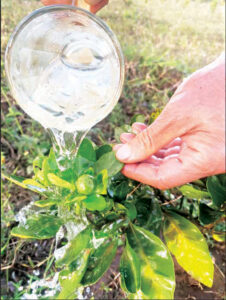
Following the “One Core, Five Wings” demonstration layout designed by Liang—one central flagship orchard supported by five regional satellite stations—the project built a national demonstration network.
In January 2026, more than 1,000 citrus, mango and apple saplings shipped from China were planted across six agricultural research stations with different altitudes and climate conditions in Kasinthula, Lunyangwa, Nkondezi and other areas of Malawi.
Up to now, 11 trial and demonstration orchards have been constructed, covering 23 improved fruit varieties of three categories.
In April 2026, an inspection team from the Ministry of Agriculture, Irrigation and Water Development carried out site supervision and inspected the mango trial orchard. All saplings at Nkondezi mango demonstration orchard grew healthily, matching preset adaptability targets.
On May 15, 2026, FAO representatives in Malawi finished comprehensive midterm verification of the whole fruit project at trial bases.
Taking demonstration orchards as training hubs, Liang put forward the localized “1+2+5” technical service model: one lead Chinese expert, two fixed Malawian assistants and five regional core technicians to deliver hands-on field guidance.
Over two years, 77 practical training sessions have been held, reaching 924 participants.
More than 65 percent of trainees are women and low in come smallholders, and special training classes are arranged for farmers with disabilities to meet FAO’s inclusive development standards.
Thirty-two independent local technical specialists have been fully trained.
The joint team has bred over 50,000 native rootstocks and more than 20,000 saplings of imported varieties, with illustrated technical handbooks and promotional short videos produced to boost local independent industrial capacity.
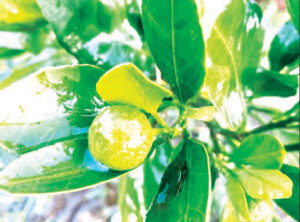
Tangible poverty-reduction gains have been widely seen among rural households.
Special seedling growers gain an extra K8 million per household every year on average.
Farmers who attended training cut seedling costs by half and doubled graft survival rates, earning an additional K1.2 million per household annually.
Once citrus trees reach full bearing age, output value per acre is 8 to 10 times higher than traditional maize farming, bringing stable long-term income for rural families.
Green pest control techniques promoted by the project slash pesticide application by over 70 percent.
In addition, the wide-row narrow-planting layout tailored for local terrain improves ventilation and reduces soil erosion, achieving eco-friendly fruit cultivation. All variety introduction procedures and field management standards formed under this project are mature enough for large-scale regional replication.
This dual-path poverty alleviation model—cutting production costs via technical innovation and achieving sustainable growth through local capacity building— provides a replicable reference case for FAO global South-South cooperation and industrial poverty reduction programmes across African developing nations.