By Macdonald Thom:
The year is 2018. On this particular day, Canaan Kamanga, a 53-year-old man from Chifya Village, Traditional Authority Mankhambira (TA) in Nkhata Bay, wakes up with a severe headache.
The problem persists and before long, he begins to feel hot in his legs and feet. He has no choice but to decide to go to Nkhata Bay District Hospital.
Today, Kamanga, now 59 years old, recounts his journey with hypertension over the past six years.
“I was diagnosed with hypertension and started receiving treatment in the same year, 2018,” Kamanga says.
- Advertisement -
He reveals that, for many years, given the distance between his home village and Nkhata Bay District Hospital, it has been a tall order to access medication for the non-communicable disease (NCD), commonly known as high blood pressure (BP).
“It was not easy to access medication and other services that could help with my condition. I could spend K3,500 travelling to Nkhata Bay District Hospital and another K3,500 on the return journey,” he explains.
Things deteriorated further when, in 2023, he was also diagnosed with diabetes.
The need for constant medical care grew and the dietary needs of the two conditions meant that he required additional funds.
- Advertisement -
- Advertisement -
However, earlier this year, Nkhata Bay District Council collaborated with the Christian Health Association of Malawi (Cham) to decentralise NCD services to selected facilities.
This initiative has been a relief for Kamanga and other NCD patients in TA Mankhambira.
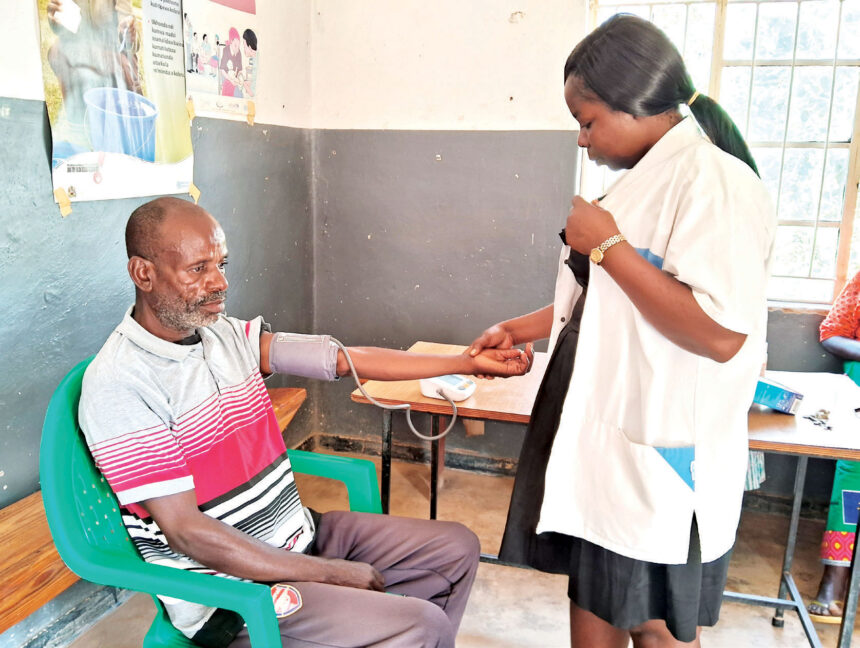
They are now able to access services at Chilambwe Health Centre, a facility 25 kilometres away from Nkhata Bay Boma.
“Since I started coming here, I have managed to save money as I can walk to this place.
“My only appeal is that the government should provide us with medication for other ailments free of charge so that when we come for NCD services, we can also access other services at no cost, as we do at the district hospital,” he says.
Another 59-year-old hypertension patient, Gloria Manda, who was diagnosed with the condition in 2023, says the decentralisation of the service is a good idea.
Manda started feeling the symptoms in 2023.
“When I went to Chilambwe Health Centre, I was told that I had hypertension. I started coming to this facility and was receiving medication which cost K3,500. I visited the district hospital once and spent K6,000 on transport to and from the hospital,” she says.
For Washington Mzumara, a 60-year-old man from Kachipapa Village, TA Mankhambira, free access to hypertension and diabetes medication, coupled with no transportation costs, has allowed him to use the saved money to adhere to dietary restrictions associated with the two diseases.
“When I was going to the district hospital, I would pay K10,000 or K11,000 for transport. I am happy that I am now accessing services closer to home,” he says.
According to the World Health Organisation (WHO), NCDs, which include cardiovascular diseases, chronic respiratory diseases and diabetes, cause 41 million deaths each year, equivalent to 74 percent of all deaths globally.
WHO reports that out of these deaths, 17 million occur before the age of 70, with 86 percent of the deaths happening in low- and middle-income countries.
The health agency says detection, screening and treatment of NCDs, as well as palliative care, are key components of the response to NCDs.
This aligns with United Nations Sustainable Development Goal (SDG) 3, which aims to reduce premature mortality from NCDs by one-third by 2030 through prevention, treatment and promotion of mental health and well-being.
The intervention at Chilambwe Health Centre in Nkhata Bay is part of Cham’s Phindu Project, which aims to enhance and strengthen NCD systems for hypertension and diabetes care.
Besides Nkhata Bay, the project is also being implemented in Mzimba North and Mzimba South.
Financed by Sanofi, a French multinational pharmaceutical and healthcare company headquartered in Paris, the project aims to reach 300,000 adults with NCD messages by 2025.
It also plans to increase the number of NCD clinics in the supported districts from nine to at least 25 by 2025.
The Chilambwe Health Centre NCD clinic, which started earlier this year with 60 patients, now serves 165 patients.
According to the facility in-charge, Queen Vumu, the numbers have been growing because, following the decentralisation of the service, patients have been transferred from the district hospital.
“After conducting sensitisation with the help of community influencers trained by the Phindu Project, the numbers started increasing.
“They started receiving transfers from the district hospital, and we also started registering new clients identified during outreach clinics supported by the project,” she says.
Vumu adds that the facility has gone beyond treatment and is now leveraging community meetings to provide health talks on NCDs.
“We sensitise clients on the dangers of excessive salt and fat consumption so they can make healthier food choices, leading to a reduction in hypertension and diabetes complications,” she says.
However, she admits that they are facing several challenges as the number of people accessing NCD services rises.
“We sometimes ask our clients to buy medication when the government-supplied stock runs out. Even at the district hospital, they face the same challenge. Some clients cannot afford to purchase the medication they need,” she adds.
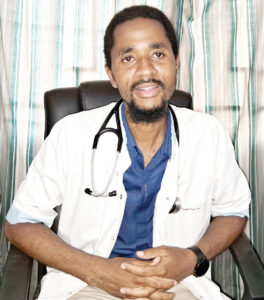
Jotham Cross, NCD Coordinator at Nkhata Bay District Hospital, says their partnership with Cham has eased the provision of NCD treatment and related services in the district’s remote areas.
“Previously, we had only one NCD clinic at the district hospital. With the help of Cham, we have managed to decentralise to six additional clinics. We now have seven clinics in total offering NCD services,” he says.
In addition to Chilambwe Health Centre and Nkhata Bay District Hospital, NCD clinics are also conducted at Chintheche Rural Hospital, Mzenga Health Centre, Liwuzi Health Centre, Maula Health Centre and Chikwina Health Centre.
Mathias John, Cham’s Monitoring and Evaluation Lead for the Phindu Project, says they are pleased with the project’s impact so far.