By Benedicto Kondowe:
The Malawi Electoral Commission (Mec) has always carried the heavy responsibility of ensuring that our elections remain credible, transparent and reflective of the will of the people.
Over the years, the commission has had to adapt to shifting challenges, ranging from logistical hurdles to political suspicions, while also keeping pace with evolving global democratic standards.
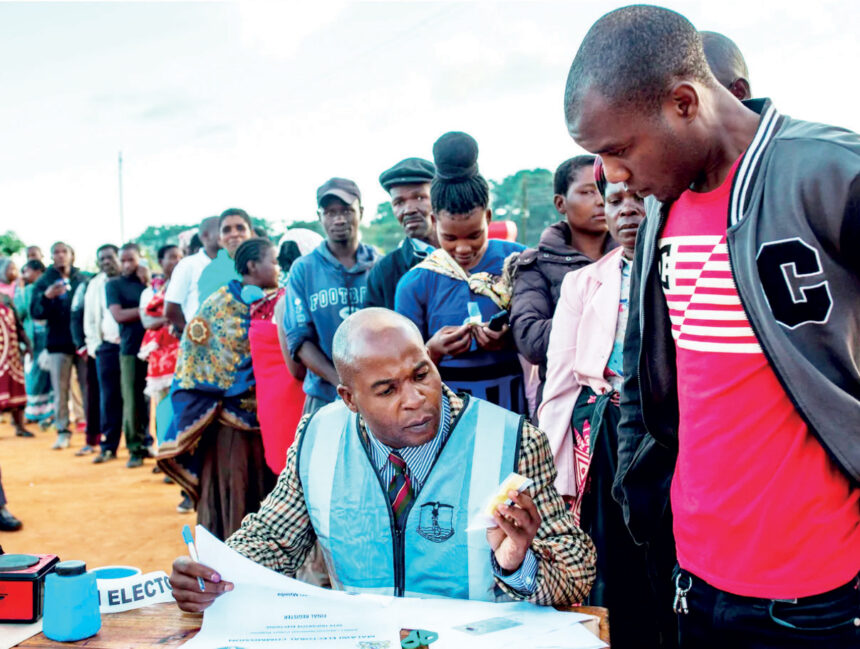
The latest innovation is the introduction of Biometric Voter Verification and Identification Devices (BVVIDs) for use during voting in the September 16, 2025 General Elections.
This development follows closely after the adoption of Election Management Devices (EMDs) during voter registration.
- Advertisement -
Civil society organisations working in governance and democracy have broadly welcomed this bold step.
At its core, the BVVID system is a much-needed safeguard against electoral malpractice, a technological barrier designed to ensure that only genuine, registered voters cast ballots and that each voter does so only once.
For a country where suspicions about multiple voting, impersonation and stolen voter IDs have frequently fuelled mistrust, BVVIDs offer a powerful tool to strengthen electoral legitimacy.
They also respond to allegations that some aspirants have exploited loopholes by collecting voter IDs.
- Advertisement -
- Advertisement -
With biometric verification, every voter must place a finger on the device to confirm identity, in which case stolen IDs become useless without the matching fingerprint.
The system also curbs voting in the names of deceased persons, a recurring weakness in past elections.
Most importantly, it ends the possibility of multiple voting, as once a fingerprint is verified and recorded it cannot be duplicated.
Yet, while the promise of technology is clear, civil society raises an important “but”. Technology alone cannot inspire trust. What matters is how it is introduced, explained and embedded within the wider electoral process.
Some citizens fear that biometric verification may confuse voters unfamiliar with technology. Without adequate awareness, rejected fingerprints due to worn-out ridges or technical errors could easily be misinterpreted as deliberate attempts to disenfranchise voters.
Perceptions, whether accurate or not, can damage the credibility of an entire election. This is why Mec must not stop at procuring devices; it must also undertake extensive voter education to ensure that parties, candidates, monitors, observers and the electorate all understand how the system works.
Equally important, Mec must not limit engagement to political parties alone. Civil society organisations (CSOs) are critical in bridging the gap between the commission and communities.
Rooted in grassroots structures and trusted by ordinary citizens, CSOs can act as multipliers for explaining the devices, clarifying misconceptions and building voter confidence.
Technology must therefore be introduced in a participatory manner and that requires CSOs to be at the centre of awareness campaigns, not treated as an afterthought.
Timing adds another layer of urgency. The rollout of BVVIDs comes close to polling day, leaving little room for adjustment. Too often, electoral challenges stem not from manipulation but from information gaps.
When stakeholders lack a clear understanding of new processes, misunderstandings deepen, rumours spread and tempers flare.
Mec must act swiftly to ensure that all voters receive accessible, repeated and consistent messages on BVVIDs.
An uninformed voter is a vulnerable voter who is also vulnerable to manipulation, disinformation and distrust. As Kofi Annan once reminded us, “Elections are the ultimate expression of the sovereignty of the people. Their integrity depends not only on laws and institutions but on the confidence of citizens that their voices will be heard.”
Civil society insists that awareness must start with key stakeholders, who can in turn cascade information to communities.
Civic educators, the media, political parties and local leaders must all be engaged. Acceptance of BVVIDs will come faster if citizens hear about them not only from Mec but also from trusted voices around them.
After all, no matter how advanced technology is, elections ultimately rest on human trust. Machines may verify fingerprints, but it is people who manage polling, interpret results and declare winners.
Trust is not built by technology alone but by openness, inclusivity and visible engagement of all players.
That is why Mec must also issue clear operational guidelines well ahead of polling.
Questions such as: What if a fingerprint cannot be captured? What happens if a device fails? What backup measures will apply? Will there be manual verification under strict safeguards or will voters be turned away? must be answered publicly and unambiguously.
Clear rules, known in advance, will prevent confusion and build confidence.
As former United States president Jimmy Carter wisely said, “The experience of democracy is like a baptism: it is a cleansing experience and it requires trust to make it real.”
In conclusion, the introduction of BVVIDs is a welcome innovation for Malawi’s democracy. It offers protection against fraud, enhances transparency and strengthens electoral integrity.
But technology without trust is fragile. Mec must therefore prioritise robust awareness campaigns, intensive training and transparent guidelines.
By doing so, the commission will not just introduce a new device but will also reinforce the bond of confidence between itself and the electorate.
The author is the chairperson of the Civil Society Elections Integrity Forum