



By using this site, you agree to the Privacy Policy.
Accept
The Times GroupThe Times Group
  • Home
  • National
    National
    Get the latest National News from your trusted source.
    Show More
    Top News
    CSOs fear for prison department
    February 27, 2024
    Limbe Health Centre set for major upgrade
    March 19, 2026
    Reforms report damns civil service
    March 6, 2024
    Latest News
    Malawi Government-owned houses put on rent in Zimbabwe
    November 7, 2026
    More than 30 Malawians stuck in US ‘detention’
    November 7, 2026
    Forex hitch chokes drug supply
    November 6, 2026
    AI must serve humanity—Government
    November 6, 2026
  • Business
    Business
    Breaking news and analysis on business and the economy, including the latest news in technology, stock markets, media and finance.
    Show More
    Top News
    Standard bank dividend motivates shareholders
    June 21, 2024
    Reserve Bank of Malawi sees economy growing by 2.3%
    July 5, 2024
    Tobacco output down 12 percent
    July 18, 2024
    Latest News
    Import bill grows by 11.3% to $3 billion
    November 6, 2026
    ‘Fuel permit suspension could disrupt production’
    November 5, 2026
    Government turns to household solar
    November 5, 2026
    Minister warrants secure investment environment
    November 5, 2026
  • Entertainment
    Entertainment
    Your source for entertainment news, celebrities, celeb news, and celebrity gossip. Check out the hottest fashion, photos, movies and TV shows!
    Show More
    Top News
    Code Sangala reappears with new song
    January 28, 2025
    ‘The Gunless Soldier’ to premiere in March
    February 13, 2025
    Lucky fan goes on date with Charisma
    February 28, 2025
    Latest News
    First Couple mourns Jack Mapanje
    November 6, 2026
    Film industry in solid progression
    November 4, 2026
    St Pius Choir rekindles six decades of melody
    November 3, 2026
    Nigerian star in no-show as Theresa’s concert soars
    November 2, 2026
  • Sports
    Sports
    Keeping you up to date on the latest sports news from Malawi and around the World. With live scores, fixtures from world of Football, Netball,…
    Show More
    Top News
    Basmal to conclude Mo626 preliminary matches Saturday
    April 23, 2024
    Blantyre derby match officials replaced
    May 3, 2024
    Giants skeptical on Flames camp
    May 14, 2024
    Latest News
    Mpira Stadium playing surface ‘overused’
    November 7, 2026
    Dedza Dynamos risk losing sponsorship
    November 6, 2026
    Bravehearts stumble in BAL qualifiers
    November 6, 2026
    Analysts say Kalisto Pasuwa lacks consistency
    November 6, 2026
  • fyi
Search
More Categories
  • World
  • Features
  • Leisure
  • Social and Human interest
  • Digital & Technology
  • Advertise
  • About Us
  • Privacy Policy
  • Contact Us
© Copyright 2026, The Times Group. All Rights Reserved.
Reading: Eliminating neglected tropical diseases
Share
Sign In
0

No products in the cart.

Notification Show More
Latest News
Malawi Government-owned houses put on rent in Zimbabwe
National
More than 30 Malawians stuck in US ‘detention’
National
Mpira Stadium playing surface ‘overused’
Sports
Forex hitch chokes drug supply
National
AI must serve humanity—Government
National
Aa
The Times GroupThe Times Group
0
Aa
Search
  • Home
  • National
  • Business
  • Sports
  • Entertainment
  • Features
  • World
  • Digital & Technology
  • Leisure
  • Social and Human interest
  • Times Radio
  • Read e-Paper
  • Exclusive Content
  • Dzuka Publishing Company Limited
Have an existing account? Sign In
Follow US
  • Advertise
  • About Us
  • Privacy Policy
  • Contact Us
© Copyright 2026, Times Group Media. All Rights Reserved.
The Times Group > Blog > Features > Eliminating neglected tropical diseases
Features

Eliminating neglected tropical diseases

Times News
Last updated: 2024/10/11 at 9:08 AM
Times News
Share
7 Min Read
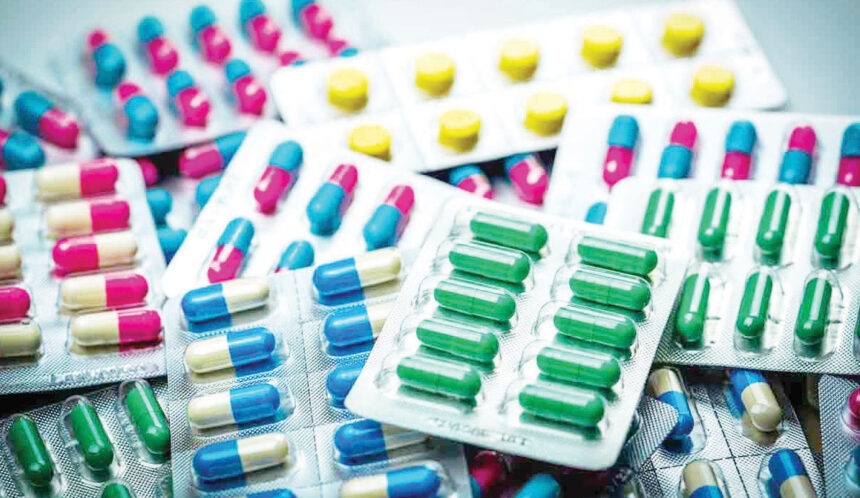
PRESCRIPTION DRUGS—Antibiotics
SHARE
MUTAPI —It is about controlling the vector

By Francisca Mutapi:

A major health challenge of our time is when drugs no longer work to treat infections. This happens when the agents that cause infections – they may be bacteria, viruses or fungi – become resistant to the drugs.

Antimicrobials are a broad range of medications that act on microbes – like bacteria, fungi, viruses or parasites. Antibiotics, for instance, are one type of antimicrobial working against bacteria.

Resistance to antimicrobial drugs therefore makes it difficult to treat and prevent a wide range of infections.

- Advertisement -

Ad image

Antibiotic resistance compromises public health programmes, such as TB treatments.

- Advertisement -

It can also compromise other medical interventions where treatment is needed to prevent infection, like surgery, caesarean sections or cancer treatment.

The main causes of antimicrobial resistance are the misuse and overuse of antimicrobials in humans, animals and plants.

Antimicrobial resistance leads to more deaths and illness in Africa compared to anywhere else.

The continent recorded 21 percent of the global antimicrobial resistance related deaths in 2019. In that year, over 1.05 million deaths in Africa were associated with antimicrobial resistance. This poses an exceptional health threat.

- Advertisement -

Worryingly, antimicrobial resistance related deaths are predicted to increase globally. The trend is already being observed in Africa.

For example, the latest data shows that the share of E. coli infections resistant to cephalosporins (the antibiotic used to treat them) is rising.

To change this, it is necessary to reduce the burden of diseases that require antimicrobial treatment.

One group of infectious diseases prevalent in Africa are the neglected tropical diseases (NTDs). There are already effective tools to prevent and even eliminate them.

But every year, millions of people are infected and treated for them using antimicrobials. This increases the risk of spreading resistance.

Having been involved in the design and implementation of large-scale neglected tropical diseases control programmes, I argue for a push to eliminate these diseases.

This must be done through integrated approaches, including preventive medicine, water and sanitation, and controlling the agents that spread the diseases.

Even countries where neglected tropical diseases are not common should make this push, as part of global health security.

Controlling neglected tropical diseases

Neglected tropical diseases are a group of 21 diverse conditions capable of causing long term health and economic challenges.
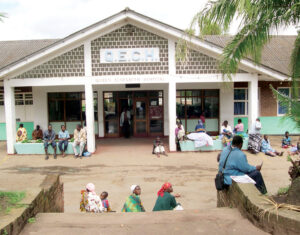
GETS SRAINED—Hospitals such as Queen Elizabeth in Blantyre

They are caused by a variety of pathogens including worms, bacteria, fungi and viruses. Of these diseases, six are treated with antibiotics: buruli ulcer, leishmaniasis, leprosy, onchocerciasis, trachoma and yaws.

Globally, millions of people with neglected tropical diseases are treated with antimicrobials every year.

One of the most effective public health approaches for controlling neglected tropical diseases is preventative chemotherapy, which involves mass drug administration, where people are treated without diagnosis.

Nonetheless, it is not sustainable, both in terms of cost and because it increases the risk of antimicrobial resistance.

However, preventative chemotherapy is a necessary and effective tool for reducing infection and disease. Since 2012, over 600 million people have been cured of neglected tropical disease infection this way.

An example of this is Zimbabwe’s control programme for schistosomiasis (an acute disease caused by parasitic worms), which I have been involved with.

Preventative chemotherapy was administered to about five million children every year between 2012 and 2019. Infection levels were reduced from 32 percent to just under two percent in children aged six-15.

The latest World Health Organisation report from 2022 indicated that just under 1.7 billion people globally required preventative chemotherapy. Of these just under 600 million are in Africa.

Another risk for an increase in antimicrobial resistance is that the antibiotics used to treat neglected tropical diseases are also used to treat other infections.

For example, azithromycin (for treating trachoma and yaws) is used also to treat other bacterial infections including bronchitis, pneumonia and sexually transmitted diseases.

Already, of the six neglected tropical diseases that are treated with antibiotics, five have documented drug resistance. This trend will only increase.

It is therefore vital that neglected tropical diseases are eliminated so that fewer antibiotics and antimicrobials are used. This also protects people from other dangerous infections.

Ready-made tools

The good news is that the tools to eliminate neglected tropical diseases already exist.

Within the past decade, 51 countries have eliminated at least one neglected tropical disease. Underlying these successes are the use of multiple tools, cross-sectoral strategies and sustained efforts to prevent and treat infections.

In the case of diseases which are transmitted by animals or insects (vectors), it is about controlling the vector. For instance, killing the flies that transmit onchocerciasis parasites or snail hosts for schistosomiasis.

Similarly, provision of safe water and sanitation facilities is critical for disease elimination. For example, the organisms that cause some diseases spend some stages of their life in faeces (poop).

So, when faeces are poorly disposed of, they can contaminate the environment and the disease can be passed on.

The World Health Organisation has set a target of 100 countries eliminating at least one neglected tropical disease by 2030.

This would be a massive health and economic win for countries where the diseases are prevalent.

It will also lead to a reduction in antimicrobial use – which is a vital global health goal.
You Might Also Like

Mponela 2 Primary School battles for dignity

Eyes on Commonwealth leaders’ meeting

Quenching thirst in trash: Residents turn to polluted rivers for water

Herbal medicine under scrutiny

Nkhata Bay beyond the blue: From Dwambazi to Usisya

TAGGED: Tropical diseases, World Health Organisation

Sign Up For Daily Newsletter

Be keep up! Get the latest breaking news delivered straight to your inbox.

By signing up, you agree to our Terms of Use and acknowledge the data practices in our Privacy Policy. You may unsubscribe at any time.
Times News October 11, 2024
Share this Article
Facebook Twitter Copy Link Print
Share
Previous Article Of pounding songs, poetry
Next Article Germany Ambassador samples traditional dances at Gwirize
Leave a comment Leave a comment

Click here to cancel reply.

Please Login to Comment.

Stay Connected

554.5k Followers Like
120.8k Followers Follow
5.5k Followers Follow
28.6k Subscribers Subscribe

Latest News

Malawi Government-owned houses put on rent in Zimbabwe
National November 7, 2026
More than 30 Malawians stuck in US ‘detention’
National November 7, 2026
Mpira Stadium playing surface ‘overused’
Sports November 7, 2026
Forex hitch chokes drug supply
National November 6, 2026
//

The Times Group is a multi-award winning media group and the only 360 media house in Malawi.

About Us

  • Company Profile
  • Rate Cards
  • Vacancies
  • Privacy Policy
  • Contact Us

Quick Links

  • e-Edition
  • Times Radio
  • Subscribe for Exclusive Content
  • Submit a Story
The Times GroupThe Times Group
Follow US

© Copyright 2026, The Times Group. All Rights Reserved.

  • Advertise
  • About Us
  • Privacy Policy
  • Contact Us

Removed from reading list

Undo
Welcome Back!

Sign in to your account

Lost your password?