Monday, June 24, 2024. A lone donkey lumbers about Nchalo Community Day Secondary School (CDSS) premises, some 30 kilometres from Chikwawa Boma.
Then, at 10:56am, the donkey brays.
According to Donkey Sanctuary Ireland, the bray is one of the six sounds that a donkey makes; others being a grow, grunt, squeal, whuffle and snort.
It, however, indicates that the bray is the loudest of them all.
At the sound of the donkey’s braying, Andrew Marten Chiphiko, a form two student at the school, bursts out laughing.
- Advertisement -
“Ha! Ha! Ha! Ha! Ha! Ha! Ha! Ha! Ha! Ha! Ha! Ha! That is unusual. He [the donkey, which apparently has no name] does not bray at 10:56am. It does so on top of the hour—say at 6am, 7am, 8am, 9am, 10am, 11am and so on and so forth.
“What has happened to it for it to bray at 10:56am? Actually, when he brays, almost every student who happens to be outside the classroom pays attention to him. Today, no one seems to be paying attention to him. Maybe he has noticed it and that is probably why he is behaving unusually today. Maybe he wants to draw attention to himself. Unbelievable! Ha! Ha! Ha! Ha! Ha! Ha! Ha!” Marten Chiphiko cannot control himself.
Coincidentally, the early part of the day had been a busy one for both students and teachers at the school as they were admiring progress of structures that are being constructed under the World Bank-funded Equity with Quality Learning at Secondary School (Equals) Project.
Nchalo CDSS form 4 student-cum-vice head girl Sophie Harawa says she is not surprised that all the attention has been paid to the library and twin science laboratories whose construction is nearly complete.
- Advertisement -
- Advertisement -
“We, as students, cannot wait for the completion of the structures because we have been covering long distances to get to schools that have the facilities.
“Junior Certificate of Education and Malawi School Certificate of Education (MSCE) candidates here have been struggling in physics, biology and chemistry examinations, something we hope will soon be a thing of the past,” Harawa says.
The school’s head teacher Gift Mark Loppah Nelson Lipenga concurs with Harawa.
He adds that he hopes that the availability of infrastructure would attract students to science subjects.
“I am hopeful because in the past, lack of laboratories was proving to be a disincentive to students who were interested in science subjects. Even teachers used to struggle to impart knowledge in students because they were dwelling on theories when science subjects also demand experiments,” he points out.
South West Education Division Planner Nelson Lipenga indicates that the 17 sites where the project is being implemented have experienced a facelift, in terms of infrastructure development.
“The Equals Project is being implemented in Chikwawa, Neno and Mwanza, with schools benefitting through the construction of libraries, science laboratories and, in others, toilets.
“This is more than welcome because most CDSSs could not afford to construct such infrastructure on their own,” Lipenga explains.
He adds that the infrastructure construction completion rate is at 90 percent.
At Migowi CDSS in Phalombe District, biology and science teacher Taonga Maere has already started counting her eggs.
“The first thing that impressed me is that we got trained in science subjects. Topics that used to be difficult to us, teachers, were simplified, such that we now tackle subjects easily, thereby helping students grasp concepts.
“That is why I am hopeful that once laboratory construction works are done, all students in my class will be passing MSCE and other examinations with flying colours. This is, really, an icing on the cake,” she says.
In the recent selection of MSCE candidates to public universities, five students were selected to Malawi University of Business and Applied Sciences, three were selected to the University of Malawi, six have gone to Lilongwe University of Agriculture and Natural Resources while two students have been selected to Mzuzu University.
No wonder, Migowi CDSS Mother Group Chairperson Gertrude Banda, who is from the nearby Ganeti Village, Traditional Authority Kaduya in the Southern Region district, is equally optimistic.
“Already, girls who preferred marriage to school are coming back to school, safe in the knowledge that requisite infrastructure and learning materials are available at the school,” Banda stresses.
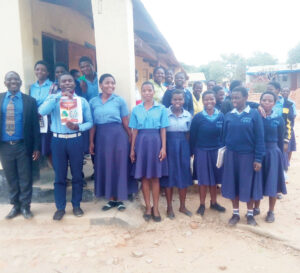
At Mulanje Secondary School, the twin laboratories are almost complete, becoming other imposing features alongside Mulanje Mountain.
These developments have elated Shire Highlands Education Division Planner Blessings Pensulo, who accompanied journalists on a tour of Migowi CDSS and Mulanje Secondary School on Monday last week.
The division covers Mulanje, Phalombe, Thyolo and Chiradzulu districts.
“So far, the completion rate is at 70 percent. We are hopeful that the project will improve the pass rate in our division.
“The good thing about the project is that through the construction of laboratories, students will be getting first-hand experience through laboratory experiments,” Pensulo indicates.
At Mulanje Secondary School, construction of two laboratory blocks has been completed and is pending handover.
At Namadidi CDSS in Zomba, the laboratory and one block with two classrooms await handover and occupation.
“We also have modern toilets and furniture. Soon, students will be using the facilities and making the best out of them,” says head teacher Stanley Mpingiza.
At Katamba CDSS in the district, form 4 student Floncy Didimo has already sampled the new twin laboratories.
“We, outgoing form 4 students, did not have the opportunity to use facilities like these but we are glad that our friends will be using them. I hope students will put the facilities to good use,” Didimo says.
It is a sentiment Senior Chief Mlumbe echoes.
“We do not condone vandalism. We want the structures to be in the same state come 2037,” he stresses.
Zomba-Nsondole Member of Parliament McNice Aboo Naliwa is equally optimistic that community members will value the structures.
“It is good that schools in rural areas are having state-of-the-art structures like these,” he points out.
According to South East Education Division acting manager Edna Manyungwa, the project has also culminated in the capacitation of teachers.
“As at now, Equals Project implementers have trained mathematics, physics, biology and chemistry teachers. Those trained are not only teachers at sites where the project is being implemented; all science teachers in the division have been trained,” she explains.
The division has 16 sites, 10 in Zomba and six in Balaka District.
At Kasungu Secondary School and Mphomwa CDSS in Kasungu District, science laboratories, libraries and toilets are taking shape.
Councillor for the area where Kasungu Secondary School is situated, Jonathan Qongwane, says the twin laboratories that have been planted at the school will ease access to learning facilities.
“We are, therefore, glad that we have benefitted from the project,” he says.
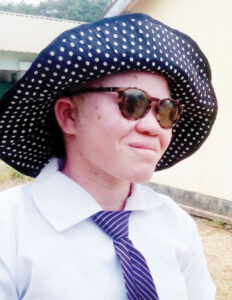
Kasungu Secondary School form 4 student Daless Mussa believes that the project is the missing piece to the puzzle of science education in the country.
“Some schools teach science subjects without the necessary tools, which defeats the purpose of education. The science laboratories will, therefore, inculcate a culture of conducting experiments in our schools,” she says.
At Wilore CDSS in Karonga District, head teacher Anastazia Chitete describes the construction of twin science laboratories as a milestone.
“We established the school in February 2018 with one school block. There was no laboratory, no library and no access to quality education. No wonder, our students were performing poorly in science subjects.
“Now they will have access to computers and other resources, which will definitely improve education outcomes here,” Chitete points out.
Karonga CDSS has also benefitted from the project, with one block of two classes—each class with the capacity to accommodate 50 students—and science laboratories there for all to see.
Rukuru Ward Councillor Gif Mwale Mwakyelu says they have, on their part, been mobilising resources.
“For instance, community members mobilised resources such as bricks, dambo sand and labour. This shows that we own the projects and will ensure that the infrastructure is safeguarded,” he explains.
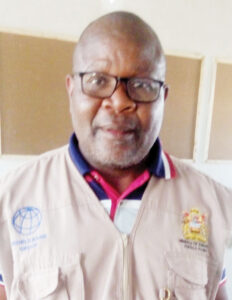
Yusuf Nzariwa, who is the Chief Planning Education Officer for the Northern Region, says they are satisfied with progress they have made.
“The Equals Project is being implemented in all the education districts except Likoma. In Mzimba South, we have four sites; four sites in Mzimba North; two sites in Nkhata Bay; two sites in Rumphi; one site in Mzuzu; two sites in Karonga; and two sites in Chitipa
“We want students to have access to state-of-the-art facilities as one way of improving education outcomes in the country,” he points out.
On his part, Ministry of Education spokesperson Mphatso Nkuonera credits the project for improving education standards in the country.
“You are aware that the Equity with Quality Learning at Secondary School Project is premised on promoting infrastructure development in community secondary schools in 103 centres across the country.

“We are also constructing twin labs in other secondary schools, meaning that you could have a physical science laboratory, biology laboratory or chemistry laboratory and agriculture laboratory in schools in that order,” he says.
Nkuonera adds that the construction of laboratories and additional classrooms will improve the quality of education in the country.
“This project is very important because the project is also looking at the provision of teaching and learning materials. We have managed to procure enough mathematics and science textbooks, which have been distributed to schools across the country. As we speak, the textbooks-student ratio in secondary school is at 1-1 in mathematics and science subjects,” Nkuonera indicates.
Back at Nchalo CDSS, the donkey is back to its old ways; braying at the top of every hour.