By Elia Chibwe:
In Mwangwera Village, Traditional Authority Kilupula in Karonga, Manyanani Mwakibinga Munthali’s life is a tempest of struggle and resilience.
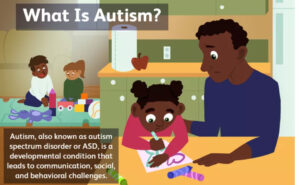
The 56-year-old single mother’s daily reality revolves around her 31-year-old daughter, who lives with autism—a condition that has transformed their lives into a battle against both societal prejudice and financial strain.
“I am drowning in expenses—school fees are high, my housemaid’s wages are steep because my daughter can’t manage the toilet on her own and finding a safe place to live is a constant challenge due to security concerns for my autistic child,” Munthali says, her voice tinged with frustration.
For years, Munthali was in the dark about her daughter’s condition, born in 1993.
- Advertisement -
It was not until a chance meeting with a psychiatric lecturer from the University of Malawi that she learned her daughter’s struggles were linked to autism, not simply developmental delays.
The path to understanding has been fraught with difficulties.
Munthali has faced relentless challenges in managing and educating her daughter, who has been the target of daily complaints from teachers and discrimination from peers.
The hostility extended beyond the classroom, with locals accusing Munthali of witchcraft and claiming she had cursed her own child.
- Advertisement -
- Advertisement -
The tide of discrimination and the burden of securing safe housing have taken a heavy toll on Munthali’s mental health, leaving her feeling as though she is adrift in a sea of miseries.
Separated from her family 18 years ago, she now raises her two biological children and three others on her own.
She dreams of government support programmes that could alleviate the financial strain on families like hers.
Despite the psychiatric lecturer’s early diagnosis, Munthali only came to understand her daughter’s condition as autism through the awareness campaign launched in 2010.
“Initially, I thought witchcraft was responsible for my daughter’s condition, which only added to my distress.
“The campaign clarified the situation and has provided invaluable support through local parent groups, where we share strategies for managing autism,” she says.

Efforts to gain insights from the Ministry of Health on autism support programmes were unsuccessful. The ministry’s spokesperson, Adrian Chikumbe, did not respond to requests for information.
However, Precious Makiyi, a mental health expert, highlights the campaign’s impact.
“Awareness has grown significantly. We now have more mental health professionals and a better understanding of autism, which has improved both diagnoses and support,” he says.
Makiyi points out that late marriages are now contributing to higher autism rates, in contrast to the past when people married younger and had children earlier.
“Giving birth at an older age, such as 35 or above, increases the risk of developmental disorders like autism. Previously, people married and started families at around 18 and had their children by 35,” he explains.
Lauryn Sulani, Director of the Centre for Down Syndrome, Sickle Cell Anaemia and Autism, describes autism as a complex neurological condition affecting social interactions and communication.
She notes that genetics and environmental factors both play roles in its development and having a sibling with autism increases the likelihood of having it.
Sulani’s organisation provides psychosocial counselling, support groups, and economic empowerment tailored to individual needs.
She also mentions that while the estimated number of autistic individuals in the country was 130,000 in 2014, her organisation plans to conduct a nationwide study to obtain precise figures for better planning and programming.
For those seeking to understand autism, key signs and symptoms include difficulties with social interaction, intense focus on specific objects, challenges with changes in routine, strong abilities in certain areas coupled with difficulties in others, heightened sensory sensitivities, repetitive behaviours and profound emotional reactions.
Munthali’s journey through the stormy seas of autism is a testament to her unwavering determination and hope for a brighter future for her daughter and others like her.—Mana