







By Kingsley Jassi:
Malawi’s foreign exchange-generating platforms, including foreign direct investment (FDI), aid and exports, have recorded an upturn, despite the economy showing little improvement amid growing demand for forex.
Unlike diaspora remittances, which remain under pressure, FDI inflows have improved and are projected to rise from $445 million to $1.2 billion this year.
Meanwhile, exports reached $806 million in the first eight months, representing an increase of 28 percent.
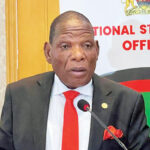
Finance, Economic Planning and Decentralisation Minister Joseph Mwanamvekha has acknowledged an increase in aid inflows.
- Advertisement -
Recently, the Treasury signed agreements worth $221.9 million with the World Bank and Multi-Donor Trust Fund partners.
The government also recently received more than $80 million under the Government to Enable Service Delivery programme and $20 million from the International Fund for Agricultural Development, bringing aid inflows for November to nearly $322 million.
Mwanamvekha expects the inflows to help improve the country’s foreign reserves as the funds begin to trickle in through the Reserve Bank of Malawi.
“This money will come in the form of forex, which will be kept by the Reserve Bank [of Malawi] and can be used to import essential goods.
- Advertisement -
The beneficiaries will receive the money in local currency.
So, we should expect these inflows to help us on the forex front,” Mwanamvekha said in an interview.
However, he said the improved inflows were coming amid growing pressure on foreign reserves and cautioned that it would take time before the situation stabilised.
Mwanamvekha said the government still had to clear outstanding foreign exchange obligations, including a $50 million debt to the Arab Bank for Economic Development in Africa, which was incurred through the Government-to-Government fuel import arrangement.
Mwanamvekha further said the cost of importing fuel in foreign currency had increased significantly due to price spikes on the international market and growing domestic demand. Statistics indicate that fuel import costs surged by 84 percent in the second quarter to $343.1 million, averaging $114.3 million per month.
Meanwhile, the central bank reported in its August Monthly Economic Review that the country’s foreign reserve position had improved compared to the corresponding period last year, rising to $593.8 million from $523.9 million.
Despite these positive developments, Malawi continues to face acute foreign exchange shortages, with businesses struggling to operate.
The National Statistical Office reported a 12.1 percent contraction in economic activity in the first quarter of this year, citing foreign exchange shortages and energy challenges as major contributing factors.
