





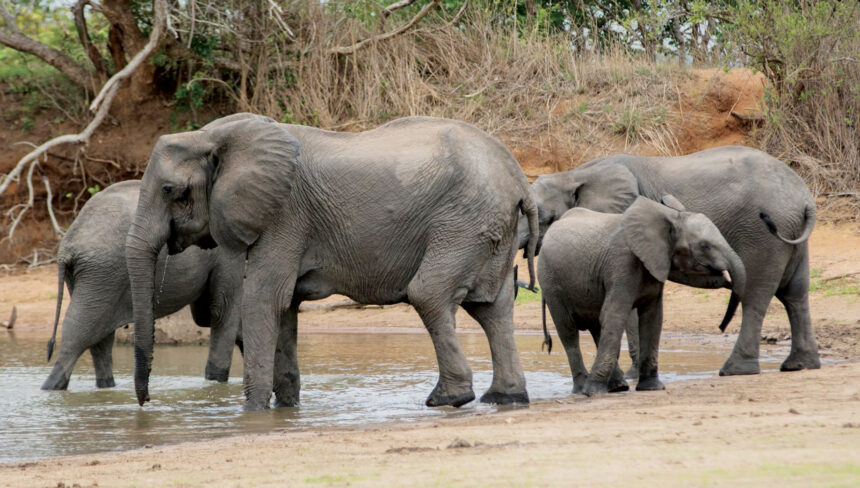
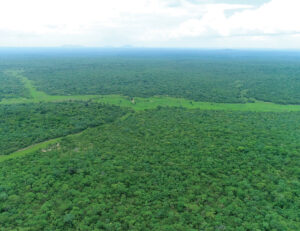
Kasungu National Park is a vast sanctuary that once teemed with unspoiled life before its fragile ecosystem fell victim to the relentless assault of poachers.
Since its founding in 1970, the reserve has cradled some of Africa’s most iconic species— elephants, lions, rhinos and antelopes.
But over the decades, the silence in the reserve has grown heavier.
The park’s peace has been shattered by gunfire, its soil stained by a different kind of footprint, the kind left behind by poachers.
- Advertisement -

One of them is a man in his early sixties who has developed deadly tactics in his pursuit of animals behind the fence erected to keep his kind out and wildlife in.
- Advertisement -
“I have been a poacher for over 40 years, since the time of the one-party system of government,” says the poacher, veiled as Tsika, with a dry chuckle as he approaches the electric fence of the vast park.
Poaching in this reserve, initially driven by the demand for ivory and bushmeat, became a major problem throughout the 1980s and 1990s.
During this period, poachers like Tsika became entrenched in the illegal trade that continues to plague the park despite a reduction in activity.
Roots of a relentless trade
- Advertisement -
He became involved in poaching as a boy, drawn by the promise of money and the survival instincts that poverty often triggers.
Over the years, he learned the trade, becoming skilled in tracking animals and avoiding park rangers in this less touristy reserve.
Though his methods have evolved, he remains an active participant in poaching despite anti-poaching campaigns.
He initially mentions entering the park to collect mopane worms, which are both a food source and a commodity in local markets.
His tone is casual, though those familiar with the area know he has hunted larger animals including buffaloes and antelopes, something he initially attempts to downplay.
“We also get mushrooms in the park, but even that is illegal because entry is restricted,” the father of 10 and grandfather to 16 says.
Crossing the line
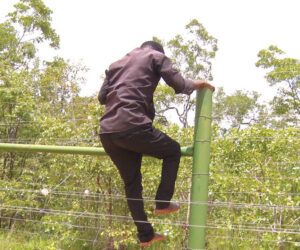
Despite a stretch of about 87 kilometres of the national park being fenced, Tsika regularly finds his way inside, where he hunts a variety of animals.
The meat often ends up on his family’s dinner table or is sold to others in the community.
Yet he continues to insist he does not target larger animals, downplaying the more dangerous and illegal aspects of his activities.
A local community organisation that promotes wildlife conservation is pleased with the progress on fencing the park and sees the barrier as a major step forward in protecting its wildlife.
“The new fence has amplified protection of the wildlife in the park. It has effectively closed off easy access for poachers,” Siwinda Chimowa, chairperson of Kasungu Wildlife and Environmental Conservation Development Association, explains.
However, Tsika later admits he was in the park as recently as the previous month to poach.
Many in his village, which lies just outside the reserve, confirm that it was not long ago he returned with wild meat.
“He just can’t stop. He has his own ways and it seems easy for him to evade being caught,” a village mate familiar with his illegal tactics declares.
Clearly aware he is breaking the law, Tsika is cautious about revealing details of how he enters the park and carries out his hunts.
Inside the forbidden zone
Still, he takes us through some veiled routes and we eventually find ourselves deep within the protected reserve, getting a sense of his illicit activities.
He admits that after each incursion, he often returns home with something—usually wild meat, which he consumes with his family or sells in the community.
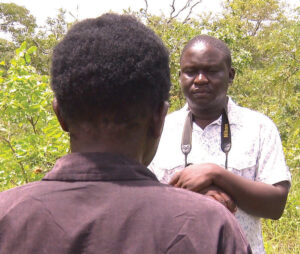
When we introduce him to Chimowa as a man who has spent decades defying the law and evading capture, the conservationist concedes that some poaching will always persist.
“Well, the battle against poaching is a never-ending struggle. It is just unfortunate that some people don’t appreciate efforts to eradicate the vice,” Chimowa says, with a tone of defeat in his voice.
To Director of Parks and Wildlife, Brighton Kumchedwa, poaching remains a source of deep sorrow and frustration.
He watches with a heavy heart as, despite years of efforts and collaboration between the government and its partners, illegal hunting and wildlife exploitation continue.
Kumchedwa is resolute in his belief that ending poaching is both necessary and a moral imperative.
“The fact is that poaching has declined to manageable levels. At least the animal populations are thriving,” he says.
He cites the involvement of communities surrounding the park and the tightening of anti-poaching laws as key factors helping to protect wildlife.
Beyond borders, beyond reach
Kumchedwa also acknowledges that poaching, particularly in transboundary parks like Kasungu and Nyika, presents a complex challenge.
These areas, straddling national borders, are hotspots for illegal hunting, making enforcement and monitoring more difficult.
“That is why we work with our partners even in Zambia, so that if poaching extends into their country, they take action too,” Kumchedwa says.
Poaching is a risky and dangerous venture, with poachers battling the harsh conditions of a wilderness rich in biodiversity.
Yet despite the dangers, Tsika has thrived for over four decades, evading capture and continuing his illegal activities.
He admits to encountering lions and leopards while entering or exiting the park.
“I have killed many of these dangerous animals; too many to count,” he says, without remorse.
To him, the allure of quick profits often outweighs the risks, driving him to persist in his perilous trade.
He acknowledges that community involvement in wildlife conservation is a key strategy in fostering a sense of ownership and responsibility.
Yet he distances himself from such initiatives.
“Of course, many conservation initiatives are in place. The hope is that we take pride in protecting the park and its wildlife, but you know, there are always dissenters and I am one of them,” Tsika admits cynically.
Over his 40 years as a poacher, he admits that much has changed, including the methods used.
In the past, simple traps were sufficient and often went unnoticed by authorities.
Those techniques were rudimentary but effective.
Tools of the trade
However, with increased enforcement, poachers like him have had to adopt more sophisticated and dangerous methods.
“Now we use firearms deep inside the forest. We have to make sure the rangers are far away because the sound of gunfire gives us away,” he says as we push aside overhanging branches during our walk inside the park.
Like many poachers, he is wary of disclosing details about the firearm he uses.
The secrecy surrounding his weapon is one of the precautions he takes to avoid detection.
“I don’t own the firearm,” he insists when we ask to see it upon returning from the park. “That is all I can tell you. It is not mine.”
The International Fund for Animal Welfare is among key players in the effort to conserve Kasungu National Park.
Its work, alongside other partners and the government, has brought visible improvements to the park’s miombo-dominated ecosystem.
Recent assessments show a significant increase in the animal population—a promising sign of successful conservation.
“We should all be proud that we have such reserves with amazing wildlife and we should see poaching as a huge evil,” Kumchedwa says.
The economics of destruction
He also dismisses the claim that poachers persist due to a lack of economic opportunities.
“Many of them have been offered alternatives such as beekeeping and other businesses. They are even given part of the park’s revenue for socio-economic activities of their choice,” Kumchedwa asserts.
He reiterates that the problem is not only about economics but also about changing attitudes and behaviours.
Tsika does not acknowledge the role that poachers like him played in the previous decline of animal populations before conservation efforts took effect.
“Well, it is not that the animals have been eradicated. Because of the electric fence on this side, they are just migrating to the Zambian side,” he claims, an assertion dismissed by authorities.
Chimowa still has a message for the poacher who continues to kill and maim animals in the protected area, home to over 400 bird species such as raptors, hornbills and bee-eaters.
He calls on him to understand the lasting harm he is causing to wildlife and the entire ecosystem.
“He may have hidden in the shadows for over 40 years, as you say, but he will be caught one day. He had better stop now,” Chimowa warns, wrinkles of indignation forming on his brow.