A quiet revolution, spurred by the degradation of their environment — cleared swathes of once-forested expanses — is underway in a community in Neno South.
In the hilly villages of the area, forests were the lifeblood for locals before they began disappearing at an alarming rate, with devastating consequences.
“We used to harvest honey, fruits and herbs from the forests. They were our pharmacy, our grocery store and our shelter.
“Without them, we are exposed to the elements,” Austin Malamulo, a farmer in the area, says, his eyes clouding with memories.
Malamulo acknowledges that now people have to walk for hours to find what they once sourced from their backyards.
- Advertisement -
“I have witnessed the forest shrinking before my eyes. We have lost our traditional way of life. Our children don’t know the tales of the forest,” Malamulo, 29, says.
The father of two remembers his parents collecting firewood to sell at the market during what he calls the good old days.
In Neno South, as in other parts of this border district where large areas of trees have been cleared, community leaders are sounding the alarm.
They acknowledge that forests were once vital to their people’s livelihoods, and without them, they have lost their identity and culture.
- Advertisement -
- Advertisement -
“That is why we are taking action now to save or restore them,” Francis Chisenga, leader of the Godeni Catchment Management Committee, explains.
Once a thriving community, the villages’ very existence was not long ago threatened by the spectre of forest degradation.
The lifeline for generations disappeared, leaving behind despair and desperation.
“We lost our heritage,” Chisenga laments.
He has lost count of the number of trees he saw fall in what was once dense greenery over the years.
What he has witnessed is the soil becoming depleted and crops failing to bear fruit because the earth was barren.
For women like 30-year-old Melifa Nkhoma, who used to collect firewood and herbs from the forest, the loss was profound.
Nkhoma recalls her childhood when the forests in her area were lush and green.
“When I was young, the forests were thriving. We played hide-and-seek among the trees. Our children can’t experience that anymore,” she says wistfully.
The single mother of one admits that people in the area, including herself, used to cut down trees for firewood and farming, but they now know better.
But amidst the devastation, a spark of resistance flickers to life.
Over 6,000 individuals in a part of Neno South are using 236 hectares of cultivated fields to combat the effects of environmental degradation.
With determination and a deep love for their land, they work tirelessly to restore the cleared forests, nurturing saplings until they grow into trees and planting new ones in bare areas.
“We are not just fighting for our forests. We are fighting for our very existence,” Malamulo says.
Together, they plant trees, care for seedlings, and educate their peers about the importance of conservation.
As seasons pass, the first signs of hope emerge. Saplings burst from the earth, and the forest’s whispers grow louder.
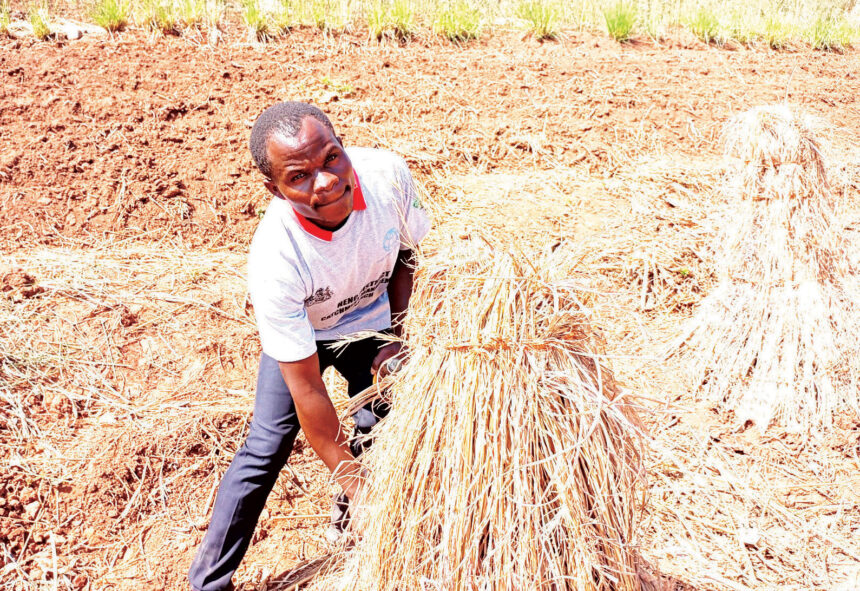
“We have learned harsh lessons. Pain is a good teacher,” Malamulo says as he rearranges a bunch of dry grass over a pit of fermenting manure in his field.
Areas that were once barren and battered, where reckless tree felling for charcoal led to severe soil degradation, are now teeming with life again.
Members of the Godeni Catchment Management Committee, once resigned to their fate, now stride with renewed determination.
They dig deep trenches in the remaining communal woodlots on sparse hills to control runoff and construct swales to shield crops during the rainy season.
“We are also conserving our rivers by managing silt that used to flow from upland areas and planting trees along their banks.
“We now see rivers flowing throughout the year, which was impossible just five years ago,” Malamulo says, adding that he has seen significant increases in crop yields.
Thursday, local conservationists gathered at Chidokowe School Ground in Godeni Village to showcase their efforts at the launch of the 2024-24 integrated catchment management activity.
Since 2021, they have been supported by the World Bank-funded Malawi Watershed Services Improvement Project (Mwasip) to restore degraded land and reap the benefits.
The overarching goal of the project is to restore degraded landscapes in key river basins and improve water security, agricultural productivity and livelihoods.
“In this area, we have witnessed the dedication of the participants and the fruits they are reaping. The entire Neno District has been grappling with land degradation, worsened by climate change,” Mwasip Technical Team Member Boniface Kautale says.
Kautale, who is also Principal Agriculture Training Officer, further states that the launch of the next phase of the initiative aims to catalyse further efforts in catchment conservation for enhanced climate resilience and improved livelihoods.
Chisenga explains that through the project, farmers are continuously trained in climate-responsive agricultural methods and involved in extensive forest restoration.
They are also supported with cash to venture into businesses and livestock to rear for food and sale.
“In the next five to ten years, our villages will be transformed. We are confident they will once again thrive with lush trees,” the farmer declares.
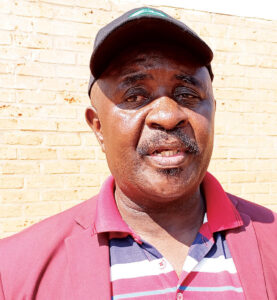
Such sentiments are echoed by Annily Msukwa, Programme Manager for Blantyre Agriculture Development Division, which oversees Neno, and Joseph Chiphaliwali, vice chairperson for Neno District Council.
Msukwa notes that conservation efforts in the catchment areas, four in total in Neno, are also safeguarding the Shire River, which used to receive significant silt from its tributaries in the hills.
“So far, the positive results are clear to see,” she says, her voice filled with admiration and gratitude.
Msukwa praises the participants in Neno South for revitalising rivers and aquifers once thought lost forever.
Chiphaliwali concurs.
He says while climate resilience is often discussed in abstract terms, in Neno, it is a reality etched into every furrowed field and every drop of preserved water.
“The narrative is being rewritten. Farmers are striving to mitigate the impacts of unpredictable weather patterns,” Chiphaliwali says, describing the efforts as the cornerstone of the participants’ shared vision.
As officials and farmers disperse after the launch at a school in Neno South, conversations buzz with renewed energy.
Locals have embraced their role as guardians of the wild and stewards of its resources. They continue to share stories of challenges faced and victories celebrated.