



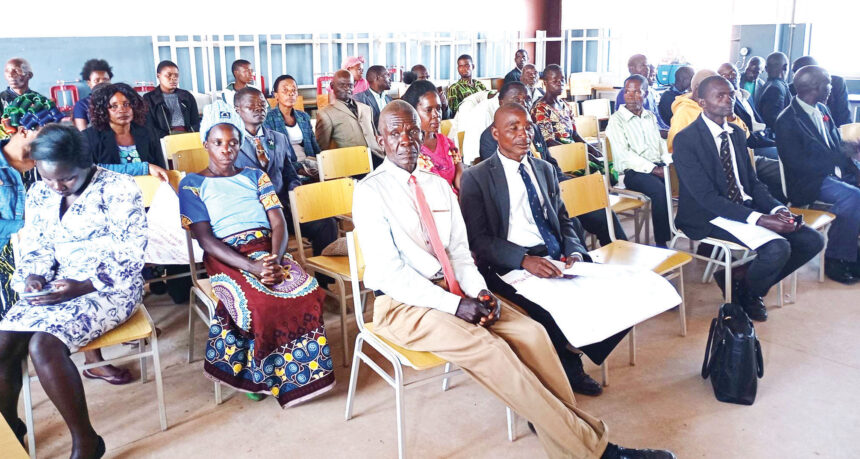
The relatively spacious room at Kavinkhama Community Technical College in Mzimba is nearly rammed to capacity.
Residents of villages surrounding the education institution and others from distant locations have come to the place to deliberate what they believe are the roles of their Member of Parliament (MP).
One after another, they put their hands up in their groups, say their views and earn rounds of applause.
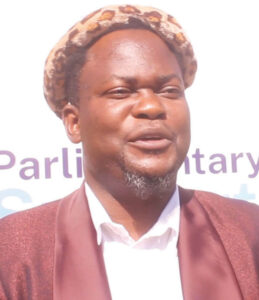
There are stark indications that most of them are not aware of what their MP Sam Chirwa, who represents Mzimba Luwerezi, is supposed to do in his official capacity.
“He is supposed to buy coffins during funerals,” a participant chirps in during discussions on roles of the legislator.
- Advertisement -
With the courage of her conviction, another one rises to declare that their MP has the responsibility of buying school uniforms for needy students in his constituency.
It is a cocktail of off-beam views which culminate in one conclusion—that glaring gaps exist in communities regarding official roles of MPs.
And Chirwa is worried his constituents might judge his performance based on what they believe are his tasks.
“When you don’t do what they expect of you, they label you as a failure. This is the case even when you are perfectly delivering in your designated roles,” he says.
- Advertisement -
- Advertisement -
The lawmaker further states that if he shifts his attention too much to individual households’ needs, he would ease up on development that the constituency as a larger unit needs.
Centre for Social Accountability and Transparency (Csat) is linking MPs with their people in an initiative dubbed ‘Parliamentary Support Programme’.
The activity, funded by the United States Agency for International Development through Democracy International, seeks to move Malawi’s democracy forward through locally led activities by supporting the effectiveness and independence of Parliament.
During the discussions at the technical college, previously known as Mzimba Community Technical College, Csat Head of Programmes Albert Lulaka clarified to the gathering that their legislator has three major responsibilities weighing down his shoulders.
“An MPs makes laws, which is the legislative function; checks how government operates, which is the oversight task and represents the constituents, which is the representative responsibility,” Lulaka said.
Racheal Ndhlovu, a businesswoman at Luwerezi Trading Centre, admits it has never occurred to her that their MP was not mandated to buy coffins during funerals.
“It is something that has been there for ages. The MPs himself does all those tasks perhaps because it is a common practice.
“Now, we understand that it is not his responsibility and his performance should be judged based on the three official roles,” Ndhlovu says.
In the run-up to elections, lawmakers often get accused of abandoning their key roles in preference for ‘local’ activities which they feel endear them to voters.
Some pundits state that some MPs are perpetually absent from Parliament because they have to attend every funeral, wedding and party in their constituency.
And Csat Citizen Engagement Manager Moffat Phiri concurs with those who believe if constituents properly recognise their MPs’ duties, the lawmakers will be more effective in their tasks.

Phiri says enlightened citizens are able to demand from their elected leaders what the officials are in point of fact supposed to provide.
“Meaningful citizen engagement is the essence of democratic governance. Good governance means elected officials and their people are able to interface and bring up issues affecting each party.
“Meetings such as this one amplify the voices of citizens, especially when they get to know how their MPs must represent them,” he says.
Phiri further reiterates that in several meetings that Csat has organised for MPs and their constituents, the issue of Parliamentary deliberations being conducted in local languages keeps popping up.
He hopes such concerns will be addressed in due course.
“People say their MPs campaign in local languages, but turn to English when they speak in Parliament. They feel there is some kind of disconnect,” Phiri explains.
MP Chirwa also concedes that the push for Parliament discussions to be in local languages makes sense.
He says the lawmakers themselves are already talking about the possibility of introducing local languages in the chamber.
“We are going to sit down and discuss the issue because we believe it is important. We intend to do that in the next meeting of Parliament,” Chirwa says.
Previous sentiments by some stakeholders have further suggested that some MPs fail to effectively represent their people because of language barriers.
This, according to observers, also results in such lawmakers steering clear of their legislative, oversight and representative duties and clinging to smaller tasks outside their positions’ scope.
But for Senior Group Village Head Vengi Baloyi in Luwerezi Constituency, with more people getting apprised of MPs’ official duties, manipulation of voter will soon become an attempt in futility.
“For instance, on my part, I will use social gatherings to tell my people that our MP should not be appraised based on how many coffins he has bought or how many funerals he has attended.
“He can do that out of his own free will, because he is part of the community, but he has roles which he has to fulfil, and from now onwards, we will be watching and paying attention,” the local ruler says.