Government plans to top up the K105 billion loan it borrowed from National Bank of Malawi and NBS Bank for the Salima- Lilongwe Water Project by an additional K70 billion, as it seeks to booster its equity contribution in the project, The Daily Times has established.
This is according to the NBS Bank plc and National Bank of Malawi plc (Lake Malawi Water Supply Project) Loan (Authorisation) Amendment Bill of 2024, which is expected to be tabled during the current meeting of Parliament.
The bill, signed by Attorney General Thabo Chakaka Nyirenda, seeks to amend the NBS Bank plc and National Bank of Malawi plc (Lake Malawi Water Supply Project) Loan (Authorisation) Act (No. 20 of 2023) to include CDH Investment Bank Limited as one of the lenders of funds for the Lake Malawi Water Supply Project.
The bill further seeks to revise upwards the sum of K105 billion that was previously authorised by Parliament, which now, due to the recent currency re-alignment, falls short of the $100 million equity contribution from government into the project.
The bill would, once approved, bring government’s equity contribution to K175.1 billion at the current exchange rate, representing 30 percent of the total project cost.
- Advertisement -
Government awarded the contract for the project to Khato Civils and South Zambezi Joint Venture.
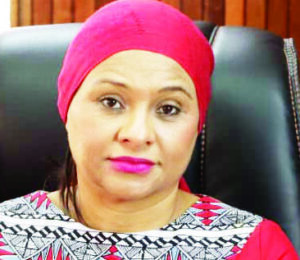
Last month, Water and Sanitation Minister Abida Mia told Parliament that government would resume implementation of the K500 billion Lilongwe- Salima Water Project on March 1 2024.
Responding to a question from Lilongwe City Centre Member of Parliament Alfred Jiya, Mia said government has already sourced funds for the project which, she said, would be implemented within 24 months.
“We have, so far, sourced funds from local banks but, as we go along, it is a bankable project. So, we will be getting a lot of interest in the project as we start, as we have already started getting expressions of interest from some people who are interested in investing in the project,” she said.
- Advertisement -
- Advertisement -
Mia said all processes were done, including environmental assessment.
“The environment assessment was done because we cannot embark on a project like this without knowing the environmental impact of the project,” she said.
She said once completed, the project would benefit many Malawians that stay on the stretch between Lilongwe and Salima.
“This project will reach out to people along the project route and also provide water for irrigation so that farmers along the way can be irrigating their crops throughout,” she said.
The project was halted for seven years due to, among other things, financing challenges.
It seeks to tap water from Lake Malawi in Salima to Lilongwe, where people from Salima, Dowa and Lilongwe are expected to benefit upon its completion.