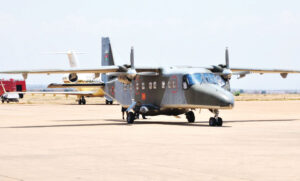
 The preliminary report on the tragic military aircraft crash that claimed the lives of former vice president Saulos Chilima and eight others has once again exposed the lack of seriousness among authorities when it comes to matters requiring meticulousness and attention to detail.
Our ongoing struggles with poverty, poor governance, low educational standards and a general lack of diligence in crucial issues stem from the fact that some individuals rarely fulfil their responsibilities.
Although the report is not definitive, it highlights significant issues that merit serious reflection as we await the final account.
For example, the report reveals that essential equipment was missing from the plane, which had previously transported high-profile individuals, including President Lazarus Chakwera and Chilima.
One would expect that while accidents are sometimes unavoidable, an aircraft carrying the country’s top officials would be thoroughly equipped and well-maintained.
- Advertisement -
I am not suggesting that the absence of the crucial equipment, as noted in the report following an investigation by German experts, directly caused the accident.
The investigators have pledged to deliver a comprehensive account once they complete some critical analyses.
Among their recommendations is that the Malawi Defence Minister should ensure that Malawi Air Force aircraft carrying officials are equipped with a functional Emergency Locator Transmitter.
Additionally, the investigators recommended that the Minister of Transport and Public Works ensure that up-to-date information regarding radio navigation aids in Malawi is always available to aircraft crews.
- Advertisement -
- Advertisement -
The Department of Civil Aviation was also advised to verify the proper functioning of radio navigation aids and update the relevant information in the Malawi Aeronautical Information Publication.
These measures should not have arisen as a result of the accident; they should have been implemented by government officials who are serious about addressing important issues.
It seems that only in Malawi would an aircraft transporting a vice president operate in such a careless manner.
Furthermore, while I am not an expert in aircraft operations, it seems that the outdated plane should have been reserved for military training and operations rather than VIP transport.
The reality is that numerous faults were found with that aircraft, making it unsuitable for transporting high-profile individuals, including a president or vice president.
Someone has clearly been neglecting their duties and should face appropriate consequences.
However, in Malawi, such expectations might be unrealistic. We have seen numerous public officials fail dramatically in their roles with little in the way of disciplinary action.
Meanwhile, the cause of the aircraft crash remains unclear and it might take some time before the complete truth is revealed.
In fact, it might never be fully disclosed, as the preliminary report indicates that crucial information about the plane’s conditions and conversations on board is still unavailable.
It is tragic that important lessons may only be learned after the death of a vice president, the second most important figure in the country.
Moreover, another potential disaster could be looming at our so-called international airports, whose equipment leaves much to be desired.
Recently, an Ethiopian aircraft was unable to land at Kamuzu International Airport due to a malfunction in electrical equipment meant to illuminate the runway.
In other countries, such an incident would prompt immediate and serious deliberation, with a swift resolution.
But in Malawi, there is no guarantee that the issue that prevented the plane from landing has been addressed.
Many critical issues, particularly those affecting human lives, are often inadequately managed.
It seems business as usual, as if we are not a serious country. Even when evidence shows that someone has failed in their duties, no meaningful action is taken against them.
Indeed, the recommendations made by the German experts are likely to be ignored, just as previous recommendations have been.
The death of a vice president in a plane crash should be a powerful impetus for change to prevent future tragedies. However, those in positions of responsibility may disregard this as merely another incident.
No one will likely be held accountable for negligence, as it is often overlooked by those who should be condemning it because they are complicit in its perpetuation.
And then there is another disaster: so many individuals have once again come forward to provide analyses on the cause of the crash, as long as it suits their long-held narratives.