



With seven years remaining for Malawi to attain Abuja Declaration and Universal Health Coverage (UHC) goals by 2030, over-dependence on donor funding has been cited as one of the threats.
More so because the goals are in line with the timeframe set out in Sustainable Development Goals (SDGs).
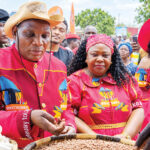
Out of the many people that fear for the goals, volunteer working for Kaigwazanga Tuberculosis (TB) Club in Mchinji District, Rhoda Mbeta, stands out.
“I am worried that low budget funding to the Ministry of Health and overreliance on donor funds in the health sector will affect Malawi’s ability to achieve sustainable health goals,” says Mbeta, a one-time TB patient who benefitted from a low-cost community lung rehabilitation programme.
“If donors had hesitated on funding the project, I would have been dead by now.
- Advertisement -
“After all, donors account for more than 70 percent of total health expenditures. If donors stopped funding the health sector now, there would be chaos. In fact, district hospitals such as Mchinji would be among the worst hit,” she hypothesises.
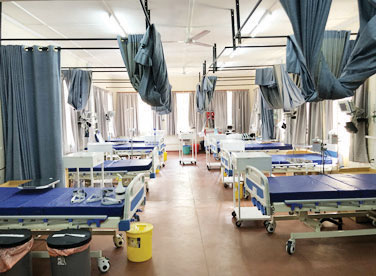
To make matters worse, she says, even the country’s referral hospitals depend on donors, which she equates to a man who depends on artificial legs borrowed from a neighbour.
Mbeta says that the moment the neighbour calls for the leg, it is game over.
Not that she is against donors; far from it. She just wants the government to show a little more commitment to the cause of health sector funding.
- Advertisement -
- Advertisement -
Through the Transforming Gender Pathways to Health for TB Programme, a donor-funded project aimed at leaving no one behind, she claims that the initiative saved her life after being diagnosed with TB.
Mbeta is just one of the people who are lucky to have been saved from one of the deadliest, but curable, diseases.
When one gets proper medication, life is saved.
Malawi is one of the countries that signed the Abuja Declaration, which states that governments should commit at least 15 percent of the national budget to the health sector which, if implemented, could have helped to improve funding for TB treatment. However, since the declaration was signed, the government has only managed to allocate an average of 9.8 percent of its total budget to the Ministry of Health, effectively failing to meet its obligation.
The Abuja commitment, calls and other declarations are aimed at combating Aids, TB and malaria in Africa. Other commitments include the Global Strategy for Women’s, Children’s, and Adolescent Health 2016-30; and the Catalytic Framework to End Aids, TB, and Eliminate Malaria in Africa by 2030.
Malawi Health Equity Network Executive Director George Jobe is equally pessimistic on Malawi’s chances of meeting the ambitious goals it is party to.
“The country has not set any milestones in order to move towards achieving goals of the Abuja Declaration. We are still hovering around 9 percent, which bears testimony that Malawi is failing to achieve Abuja Declaration, and other, goals,” Jobe points out.
He says Malawi has a long way to go to achieve such commitments.
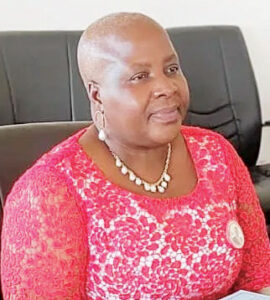
Minister of Health Khumbize Kandodo Chiponda acknowledges that the country’s health sector is highly dependent on external financing.
She also highlights the importance of continued aid to support health gains.
“Demonstrating improved governance, including building better relationships with stakeholders, is essential to achieving continued donor contributions and a more coordinated approach to the funding and provision of healthcare services in Malawi,” Kandodo Chiponda explains.
The Ministry of Health launched Health Sector Strategic Plan 3 (2022- 30) with the total cost of implementation estimated at $31.2 billion (K32 trillion).
The policy specifies the following objectives, to be met between 2022 and 2030: Strengthening the health system and achieving Universal Health Coverage (UHC) goals; improving service delivery by ensuring UHC of essential healthcare services, paying particular attention to vulnerable populations.
The others are providing effective leadership and management that is accountable and transparent at national and local authority levels; increasing health financing equitably and efficiently; and enhancing its predictability and sustainability; improving the availability of competent and motivated human resources for effective, efficient, quality, and equitable health service delivery; and improving the availability, accessibility and quality of health infrastructure, medical equipment, medicines, and medical supplies at all levels of healthcare.
Not just that; the plan also seeks to reduce risk factors for health and address social determinants of health and health inequalities as well as to strengthen capacity in health research and health information system management for evidence-based policy-making.
However, concerns have been raised about the predictability and sustainability of the healthcare service delivery system, especially in its ability to finance and achieve its health objectives.
Observers say significant improvements in service delivery cannot be made while the staff vacancy rate for healthcare facilities remains as high as 50 percent and some community members cover up to 35 kilometres on foot to get to their nearest facility.
They also say healthcare delivery is mainly via government facilities, which are currently at 63 percent and have some service limitations.
Healthcare services are also provided by Christian Health Association of Malawi (Cham), which are at 26 percent, and people have to pay a small user fee, which many people, especially those living in rural areas, cannot afford.
And Global Financing Facility (GFF) civil society members say if the Ministry of Health were to quickly disseminate the Malawi Health Strategic Plan (MHSP) and finalise operational plans, it could help in the utilisation and alignment of resources in the sector.

Health rights activist Maziko Matemba concurs, saying the Malawi Health Strategic Plan should be disseminated in order to prioritise resources.
Global Financing Facility Liaison Officer Kenas Kasinje says time has come for the Malawi Government to stop relying on donor support in the health sector, emphasising the need for proper domestic resource mobilisation.
This is happening when Malawi remains one of the poorest countries in the world, with a low per capita spending on health of $39.2, which is significantly lower than the sub-Saharan African average of $98.
Significant concerns regarding health sector governance, particularly around financial and resource efficiencies, and tensions between some government officials and stakeholders remain a challenge.
Malawi Health Strategic Plan (MHSP III) is motivated by Malawi 2063’s vision of self-reliance and outlines how the health sector will contribute to the human capital development and mindset-change pillars of the vision.
But, then, Malawian health funding statistics remain poor, and without donor funding, there would surely be chaos in the health sector.