Local councils have gone for three months without Other Recurrent Transactions (ORT) funding from the Central Government, a development that has crippled critical operations, an Analysis of the Third Quarter Fiscal Space for Local Governments in Malawi for the 2024-25 Fiscal Year has shown.
But Ministry of Finance spokesperson Williams Banda has told The Daily Times that the Accountant General (AG) has disbursed the delayed funds to all councils.
According to the analysis, which Malawi Local Government Association (Malga) has prepared, failure to access the funds has affected areas such as city roads maintenance, the devolved 10 percent drug funding and dualisation of Chileka Road.
It says local councils were expected to receive K13.8 billion in November and K7.8 billion in December, amounting to K21.67 billion in total.
This non-funding, according to the analysis, culminated in financial challenges in local councils, rendering them ineffective to deliver services such as public health, education and agriculture.
- Advertisement -
“Constituency Development Fund has the largest share of unfunded resources for the third quarter at K9.65 billion (45 percent of the total amount). City roads sector failed to access K4.4 billion, representing 20 percent of funds not transferred.
“The health sector did not receive funding for health ORT and the devolved 10 percent of health drugs amounting to K3.14 million and K624 million, respectively. The period under review is the beginning of the rainy season such that the failure by the Central Government to transfer the amount of K470 million to Local Government Authorities (LGAs) resulted into farmers failing to access agricultural extension services on time.
“Other devolved sectors such as Disaster, Forestry, Fisheries and Irrigation inclusive [sic] did not get funding amounting to K828 million for the two months for operations as the period under review is crucial and seasonal in nature,” the analysis shows.

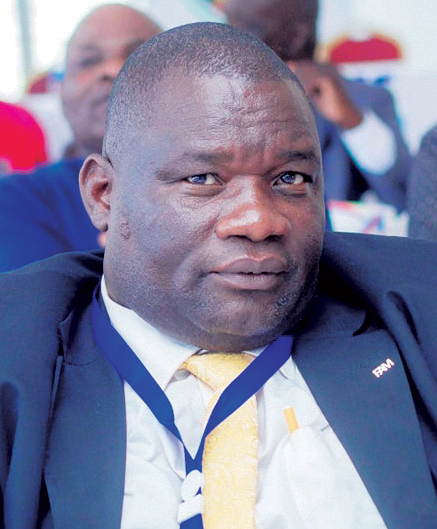
Malga Executive Director Hadrod Mkandawire said Wednesday that it was not true that the Accountant General had disbursed the funds.
- Advertisement -
- Advertisement -
“That is misrepresentation of facts. I guess the Ministry of Finance and Economic Affairs is being misled,” he said.
According to Mkandawire, it has been difficult for LGAs to provide public health services, including ambulatory services, patient feeding, cleaning services and even medical services.
He observed that the third quarter is the time the agriculture sector prepares farmers for the farming season.
“It is the time [the] Affordable Inputs Programme is affected as farmers plant their crops and apply fertilisers [to crops as part of] the rainy season.
“It has been very difficult to operate without operational funds which have, since November 2024, not been transferred to all the Local Government Authorities,” he said.
Mkandawire added that one of the main principles of devolution was that there should be fiscal autonomy of LGAs as envisioned in the Constitution of the Republic of Malawi and the Local Government Act, Chapter 22:01.
He added that the revised Decentralisation Policy of 2024 has highlighted this.
“We, therefore, reiterate our persistent and long call for the Central Government to adhere to the provisions of the Decentralisation Policy 2024 which, among other things, provide that the [Central] Government shall share ceded revenue with Local Government Authorities.
“In addition, the Central Government should consider making a policy shift on local taxes by leaving some taxes to Local Government Authorities, which would enhance the sources of revenue for the Local Government Authorities,” Mkandawire said.
Furthermore, Mkandawire urged the Treasury and the National Local Government Finance Committee to ensure that resources for development and operations that are meant for LGAs are prioritised because they are meant to reach out to local communities.
“The population of Malawi lives in Local Government Authorities and this calls for optimal service delivery in all key sectors of the economy. Service delivery is only possible with adequate financial resources for LGAs.
“We can only achieve the Malawi 2063 agenda of [becoming] an upper middle-income country if public resources are equitably and efficiently transferred to LGAs for local governance, local development and sustainable rural and urban livelihoods,” he said.

Meanwhile, Centre for Social Accountability and Transparency Executive Director Willy Kambwandira has called on the Central Government to take responsibility for the persistent funding challenges facing local councils.
Kambwandira noted that councils’ inability to provide basic services was an indication of inadequate funding.
“The blame game will not solve Malawi’s service delivery crisis. The reality is that district councils are struggling to provide basic services, and it is clear that funding is a major issue.
“This is not the first time we have heard about funding challenges and it is time for the government to take responsibility and address the problem. The Treasury needs to provide a clear explanation for the delays and come up with a plan to ensure consistent funding for local councils,” Kambwandira said.
However, Treasury spokesperson Banda maintained that the AG’s office had disbursed the delayed funds to all councils.