





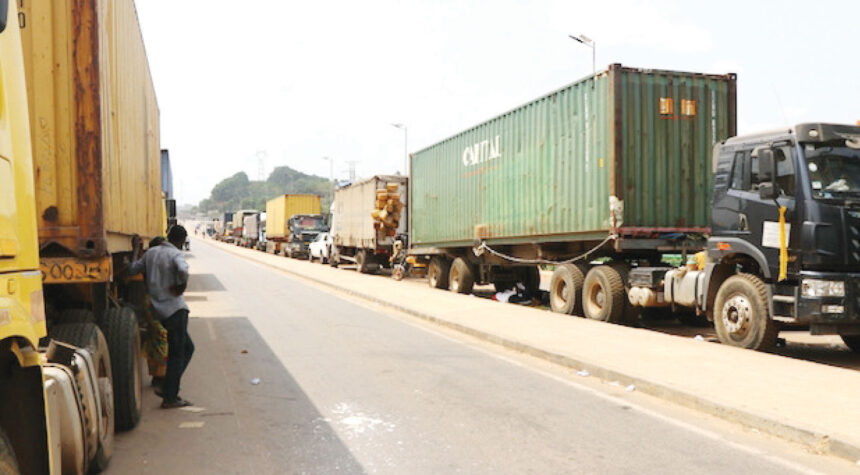
By Unep:
Trucks and buses contribute to economic growth, but stringent regulations are needed to curb their emissions causing major environment and health impacts, a report finds.
While heavy-duty vehicle (HDV) exports represent a modest 3.6 percent of the global automotive trade’s total value, their associated carbon emissions have surged by over 30 percent since 2000, with trucks contributing 80 percent to this increase.
Moreover, HDVs participate substantially to environmental pollution, accounting for over 40 percent of on-road nitrogen oxides (NOx) emissions, over 60 percent of on-road particulate matter (PM 2.5), and more than 20 percent of black carbon emissions, as revealed in the latest report by the UN Environment Programme (Unep).
The report ‘Used Heavy Duty Vehicles and the Environment – A Global Overview of Used Heavy- Duty Vehicles: Flow, Scale and Regulation report’, jointly launched by the Unep and the Climate and Clean Air Coalition (CCAC), provides a first global overview by the UN of the scale and regulation of used HDVs and their contribution to global air pollution, road accidents, fuel consumption and climate emissions.
- Advertisement -
The report recommends ways to reduce the harmful aspects of used HDVs on people’s health and the climate.
According to the study, HDVs are projected to considerably continue to grow with increasing economic activities and the need to move people and goods. This is based on past trends where global sales of trucks and buses doubled in 15 years (2000-2015).
Many developing countries rely on used heavy duty vehicles (HDVs) imports to grow their fleet.
While this promotes more affordable means to increasing mobility needs in these countries, the report finds that regulation and enforcement on the quality of used HDVs imported are either low or non-existent.
- Advertisement -
- Advertisement -
Further amplifying their impacts, especially in the case of old, polluting, and unsafe used HDVs.
To date no country has minimum requirements for exporting used HDVs. The report finds regulations in over half of used HDV importing countries to be ‘weak’ or ‘very weak’ and enforcement to be inadequate.
For example, while 25 African countries have adopted standards on used HDVs towards air pollution control, climate mitigation and improved road safety, only four have fully implemented these. Worldwide, only two countries have included used vehicles in their national climate action plans (NDCs).

Rob de Jong, head of Unep’s Sustainable Mobility Unit, said: “Trucks and buses contribute to economic growth just about anywhere in the world, but ambitious regulations are needed to curb their emissions causing major environment and health impacts. Introduction of cleaner bus technologies can be a major driver for the global revolution to low and, ultimately, zero emissions transport.”
The report emphasizes that it is a shared responsibility of importing and exporting countries to ensure cleaner and safer used vehicles are on the roads of developing countries.
It shows the need for regional cooperation for introducing and enforcing minimum standards, such as emission standards and age limits, raising public awareness, and more research, for both environment and road safety benefits.
For example, by adopting Euro VI equivalent vehicle emission standards and cleaner fuels, as much as 700 thousand premature deaths can be avoided by 2030.
Currently 97 per cent of all newly registered trucks and 73 per cent of buses in the EU run on diesel. Better regulations on used HDVs can also lead to a leapfrog and greater uptake of advanced technologies in developing countries, including electric buses and trucks.
The report represents a first effort of quantifying and qualifying used heavy-duty vehicle flows, based on export data from Japan, the European Union, and Republic of Korea – altogether representing about 60 per cent of the total new and used HDV export market – to 146 predominantly low- and middle- income countries.
The report has limitations, most notably discrepancies in statistics, as well as lacking publicly available data from the USA, which does not separate exports of new and used vehicles, and China, an emerging exporter.
The report makes following key findings:
- The global sale of new and used HDVs doubled between 2000 and 2015, with CO2 emissions increasing by about one third in the same period. 2018 saw the peaking of the export of both new and used HDVs, however, 2019 and 2020 saw a decline due to the COVID-19 pandemic.
- In 2015, 6.3 million new and used HDVs were sold globally. Among which, 3.4 million units were newly manufactured, making used HDVs account for nearly half of the total sales.
- The major exporters of new and used HDVs are Japan, the EU, ROK, Mexico, the US, and China. Notably, Japan, the EU and ROK collectively make up about 60 percent of the total new and used HDVs export market share. In terms of used HDVs, these three exported about 2.4 million units between 2015 to 2020.
- In terms of value and volume, between 2015 and 2020, Japan was the largest exporter of used HDVs, exporting around 1.3 million units (about 67,000 used buses and 1.2 million used trucks).
- In the same time span, the EU exported close to 1 million used HDVs (75,000 used buses and 898,000 used trucks).
- In addition, 1 million used HDVs were traded within the EU. Used HDVs exported from, and traded within the EU together had a value of US$ 21 billion. ROK exported about 134,000 used HDVs globally (106,000 used buses and 28,000 used trucks) worth US$ 850 million in the same period.
- A significant share of used HDVs (60 percent) is traded in high income or upper-middle-income countries. One-third of the total global used HDVs is absorbed within the EU, 20 percent is exported to Africa, another 20 percent to Asia-Pacific and the rest is exported to the other regions.
- Even though HDVs are significantly fewer in number compared to light duty vehicles (LDVs) in countries across the world, they are a major contributor to: air pollution, road accidents, high fuel consumption, and climate emissions (black carbon, CO2, etc.)