




By Justin Mkweu:
Mulhakho wa Alhomwe is an annual cultural festival celebrated among the Lhomwe people.
That said, the festival attracts the attention of people from all walks of life, who gather for three days at Chonde in Mulanje district.
This year, the festival was held from October 16 to 18, with the main event on the 18th.
The festival is popular for many reasons but whenever someone mentions it, the first thing that comes into the mind of the person is the diverse herbal medicines that flood the festival.
- Advertisement -
While the herbal medicines have different works they perform when consumed, the most popular ones are those that are said to boost a person’s sexual drive.
In an interview prior to this year’s event, chairperson for Mulhakho wa Alhomwe Cultural Organisation, Mchanakwaye Mpuluka, boosted of the festivals richness in herbal medicine, inviting people not to miss the occasion to boost their sexual drive.
“We have brought many innovations into the festival and people should expect more herbal medicine such as Gondo Gin, which is Gongolosi mixed with alcoholic beverage Gin and it is doing wonders,” Mpuluka said.
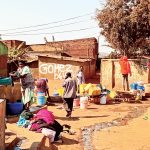
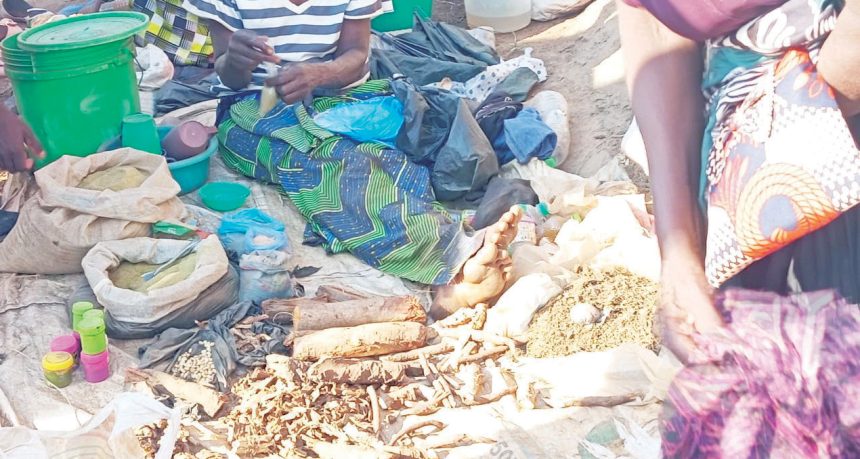
On the day of the event, the promise of the availability of herbal medicine was fulfilled with heavy availability of herbal medicine, which people from surrounding villages were selling.
- Advertisement -
- Advertisement -
One of the traders of the medicine was John Magasu, who calls himself Dr. Magasu.
He said he was selling Tseketseke, Mchape, Mthubulo, Tambala and many other herbal medicines.
When asked about the dosage of Mchape, which he said cleans the body of all toxins, he could not explain much, apart from saying one needs to finish 500 milliliters of the liquid he mixes with wood skin, roots and leaves.
“Just make sure you finish this bottle and, then, you are clean, whether you will be taking it slowly or you will take it all at once even right here—it does not matter. What matters is finishing the bottle,” he said.
However, medication needs to have proper prescriptions and the first part of medical prescription is diagnosis, which, in this case, does not happen.
That is probably what drove the Kamuzu University of Health Sciences (Kuhes) to dedicate the Science Café during its 2026 Research Dissemination Conference, held in Blantyre, to herbal medicine discussions.
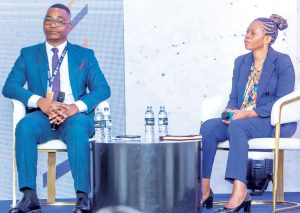
The café was held under the theme ‘Traditional, Complementary, and Alternative Medicine in Malawi: Opportunities, Challenges, and Pathways for Health System Integration’.
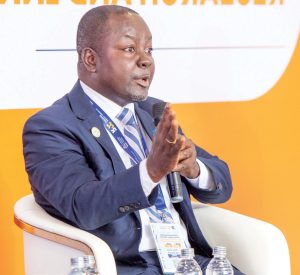
It had panelists such as Head of Department for Herbal Medicine at the Kwame Nkrumah University of Science and Technology in Ghana, Professor Isaac Kingsley Amponsah, and Ministry of Health Deputy Director of Curative and Medical Rehabilitation (Clinical Practice), Dr. Nitta Chinyama Nayeja.
The other panelists were Pharmacy Medicines Regulatory Authority (PMRA) Director General Charles Chimenya and Beatitude Naturopathy and Wellness Centre Director Francis Malunga.
Amponsah started by giving the context of Ghana, saying Malawi can learn how their country has translated their traditional knowledge into products, thereby practising herbal medicine in a safe environment.
He said they got traditional knowledge, tested it in the laboratory, develop a product out of it and send it to clinics for the safer use of people.
“Malawi should invest in research to translate traditional knowledge into products and the country should have laws that will govern the practice and define what the country can and cannot do,” he said.
The herbal medicine expert believes that Malawi has the potential to develop products from herbal medicine, indicating that the country has several medicinal plants, researchers at universities and the willingness by the government.
“It is never late to start and it is always one step at a time because it has not been an easy journey for us. So, even as Malawi takes this step, there will be some bottlenecks here and there but there is always a way,” he said.
Malunga, who was a panelist, representing naturopathic nursing practitioners in the country, said the government has shown commitment to support traditional medicine but what needs to be done is education.
He added that no one should be left behind by categorising people into groups, according to levels of their capacity.
“Malawi has huge potential because we have herbal medicines which are powerful and we are not using chemicals, comparing to other countries.
“People are coming, taking out our medicine and we go there and buy [it] in [the form of] pills and capsules but if everything is put in place, our herbal medicine can create jobs and have medical tourism,” he said.
The Malawi Government has shown commitment to develop herbal medicine in the country with commitments made at world stages.
At the second WHO Global Summit on Traditional Medicine, Malawi pledged seven key national commitments to regulate and integrate traditional and complementary medicine (TCM) into its health system by target dates ranging from 2026 to 2028.
The commitments are that the country will have the National Traditional Medicine Policy revised by December 2026, Malawi Traditional Medicine Act enacted by December 2027, Malawi Herbal Medicine Regulatory Guidelines gazetted by December 2026, and National Laboratory for Herbal Quality Control established by 2027.
The other commitments are that Malawi will have a Registration System for Herbal Medicines established by June 2027, National Traditional Medicine Research Centre established by December 2028, and training programme for herbal medicine practitioners developed by December 2026.
Ministry of Health Deputy Director of Curative and Medical Rehabilitation (Clinical Practice) Dr. Nitta Chinyama Nayeja said in an interview that these commitments remain.
As part of its contribution towards the sector, Kuhes Executive Dean for the School of Life Sciences and Allied Health, Professions Associate Professor Arox Kamng’ona, announced that they would introduce a Bachelor of Science Degree in Herbal Medicine.