By using this site, you agree to the Privacy Policy.
Accept
The Times GroupThe Times Group
  • Home
  • National
    National
    Get the latest National News from your trusted source.
    Show More
    Top News
    Passport deadlock
    February 28, 2024
    Health sector funding woes
    March 23, 2026
    Rising water levels hit hotels, houses
    March 8, 2024
    Latest News
    Malawi Government-owned houses put on rent in Zimbabwe
    November 7, 2026
    More than 30 Malawians stuck in US ‘detention’
    November 7, 2026
    Forex hitch chokes drug supply
    November 6, 2026
    AI must serve humanity—Government
    November 6, 2026
  • Business
    Business
    Breaking news and analysis on business and the economy, including the latest news in technology, stock markets, media and finance.
    Show More
    Top News
    Reserve Bank of Malawi launches risk-based supervision for insurers
    June 25, 2024
    Bank supports Small and Medium Enterprises growth
    July 9, 2024
    Standard Bank commits to innovation, creativity
    July 22, 2024
    Latest News
    Import bill grows by 11.3% to $3 billion
    November 6, 2026
    ‘Fuel permit suspension could disrupt production’
    November 5, 2026
    Government turns to household solar
    November 5, 2026
    Minister warrants secure investment environment
    November 5, 2026
  • Entertainment
    Entertainment
    Your source for entertainment news, celebrities, celeb news, and celebrity gossip. Check out the hottest fashion, photos, movies and TV shows!
    Show More
    Top News
    Paragon Arts serves ‘Shattered Silence’
    January 31, 2025
    Valentine show raises K17m for needy students
    February 18, 2025
    Tay Grin loses property in fire accident
    March 5, 2025
    Latest News
    First Couple mourns Jack Mapanje
    November 6, 2026
    Film industry in solid progression
    November 4, 2026
    St Pius Choir rekindles six decades of melody
    November 3, 2026
    Nigerian star in no-show as Theresa’s concert soars
    November 2, 2026
  • Sports
    Sports
    Keeping you up to date on the latest sports news from Malawi and around the World. With live scores, fixtures from world of Football, Netball,…
    Show More
    Top News
    Tabitha Chawinga nominated for France top award
    April 25, 2024
    Blantyre derby grosses K80.4 million in gate revenue
    May 6, 2024
    FCB Nyasa Big Bullets to weigh Cecafa options
    May 17, 2024
    Latest News
    Mpira Stadium playing surface ‘overused’
    November 7, 2026
    Dedza Dynamos risk losing sponsorship
    November 6, 2026
    Bravehearts stumble in BAL qualifiers
    November 6, 2026
    Analysts say Kalisto Pasuwa lacks consistency
    November 6, 2026
  • fyi
Search
More Categories
  • World
  • Features
  • Leisure
  • Social and Human interest
  • Digital & Technology
  • Advertise
  • About Us
  • Privacy Policy
  • Contact Us
© Copyright 2026, The Times Group. All Rights Reserved.
Reading: Here’s how to help earthquake-hit Morocco reduce the risk of disease
Share
Sign In
0

No products in the cart.

Notification Show More
Latest News
Malawi Government-owned houses put on rent in Zimbabwe
National
More than 30 Malawians stuck in US ‘detention’
National
Mpira Stadium playing surface ‘overused’
Sports
Forex hitch chokes drug supply
National
AI must serve humanity—Government
National
Aa
The Times GroupThe Times Group
0
Aa
Search
  • Home
  • National
  • Business
  • Sports
  • Entertainment
  • Features
  • World
  • Digital & Technology
  • Leisure
  • Social and Human interest
  • Times Radio
  • Read e-Paper
  • Exclusive Content
  • Dzuka Publishing Company Limited
Have an existing account? Sign In
Follow US
  • Advertise
  • About Us
  • Privacy Policy
  • Contact Us
© Copyright 2026, Times Group Media. All Rights Reserved.
The Times Group > Blog > Features > Here’s how to help earthquake-hit Morocco reduce the risk of disease
Features

Here’s how to help earthquake-hit Morocco reduce the risk of disease

Times News
Last updated: 2023/09/13 at 9:32 AM
Times News
Share
6 Min Read
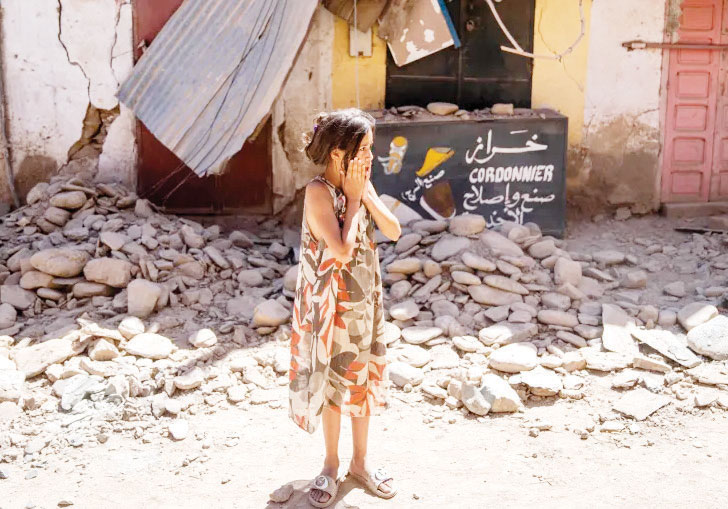
DEVASTATED— A girl reacts after inspecting the damage caused by the earthquake in her town of Amizmiz, near Marrakesh— AP
SHARE

To stay alive, earthquake survivors need access to clean drinking water and proper sanitation services as a priority CATARINA DE ALBUQUERQUE writes:

Morocco is reeling in the aftermath of an earthquake that has killed more than 2,600 people. The survivors, who are being pulled from the dust and rubble, are in critical need of shelter, food and medical assistance.

But one critical priority stands out among the rest: to keep earthquake survivors alive, they need access to clean drinking water and proper sanitation services.

When large-scale earthquakes strike, they often cause wide-scale damage to water networks, sewage systems and basic hygiene infrastructure. Mud and debris can bury critical infrastructure, paralysing entire water systems for months.

- Advertisement -

Ad image

The lack of these services increases the number of infections and drives up maternal mortality rates. It also fuels waterborne diseases like cholera, typhoid and diarrhoea, which rip through communities and kill children under five at a rate 20 times higher than war.

- Advertisement -

As the former United Nations special rapporteur on the human rights to clean water and sanitation, this is a case of déjà vu for me.

From Nepal to Haiti, and from Pakistan to Turkey and Syria, I’ve watched similar scenarios play out time and again.

In many of these crises, reports have emerged of earthquake survivors covered in grime, unable to shower and disinfect wounds. Toilets, when they exist, are often scarce in overcrowded emergency shelters. Without access to sanitation facilities, people have no other choice but to defecate outside. Women and girls are forced to manage their periods without privacy or access to sanitary products.

So what can we do?

- Advertisement -

First and foremost, humanitarian teams working in the parts of Morocco affected by the earthquake should act promptly to establish temporary latrines, deliver clean drinking water, and provide households with items like collection drums, filters and purification tablets. Hospitals should be equipped with portable handwashing stations, disinfectants and essential hygiene supplies.

Second, we need to take a look at our own communities and ensure that we are adequately prepared for any future earthquake. According to the US Geological Survey, we can expect 16 major earthquakes in the magnitude 7 range or greater on average each year. An estimated 62 percent of us live in countries with a significant seismic hazard.

Simply put, many if not most of us won’t be able to avoid earthquakes, but we can learn from previous mistakes.

That starts with making our countries as self-reliant and resilient to natural disasters as possible, which cuts down on critical wait periods from humanitarian teams and gives earthquake victims their best chance of survival.

We can also learn from countries around the world that are already investing in solutions. For example, following Japan’s devastating earthquake in 2011, the country’s Ministry of Health, Labour and Welfare made the renewal and seismic resistance of water infrastructure a top priority, installing ductile pipes that can withstand high impacts. In the United States, Los Angeles, which sits on a major fault line, has followed suit.

In New Zealand, learning from the sanitation challenges faced during the Christchurch earthquake in 2011, scientists, government officials and the Wellington water network have banded together to launch an emergency sanitation plan that anticipates a major wastewater system failure. The plan aims to make residences self-sufficient for seven days following a crisis until emergency teams can restore services. They’ve also begun piloting compostable toilets that can be deployed in a disaster.

Other good practices include installing earthquake-resilient water sources, when possible, at schools and community centres, which may serve as makeshift shelters in a disaster.

Ensuring that water and sanitation systems are earthquake-resilient should not be viewed as an extravagance but as a crucial investment in sustainable development. This is especially so since the cost of inaction is high and extensive crisis recovery can cripple economic growth. For reference, a 6.7 magnitude earthquake in 1994 cost Los Angeles $40m in repairs.

The UN High-level Experts and Leaders Panel on Water and Disasters has developed financing strategies to help governments proactively replace aging infrastructure.

Most importantly, governments need to act now to incorporate water, sanitation and hygiene into emergency response plans and long-term investment and planning. This starts by tapping into the expertise of utilities and regulators, exploring new technology and innovations from the private sector, pulling data and analysis on earthquake hazards from researchers, and partnering with NGOs on crisis strategies.

The earthquake in Morocco reminds us yet again of the urgent accountability governments have to citizens when it comes to upholding their human rights. We must give people the tools for survival, resilience and recovery.

We can begin with a drop of preparation.— Al Jazeera

You Might Also Like

Mponela 2 Primary School battles for dignity

Eyes on Commonwealth leaders’ meeting

Quenching thirst in trash: Residents turn to polluted rivers for water

Herbal medicine under scrutiny

Nkhata Bay beyond the blue: From Dwambazi to Usisya

TAGGED: Cholera, Earthquake

Sign Up For Daily Newsletter

Be keep up! Get the latest breaking news delivered straight to your inbox.

By signing up, you agree to our Terms of Use and acknowledge the data practices in our Privacy Policy. You may unsubscribe at any time.
Times News September 13, 2023
Share this Article
Facebook Twitter Copy Link Print
Share
Previous Article Mighty Mukuru Wanderers seek revenge against Kamuzu Barracks
Next Article We are ready for Sand Music Fest, says Soldier
Leave a comment Leave a comment

Click here to cancel reply.

Please Login to Comment.

Stay Connected

554.5k Followers Like
120.8k Followers Follow
5.5k Followers Follow
28.6k Subscribers Subscribe

Latest News

Malawi Government-owned houses put on rent in Zimbabwe
National November 7, 2026
More than 30 Malawians stuck in US ‘detention’
National November 7, 2026
Mpira Stadium playing surface ‘overused’
Sports November 7, 2026
Forex hitch chokes drug supply
National November 6, 2026
//

The Times Group is a multi-award winning media group and the only 360 media house in Malawi.

About Us

  • Company Profile
  • Rate Cards
  • Vacancies
  • Privacy Policy
  • Contact Us

Quick Links

  • e-Edition
  • Times Radio
  • Subscribe for Exclusive Content
  • Submit a Story
The Times GroupThe Times Group
Follow US

© Copyright 2026, The Times Group. All Rights Reserved.

  • Advertise
  • About Us
  • Privacy Policy
  • Contact Us

Removed from reading list

Undo
Welcome Back!

Sign in to your account

Lost your password?