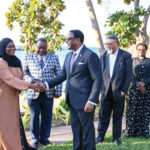
Britain and UN Women have expressed concern over the “increasing commercialisation of politics” in Malawi.
They warn that the high cost of campaigning is pushing women out of the race.
Speaking during a feminist dialogue on women’s political participation, gender equality and democratic governance, held at the British ambassador residence in Lilongwe yesterday, stakeholders raised alarm over the prohibitive costs involved in contesting for political office— estimated at over US$50,000 per candidate.
British High Commissioner to Malawi, Fiona Ritchie, described the situation as a “tough barrier to tackle”.
She noted that while both male and female politicians face campaign costs, the burden is heavier on women due to existing gender inequalities.
- Advertisement -
“A lot of women don’t have access to their own financial resources. For many aspiring women candidates, that US$50,000 just seems impossible. It’s going to stop them from even considering a political career,” said Ritchie.
She said the dialogue served as a platform for women and their allies to openly discuss barriers they face and explore ways of increasing female representation in Parliament.
“I think it’s time we had a broader conversation about what politics is for in Malawi.
“We need to move away from a system where success depends on handouts and focus instead on a candidate’s vision and ability to deliver meaningful change,” Ritchie said.
- Advertisement -
- Advertisement -
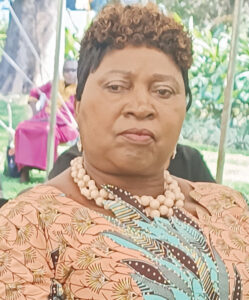
Minister of Gender, Jean Sendeza, echoed the sentiments.
She lamented the economic disadvantages that most women face, noting that “poverty has a woman’s face” in the country.
Sendeza shared a real-life example of an aspiring female candidate who reportedly spends K150,000 per day on community activities just to remain relevant in her constituency.
“Who can sustain that for three months? This is just unbelievable. We can’t continue like this. We must get rid of the ‘handout spirit’ in Malawi,” she said.
She urged voters to focus on the substance of candidates’ manifestos instead of short-term material benefits.
“We should be voting for people based on what they bring to the table in terms of development and change— not who has given the most handouts,” she said.
UN Women also weighed in on the discussion, stating that the dialogue aimed to highlight both the challenges and successes of women in politics while generating actionable solutions.
“This was an opportunity to hear the real experiences of women trying to participate in politics—what works and what hinders them.
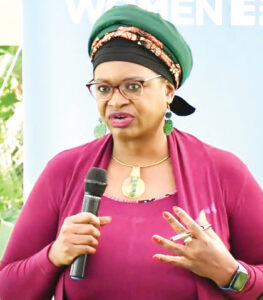
“The cost of elections came out strongly as one of the biggest barriers,” said UN Women representative in Malawi, Letty Chiwara.
Media Council of Malawi Executive Director Moses Kaufa suggested systemic reforms that would level the playing field and dismantle financial barriers that have kept many competent women away from public office.
While women struggle for political seats, they have emerged as the ultimate power brokers in terms of numbers of those registered to vote.
According to data from the Malawi Electoral Commission (Mec), out of the 7.1 million people who have registered to vote, over 4 million are women—an unprecedented 57.2 percent of the total voter roll.
Mec’s final phase of voter registration saw women turn out in record numbers. Over 1.4 million women registered, compared to just over 1 million men. Overall, 65.4 percent of the expected voters completed the registration process—but women exceeded expectations, registering at 70.4 percent of their projected numbers, while men lagged behind at 59.6 percent.
Despite their electoral strength, women in Malawi continue to struggle for a seat at the decision-making table.
In 2019, women accounted for 55.4 percent of voters but won just 20.8 percent of parliamentary seats. This under-representation has been a persistent issue.
In 1994, women made up only 6 percent of MPs. In 1999, the figure rose to 11 percent. It increased slightly to 13.5 percent in 2004, making a historic leap to 22.3 percent in 2009 before slumping again to 16.6 in 2014.
In 2019, the figure rose to 23 percent.