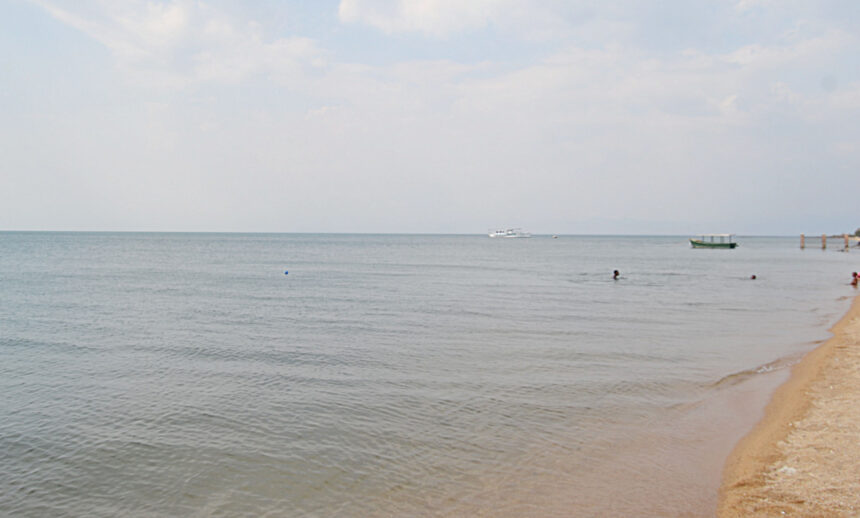
The place is Matumbi Beach, a fishing village in the area of Senior Chief Kanyenda in Nkhotakota District on the shores of Lake Malawi.
The setting is a public inquiry by the Malawi Human Rights Commission (MHRC) on the pervasive issue of sex for fish.

The inquiry panelists are High Court Judge Fiona Mwale, MHRC commissioners Viwemi Chavula, Theresa Ndanga, Andrew Kavala and Executive Secretary Habiba Osman.
Testifying from behind the curtain to avoid public shame, about nine brave women narrate how the practice is conducted.
Among other things, the women claim that the high demand for fish, coupled with low supply of the commodity, makes it a challenge for them to buy the fish using normal channels.
- Advertisement -
“After failing to buy fish for a month, I was told that the only way to buy fish was by having sex with the boat owner, which I did. We have slept together four times now,” narrated one woman.
A second woman admits having engaged in unprotected and sex for fish, a development that resulted in her having a child whose father denied responsibility and fled.
The third woman tells the inquiry that she had engaged in such exchanges with four different men when fish became scarce.
But a male witness tells the inquiry that, in many cases, women initiate these exchanges, coercing fishermen into having sex with them when they cannot pay for the fish they purchase.
- Advertisement -
- Advertisement -
“When we ask them about our money, some women show us their private parts and we end up falling for them and having sex,” he said.
The revelations from Matumbi Beach in Nkhotakota could be shocking to many Malawians living inland but may not be very terrifying to people living along the lakeshore or major rivers where fish is caught and sold.
For example, at Bulawayo Beach in Nsanje District, women exchange sex for milamba and makakana.
Nsanje District Aids Coordinator, MacKnowledge Tembo, said the practice is fueling the spread of HIV among young girls aged between 15 and 24.
“A recent study has revealed that HIV prevalence is on the rise again among girls aged between 15 and 24,” Tembo said during the commemoration of this year’s International Condom Day held at Sorgin Market in the district.
According to Nsanje District Condom Coordinator John Maganizo, the increase in new HIV infections is a cause for concern.
“We have reached a critical level in managing HIV in the district and, as such, the increase in new infections is a cause for concern,” Maganizo stated.
A Vulnerability of female fish traders to HIV and Aids Along the Fish Market Chain of the South-Eastern Arm of Lake Malawi Analysis Report by P. Kambewa, J Nagoli and S.M.C Hüsken notes that there are two types of women who are found to be involved in transactional kinds of relationships.
“There are single women who are resident to the beaches. These women rely on fish trade as a major source of livelihood. It is common for these women to be more aggressive in getting fish, as it is a source of their survival.
“Secondly, there are female traders from either the urban areas or other beaches who might also engage in fish for sex relationships in order to reduce their operating costs for the days they spend at a fish landing site,” the report reads.
It adds that in all the beaches visited, it was reported that preference for fish-buying is given to women from the beach and not to outsiders.
“Thus an outsider would sometimes resort to offering sex to boat owners or crew members so that they can be given preferential treatment.
“When fish catches are low, these tendencies will increase compared to when there is a good catch with enough fish for sale,” the report says.
Malawi has in recent years made significant strides in attaining positive outcomes in the HIV and Aids response.
By June 2023, a total of 952,011 people were aware that they were living with HIV. Out of these, 937,994 were initiated on the life-prolonging ARVs and of those initiated on the ARVs, 872,334 had their viral load suppressed. This represents a 95:99:93 performance against the UNaids 95:95:95 treatment targets.
The country has further managed to reduce the number of Aids-related deaths by 67 percent from around 36,000 in 2010 to 12,000 in 2022 and new infections by 72 percent from around 56,000 in 2010 to around 16,000 in 2022.
In addition, the country has reduced adult HIV prevalence rates among people aged between 15 and 49 years from 10.6 percent to 7.1 percent between 2010 and 2022.
Speaking at Mkaika Primary School Ground at 2023 Joint World Aids Day and International Candlelight commemoration events, National Aids Commission Board Chairperson Chipo Kanjo said despite the successes recorded in the HIV fight so far, there are still some population groups such as Adolescent Girls and Young Women (AGYW) and Key Populations where new HIV infections are still high.
This, Kanjo said, calls for reinforcing the HIV prevention efforts such pre-exposure prophylaxis (PrEP), condom distribution to the last mile and voluntary male medical circumcision (VMMC), just to mention a few.
According to Kanjo, Malawi can only end Aids if communities are included in leading the way.
“Communities have been key in the HIV and Aids Response as they connect people to the nearest health facilities, conduct community mobilisation and hold providers and duty bearers accountable.
“It is in light of the above that the government, in collaboration with civil society, decided to have this commemoration in Kanyangale Village, a community dominated by fishermen here in Nkhotakota, to indeed take messages to the grassroots for continuous action,” Kanjo said.
MHRC Executive Secretary Habiba Osman says there is a need for intensified interventions to address the problem of sexual abuse along lakeshore areas, following testimonies on sex for fish presented during a public inquiry.
According to Osman, the insufficient emphasis on addressing transactional sex within fishing communities has led to increased vulnerability for women, with men often evading responsibility when such women become pregnant.
She said they decided to bring along the Judiciary in the inquiry so that they hear for themselves about the cases and that they know how best to handle them in court.
One thing, for sure, is that sex for fish is real and, as demonstrated in Nsanje, it is fueling the spread of HIV.
The Malawi Gender Equality Act of 2013 prohibits sexual harassment with a penalty of roughly $1,000 (about K1.7 million) and a five-year jail term.
It is high time law enforcement agents got tough to ensure that Malawi does not lose more future leaders to HIV.