When she wakes up, what lingers in her mind is fish.
This is the life of Mercy Phiri, who has been a fishmonger on the island district of Likoma since her 20s.
She points out that apart from various challenges associated with the business, keeping her money safe has been a headache.
Mostly, she said, the money is kept in their homes, a risky endeavour exposing the currency to theft or other misfortunes such as fire.
“Whenever we sold our fish upland, we came home with huge stacks of money, which was not safe. Some people here believe in superstition, and our money could be stolen in that way. Apart from that, there are thieves on Ilala who know who has money and find ways to steal it. This affects us as traders,” she said.
- Advertisement -
Similarly, Emmanuel Kalande, one of the biggest fishermen on the island, added that money kept in cash does not earn interest, unlike deposits in banks.
“Holding cash exposes money to the risk of inflation. Over time, the purchasing power of cash decreases as prices rise, eroding the value of savings. Conducting large transactions in cash can be cumbersome and unsafe. It also increases the risk of errors and miscalculations, and without financial discipline, you end up spending carelessly,” he said.
Fishing is the primary livelihood for most inhabitants on Likoma Island, a district with over 18,000 people.
Despite the seemingly low population, money is in high circulation on the island, evidenced by good housing and a relatively high cost of living. The district also includes Chizumulu Island.
- Advertisement -
- Advertisement -
Since its establishment as a standalone district from Nkhata Bay in 1999, Likoma has lacked adequate banking services, compelling residents to store their money at home.
The absence of a bank also hit hard those employed by the government or non-governmental organisations (NGOs).
These workers had to travel to mainland areas such as Nkhata Bay or Mzuzu to access banking services and withdraw their salaries.
Given the limited schedule of Malawi’s sole passenger ship, Ilala, this often meant spending up to a week away from home, adding travel and accommodation costs to their burdens.
Austin Chirambo, who works with Find Your Feet, said this contributed to work piling up.
“Every month, having a week of travel to collect your salary is a waste of time,” he said.
However, the recent opening of an FDH Bank branch has changed the narrative.
Locals say the new branch promises to provide much-needed banking services locally, reducing the need for long and costly trips to the mainland. According to Chirambo, the presence of FDH Bank is expected to enhance financial security and convenience for them, marking a significant step forward in the district’s economic development.
The bank, which opened in March this year, says it has already registered significant deposits and accounts for both individual and institutional clients.
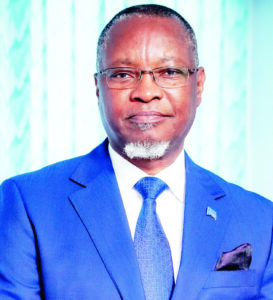
“The numbers are expected to grow multiple times by the end of 2024. Customers have successfully taken up our services, including ATM cards and mobile banking. Our ATM on the island is also successfully servicing customers of other banks, easing the challenge of always needing to travel across the island to access cash for both FDH customers and non-FDH customers.
“FDH is here to stay and this is a dream come true, in line with the bank’s purpose to provide easy access to financial solutions that help our community grow with us,” said Noel Mkulichi, the bank’s managing director.
Meanwhile, Likoma District Council Director of Planning and Development, Yohane Bilesi, has hailed FDH for breaking the record and helping improve financial security for the islanders.
“This is a milestone towards economic development. The availability of banking services can stimulate local businesses by providing them with access to capital. Entrepreneurs can obtain loans to start or expand their businesses, leading to job creation and economic development on the island,” he said.
The council is upbeat that with the arrival of FDH Bank, Likoma Island is poised for a brighter and more secure financial future, ensuring that the community’s prosperity continues to grow.