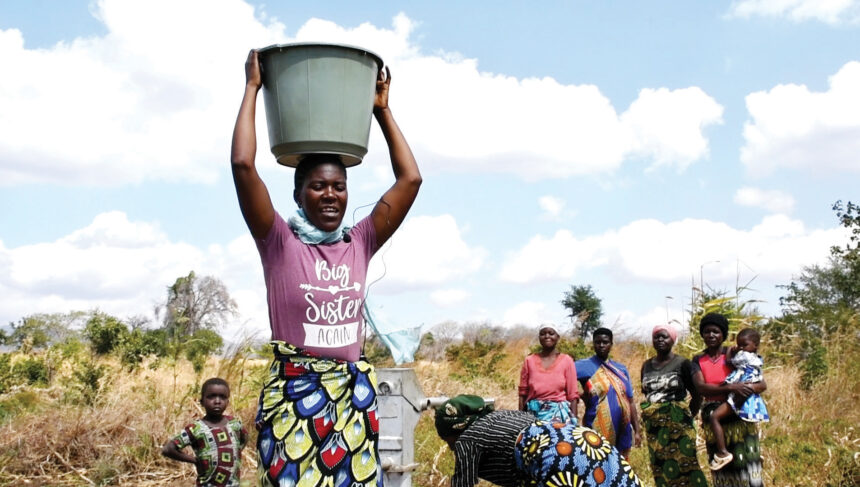
For a long time, Kachembe River had been a source of water for communities, their livestock and wildlife at Mponda Village in Traditional Authority (TA) Ndindi in Salima District.
There was always competition among the three groups for water from the stream, which would usually dry up in summer.
If they wanted clean, undisturbed water, the communities, especially women and children, had to wake up early in the morning and travel the five-kilometre journey to beat the animals to the stream.
The men would also rise at the same time for equally important tasks, but in the fields.
For the women, being late was not an option, as they would find the water muddy, having been disturbed by wild animals such as baboons or by their own livestock, which used the same river as a water source.
- Advertisement -
“We would then have to dig deeper and wait for the water to clear before we could draw it and take it home for various chores, including drinking,” Angella Manyumba, a mother of three, says.
For many years, 33-year-old Manyumba and other women in the area woke up early and travelled the distance to collect water from the stream.
She says drinking water from the river exposed communities to various diseases such as cholera, dysentery and other hygiene-related illnesses.
“Some of us used to treat the water before drinking by boiling it or using water guard, but I know some families who would drink the water untreated. Those, especially their children, were the unlucky ones,” Manyumba says.
- Advertisement -
- Advertisement -
She cannot recall ever having a reliable water source such as a borehole or water tap since she started living in the area.
She says that for over 20 years, the only source of water known to the community was the river.
Manyumba adds that relying on the river for water also affected children and women in other aspects of life.
“The river is far from our homes and our fields, so our children were being exposed to diseases because of the unsafe water.
“At the same time, they were often late for school due to the time it took to collect the water and return home to prepare them,” she recalls.
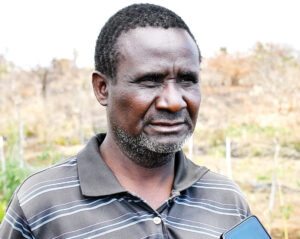
Manyumba’s sentiments are echoed by Ephraim Lamitoni, a 48-year-old man who has lived in the area since birth.
Like Manyumba, Lamitoni says that until a year ago, he did not recall any other source of water for people in the area apart from Kachembe River.
“That has been our source of water since I was a child. We have always complained of various diseases like cholera because some people used to drink the water straight from the river without taking any precautions,” Lamitoni says.
The area is dry, and any meaningful farming activity would require investment in irrigation.
“So apart from the unsafe water, we were also suffering from acute hunger due to unreliable rains,” he says.
But that was before the community received its first borehole in years.
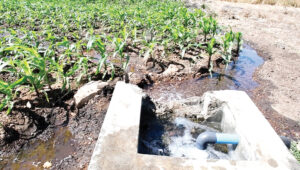
The single borehole has now become a lifeline for people in the area, providing not only clean water for drinking and domestic use but also for their crops.
Manyumba and Lamitoni say that as a result, diseases that once plagued the area have decreased, and many residents have embraced irrigation farming.
“The borehole is providing us with water for irrigation. Most people in the area are now growing crops such as tomatoes and other vegetables, on a small scale, yes, but enough to provide nutritious food for our homes and a surplus which we sell to others,” she narrates.
Manyumba adds that the extra income generated from selling crops has also boosted commerce in the area, with some people earning enough to expand into livestock farming.
“As I speak, I own some local chickens and two goats. The chickens are a good source of nutritious food for my household in the form of eggs. It is still on a small scale, but I hope to have extra to start selling soon, as there is high demand here,” she says.
For Lamitoni, who now chairs the committee responsible for the borehole, clean water has opened new opportunities.
“The borehole was set up in a way that prevents any water from going to waste, as the overflow goes directly into our gardens. So even though we draw water for irrigation, we save time and effort as the overflow irrigates automatically.
“I am now a proud vegetable farmer. I can feed my family and support my children’s education by selling the surplus,” the father of nine says.
World Relief Malawi has been implementing the Climate Just Communities (CJC) programme in TAs Ndindi and Pemba in Salima District.
CJC supports community structures to reduce the burden that climate change places on society.
It is through this initiative, implemented with support from the Scottish Government through DAI, that communities in Mponda and surrounding villages in TA Ndindi can now access clean water.
Thokozani Banda, Programmes Manager for Economic Empowerment at World Relief Malawi, says the CJC initiative has helped build community resilience to the impacts of climate change in the targeted areas.
“Through the initiative, we have managed to construct evacuation
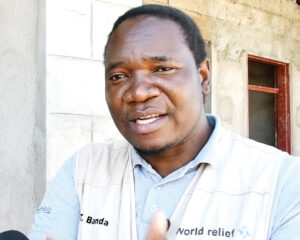
centres where people can shelter during natural disasters such as floods.
“We have helped communities plant trees and engage in meaningful agricultural practices, thereby also addressing food insecurity,” Banda says.
He adds that in the case of evacuation centres, communities provided land for free while the organisation supported the construction.
“We are also supporting communities to engage in income-generating activities through agriculture, such as beekeeping and irrigation farming, so that by selling their produce, they can earn a living,” he says.
DAI’s CJC project in Malawi is part of a flagship programme under the Scottish Government’s Climate Justice Fund, which supports locally led community projects in Malawi, Rwanda and Zambia.
The initiative is built upon three pillars of distributive, procedural and transformative justice.
Officials say this approach ensures local understanding and participation are central to effective and sustainable programmes.
Currently, 92 percent of Malawians rely on rain-fed sources of water, which are heavily affected by floods and droughts.
The increase in extreme weather events has left vulnerable populations at greater risk, as seen with Cyclone Freddy in 2023, which displaced over 500,000 people and caused 500 confirmed deaths, with more than 700 others feared dead.