By Deogratias Mmana:
It was billed to be a game changing digitalisation project for Malawi especially with its target for the rural populations that are a majority of the country.
But telecentres succeeded largely in being no more than white elephants.
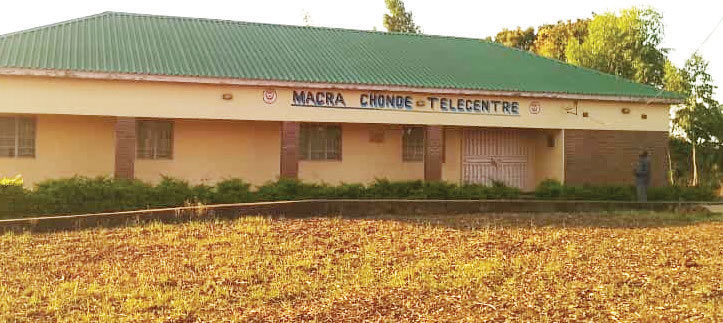
And as its implementing agency, Malawi Communications Regulatory Authority (Macra), go on another blitz with new Connect-A-School digitalisation project, most telecentres are littering the country as mere ghost towns, Malawi News has established.
In January 2019, the government claimed that there was a total of 31 telecentres in at least 23 districts.
- Advertisement -
Macra constructed the facilities under a Connect-a-Constituency model.
They were aimed at fostering access and usage of Information capacity to do this,” Kaunda said.
Currently, the facility has four assistants, down from the 9 it had some time back.
Kaunda said on a good day he attends to an average 10 people but added that business has been progressively going down.
- Advertisement -
- Advertisement -
In Dowa, Mauni Telecentre which is located in Khwema Village in Senior Chief Dzoole’s area opened in 2019.
The facility’s managing director, Benson Masauko, said the pulling out of Macra affected operations of the centre as it lacks some equipment.
Despite the challenges, the telecentre plays a vital role in offering computer studies and other services to the community, he said.
So why did Macra abandon the telecentres?
Macra Director General, Daudi Suleman, told Malawi News this week that the authority indeed discontinued the telecentres from 2021.
“The policy direction changed to Connect-A-School in tandem with Ministry of Education to ensure that all schools are connected,” Suleman said.
He said Macra handed over the telecentres to community leaders to operate them as private entities.
Macra also left all the equipment that it procured for the telecentres in the custody of the community leaders.
“[With the Connect-A-School project, so far we have started construction of 75 ICT labs in schools across Malawi with 120 ICT labs slated for construction starting in August across the country.
“The construction of ICT labs in schools is more strategic as it helps with the digitalisation into remote and rural areas which underscores the need for maximum coverage of digital services in Malawi,” he said.
In March 2020, the then Minister of Information Gospel Kazako claimed that most of the telecentres shut down or scaled down operations because some political leaders forced them to their homes instead of locating them in commercially viable trading centres. As a result, they were struggling for business.
Counterproductive move
However, Information Communications and Technology Association of Malawi (Ictam) president Clarence Gama described Macra’s withdrawal from the telecentres project as counterproductive to the country’s efforts to provide access to ICT services to many people especially in the rural areas.
“I do not know the reasons why Macra stopped supporting the telecentres. But whatever reasons, running the telecentres without Macra is a backward step. They will die down eventually. The telecentres project was good,” Gama said.
He said Malawi’s ICT penetration is still low as compared to other countries and with telecentres becoming ineffective, it only worsens the problem.
However, he said the association supports Macra’s other initiatives aimed at promoting access to ICT services across the country.
Mphatso M’bang’ombe in Dowa, Feston Malekezo in Mzuzu, Grecium Gama in Mulanje and Innocent Kalikok