





By Angelo Carlino, Andrea Castelletti & Rafael Schmitt:
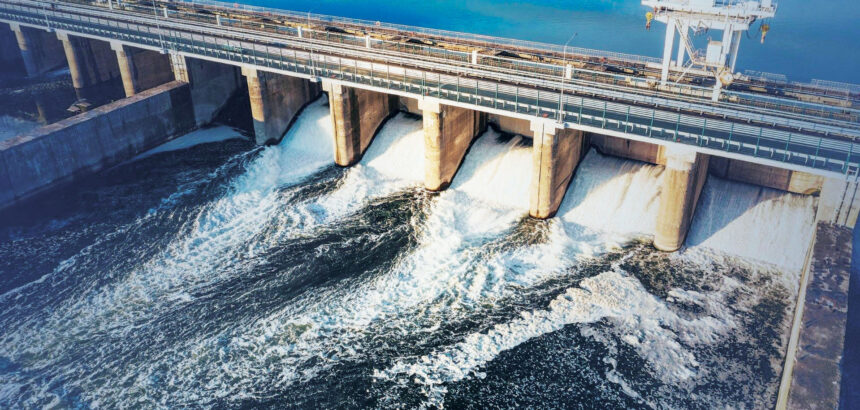
Across the African continent, more than 300 new hydropower projects are planned to meet the growing demand for electricity. Some of these will require big dams, which can have major negative environmental impacts.
Another looming problem with hydropower is that the water cycle is affected by climate change. Water availability will be reduced and become more variable in some locations in the next decades.
We are a team of environmental and energy systems researchers. Energy systems is the study of how energy can be produced to meet the demand of the different sectors of society.
- Advertisement -

Environmental systems modelling is used to simulate the natural environment and evaluate the impacts of infrastructure on it.
- Advertisement -
We analysed the likely development of energy systems in Africa from 2020 to 2050, looking at energy demand, the changing use of land and its impact on energy and how the warming climate will affect water availability.
The continent of Africa still uses 80 percent less electricity than the global average per capita. But given the projected population growth and increase in living standards, electricity demand in Africa will rise. This means new power generation infrastructure will be needed.
Our research found that wind and solar projects will be more cost effective than hydropower by 2030. This means that only 40 percent to 68 percent of the planned hydropower capacity in Africa will be economically attractive.
What also needs to be considered is that reducing the impact of droughts on energy systems requires overbuilding infrastructure.
- Advertisement -
This means more energy infrastructure than needed on average is required to be reliable against extreme droughts.
An overall increased annual investment in new power plants (of any type) of 1.8 percent to four percent will be needed across the continent.
This additional investment is needed when considering a worst-case scenario for hydropower generation. This scenario also includes the effects of climate change and the reduced cost of renewables on the power system expansion.
Hydropower no longer the solution
Hydropower is currently the main source of renewable electricity on the African continent with around 40 gigawatts of capacity installed.
This generates around 150-terawatt hour of electricity in a year, 15 percent of the total electricity consumption in the continent.
This is enough to satisfy the annual power consumption of two countries of the size of Morocco and Algeria with a total population of 82.5 million people, for example.
It has been considered a cheap source of electricity with a low carbon footprint. But this is no longer strictly true.
Hydropower presents the following problems.
Renewable power sources such as solar and wind power are becoming increasingly cost-competitive. These can reduce hydropower reliance, diversify countries’ energy portfolios and reduce the environmental impact of building more hydropower dams.
African river basins support land and freshwater ecosystems that are global biodiversity hotspots. Of the 543 major rivers in the world – those that are longer than 500 kilometres and which flow in an uninterrupted way to the sea – 156 (29 percent) are located in Africa. Dams disturb this by breaking up the flow of rivers.
In Africa, 26 percent of rivers have been fragmented or broken up – much lower than the global average of 43 percent. This means that African rivers are valuable hubs of connected river habitats.
If all the planned African hydropower projects were built, we estimate that average river fragmentation could rise to 42 percent, potentially leading to large biodiversity loss.
For example, researchers found that the Grand Ethiopian Renaissance Dam would result in the displacement of 122,000 people, release seven million tonnes of carbon dioxide and alter the Blue Nile’s water temperature, making it unsuitable for many of the plants and animals living there.
Whenever a new dam is built, water submerges land. The soil and other matter found on the land (biomass) is digested under the water and this process releases into the atmosphere carbon dioxide and methane, a potent greenhouse gas. These emissions are released from the dams for years after they are first built.
Hydropower emissions would increase by almost 25 million tonnes of carbon dioxide equivalents per year at least for a few decades, substantially hindering progress towards net zero emissions.
This would be equivalent to what is emitted per person over 25 million trans-Atlantic round-trip flights.
Hydropower is vulnerable to climate change: as droughts kick in and water runs out, hydropower will not be as available or as cost effective.
Looking at the whole energy system, our previous research has found that the availability of hydro, combined with solar and wind power decreasing in cost, means that about 32 percent to 60 percent of the proposed hydropower projects are no longer economically competitive.
Building new solar and wind renewable systems comes with an overall lower energy system cost than building all proposed hydropower projects.
Furthermore, our new study shows it is possible to reduce the impacts of the hydropower projects that are cost-competitive by deploying more renewables.
Additional river fragmentation and hydropower emissions can be reduced by at least 50 percent with a minimal increase in electricity prices (at most +1.4 percent).
Why it matters
Currently, energy systems are mostly planned based on engineering and economic considerations.
But it is more cost-effective overall if governments plan new energy systems taking into account the available technology, its cost, and costs that would be incurred by projects that damage the environment and communities (such as big dams).
We argue that the scope of energy system planning must be expanded so that it takes into account all these factors. Indeed, including social and environmental objectives is key to making sure that the energy transition is clean and just.
This research finding is very important because hydropower plants continue to be planned in many large river basins, based on the mistaken belief that they are the cheapest form of renewable energy. —The Conversation