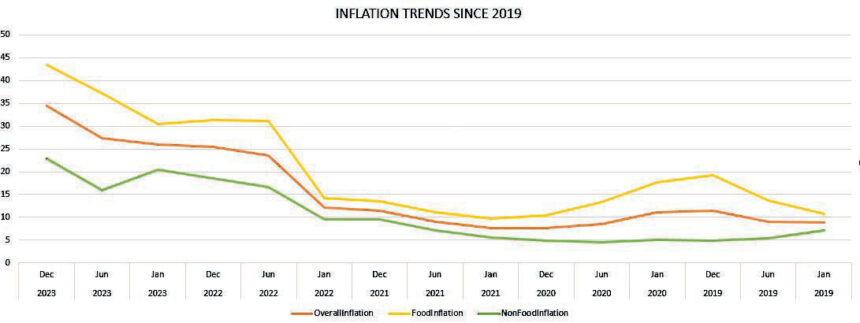
Economic experts foresee continued rise in headline inflation—the rate at which commodity prices change at a given period in an economy—in the short to medium terms.
Inflationary pressure would be perpetuated by continued rise in public debt, which is narrowing the breathing space in the fiscal space, they say.
This comes as inflation has been rocketing. Annual average headline inflation has increased from 9.37 percent in 2019 to 28.8 percent last year.
In an interview, economist Marvin Banda said government debt-led spending is an overlooked contributor to rising inflation.
He also lamented effects of imported inflation as Malawi remains a pre-dominantly importing nation.
- Advertisement -
In a separate interview, Catholic University-based economist Bertha Bangara Chikadza said food remains the main driver of inflation and low agricultural output could pile extra pressure.
“This year, there will be hunger and probably famine due to too little and too late rainfall and this can lead to a rise in food prices and inflation. The government can plan better towards enhancing food production,” Chikadza said.
In a WhatsApp response, RBM spokesperson Mark Lungu said the Monetary Policy Committee (MPC) of the central bank is expected to meet this week to, among other things, project the outlook.
“The Monetary Policy Committee will have its first meeting for 2024 at the end of January 2024 and will give the best outlook and measures that the bank will put in place,” Lungu said.
- Advertisement -
- Advertisement -
A recent Monetary Policy Report of Reserve Bank of Malawi (RBM) says the outlook suggests an increasing inflation path but slightly lower than earlier predicted.
It adds that the marginal downward shift in the inflation path is premised on an announcement by the government about Lean Season Food Response Plan, which is expected to dampen price pressures on food items.