By Mzati Nkolokosa:
Malawi is where it was in 2017.
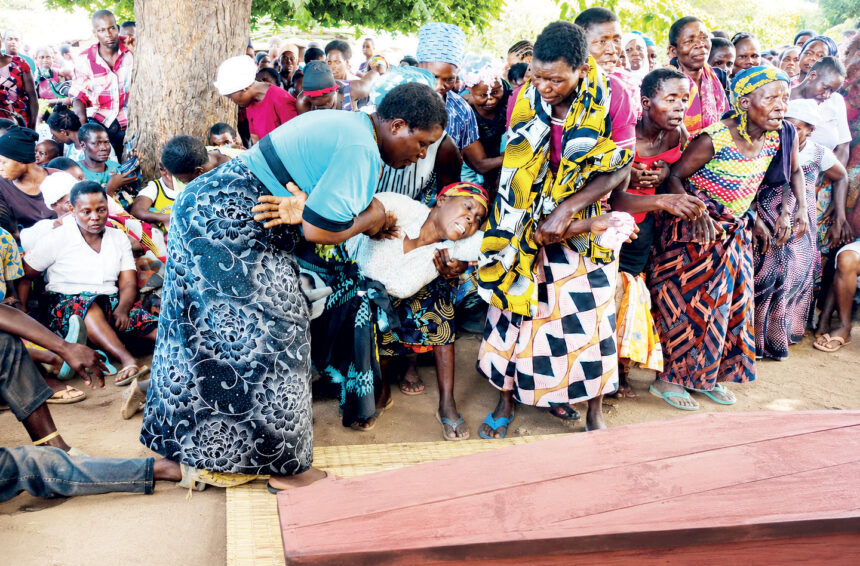
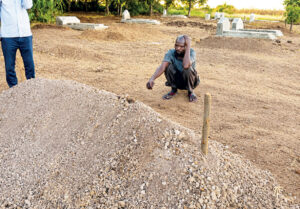
Then, nine people were brutally killed on suspicion of being blood suckers. Now, nearly a decade later, six people have been killed on suspicion that they stole private parts. Police have arrested 43 people, 16 for claiming missing private parts and 27 for alleged involvement in the killing of the six.
The easiest analysis, as always, has been to blame illiteracy and witchcraft. But this is violence by humans against humans, as the police have said, not superstition.
One danger is that we may not solve the puzzle because, according to Nicky Falkof in her 2025 book titled The Devil Made Me Do It, “when human violence and venality are overlooked in favour of a turn to the spiritual or supernatural, the possibility of real action moves even further away”.
- Advertisement -
Of course, the violence does not make sense. But we should make sense of it and defend the right to life for all.
One of the ways, perhaps the best, to understand the violence is to study the worldviews that form and inform our behaviours. Another way is to remember that our conceptual system is metaphorical; so, we should understand the terminology of missing parts as a metaphor.
In much of Malawi, wealth is categorised into three; that is, food (kulemera ndi kudya/ usambazi nkulya), children (ana ndi chuma) and character (khalidwe ndi chuma). “It is food that is considered to be wealth of the community and of the household,” writes Boyson Moyo in his 2010 thesis on the use of indigenous knowledge in small-scale agricultural systems in northern Malawi.
Money, as noted, is not considered wealth in Malawi. This is important for understanding the claims of missing private parts and the violent deaths that followed.
- Advertisement -
- Advertisement -
The three categories of wealth—food, character and reproduction—are enabled by moyo (life), which is a metaphor for good health, both mental and physical.
Ever wondered why we spend K1.7 million to produce food we could buy at less than K1 million. Why? First, because money is not wealth. Instead, it is an enabler of wealth in the name of food and, second, because, as Moyo puts it, producing own food shows “discipline and good manners”.
The place of children in our society does not need explanation. Children are wealth generated by design, not a result of what demographers call high fertility rates.
In Malawi, children are not statistics; they are not an obstacle to development. They are wealth. So, we can have them as much as we can.
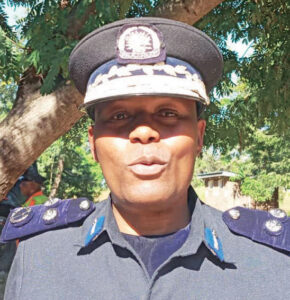
Deputy Police Inspector General Noel Kayira
The understanding of categories of wealth helps us to understand the metaphors involved in the claims of missing private parts and the killings. Look at the pictures of victims and perpetrators. The perpetrators are poorer than the victims. The perpetrators live in the traditional economy where money is not wealth. The victims appear to be among those who define money as wealth.
Thus, for the perpetrators, ndalama ndi Satana (money is evil) while for the victims, money was wealth. For the perpetrators, nthawi ndi kachitsiru (time does not learn), meaning kadauluka kadzatela (implying whoever is rich shall become poor in future) or chuma ndi mchira wa buluzi suchedwa kupululuka (money is like a lizard’s tail; it peels off quickly).
By contrast, for the victims, time was money. Each day was a time to make money, improve their lives and live a better life.
This is where the series of Ken Lipenga, One World Two Nations, become important. Malawi is one country but there are two worlds: the world of the literate and the world of the illiterate, the world of those who appropriate meaning in English and the world of those who appropriate meaning in mother tongues, the world of those who live under English law and the world of those who live under customary law.
Malawi is a place in which differences make all the difference. Those who are different, as clinical psychologist professor Chiwoza Bandawe put it during the 2017 violence, people tend to attack those who are different. Or, according to a piece I wrote in The Nation about 20 years ago, those who are close, yet far away.
Our tragedy is that those with university education, who make less than 1 percent of the population in Malawi, prefer English to mother tongues and, as a result, miss the meaning in metaphors such as theft of private parts.
Here is the meaning of the claim of theft of private parts. Since private parts are a means of reproduction, their theft metaphorically represents poverty and suffering. The claim is a metaphorical accusation against those who are different, much like the metaphor of blood sucking that resulted into nine deaths in 2017.
Those in the economy of money might say the killings are a result of envy, which is one of the three enemies in our national anthem. Those in the traditional economy, where money does not count, might say they are fighting against agents of capitalism.
The solution lies in ending extreme poverty and we all know that providing education for all is one sure way to create equality for all.