By Kingsley Jassi:
President Lazarus Chakwera has challenged Reserve Bank of Malawi (RBM) to remain relevant in its regulatory role of the financial sector and as a monetary authority to champion the country’s economic boom.
He said the time for talking is over and demanded action.
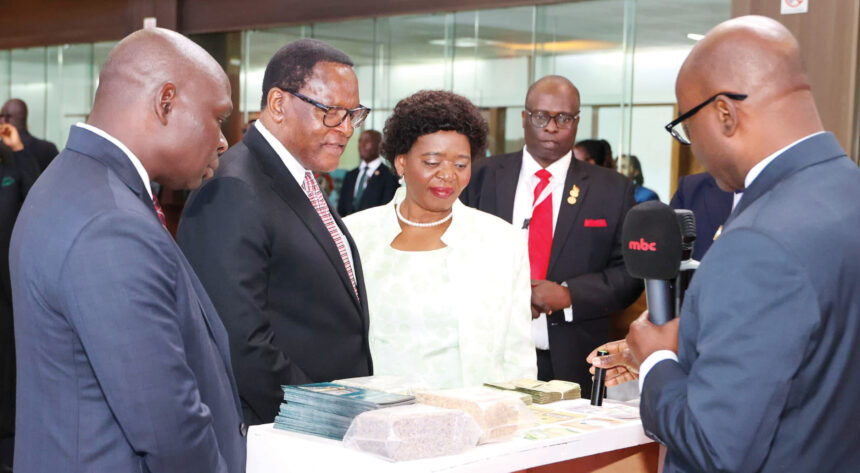
During the opening Friday of an event to mark 60 years of the central bank’s existence, Chakwera noted that the central bank headquarters remains the only outstanding structure in the skyline of the capital city, Lilongwe, signifying lack of economic progress that needs everyone to be action-oriented.
Chakwera rued the country’s economic situation that is characterised by bottlenecks that retard productivity.
- Advertisement -
He asked: “Where are the doers who will remove the structural bottlenecks that hinder productivity and growth in the private sector? Where are the doers who will fulfil the central bank’s mandate to achieve price and financial stability? Where are the doers who will put aside petty differences and forge alliances across institutions to create access to credit, to enable SME growth, and to facilitate investment in critical sectors at the speed of light?”
The central bank started operations in 1965 following the country’s independence of the monetary system of Rhodesian Central Bank which comprised of Zambia, Zimbabwe and Malawi.
Marking the 60th anniversary, the bank held an economic symposium, bringing together the private sector and foreign central banks officials from neighboring countries.
The RBM governor, McDonald Mafuta Mwale, said in his remarks that it is time to reflect on the central bank’s role in economic transformation, to expand its spectrum beyond demand side policy objectives to supply side interventions and stimulate production.
- Advertisement -
- Advertisement -
“While our primary mandate remains price and financial stability, we must also consider how central banks can support broader economic development activities, especially in economies like ours,” Mwale said.
He further said the question is not whether that direction should be taken but rather how it should be done, ensuring responsibilities, effectiveness and in alignment of the core objectives of a central bank.
Top foreign central bank officials, local commercial bank and financial sector representatives and the others from both public and private sectors were in attendance.
The 60th anniversary coincides with the country’s economic turbulence that has hit the monetary sector hard with forex shortages and high inflation while the central bank continues with tight monetary policy stance to contain the situation emanating from supply side challenges.