 Malawi has undeniably made tremendous progress towards ending HIV as a public health threat by 2030, having surpassed the UNAids 95‑95‑95 targets.
Various programmes have contributed to these gains, including expanded HIV testing, universal ‘test and treat’ immediately after diagnosis (a policy Malawi pioneered that later influenced World Health Organisation (WHO) guidelines) and broad rollout of pre-exposure prophylaxis (PrEP).
In terms of prevention, focused interventions targeting adolescent girls, young women and key populations, including PrEP and post-exposure prophylaxis, school-based HIV education and gender-sensitive outreach, have become prominent.
Despite impressive reductions, Malawi continues to record tens of thousands of new HIV acquisitions each year, which still poses a challenge to sustained momentum and long-term elimination ambitions.
Prevention initiatives such as targeted PrEP, condom distribution, behaviour change campaigns, outreach in schools and marketplaces and strategies to engage men (such as UN Women’s HeForShe programme, which addresses both gender-based violence and HIV) have been critical in achieving sustained reductions.
- Advertisement -
Notably, Malawi implemented a national test-and-treat policy, offering antiretroviral therapy immediately upon HIV diagnosis, well ahead of many other countries.
This approach influenced WHO’s 2015 guideline updates and became a model for low-income countries, highlighting Malawi’s forward-leaning policy stance.
Political will, strong leadership from the National Aids Commission and extensive community engagement supported early adoption and large-scale implementation of these interventions.
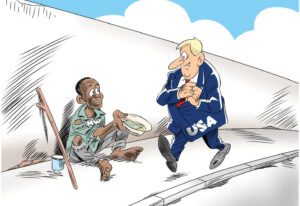
Despite national leadership and effective programmes, the majority of financial resources for Malawi’s HIV response have historically come from external partners, particularly the United States (US) President’s Emergency Plan for Aids Relief (Pepfar) and the Global Fund.
- Advertisement -
- Advertisement -
A UNAids feature story notes that approximately 85 percent of Malawi’s HIV and Aids budget depends on donor funding, with the Global Fund supporting antiretroviral procurement through at least 2027.
When US President Donald Trump ordered a freeze on USAid and Pepfar funding early this year, it caused widespread concern in Malawi.
The country stood to lose millions of dollars in annual aid, resulting in immediate shortages in HIV prevention, testing and treatment services.
Despite the sudden freeze, Malawi’s leadership responded decisively.
By early April, certain critical CDC-funded partners, including Baylor College of Medicine and Partners in Hope, were permitted to resume operations in order to sustain antiretroviral therapy provision and PrEP rollout for approximately 1,771 staff across districts.
The government also allocated around K23.3 billion to recruit 6,000 new health workers and set aside K3 billion for the transport of HIV samples, helping to mitigate service delivery gaps.
Nonetheless, challenges persist. Service delivery in humanitarian-affected and remote districts weakened, early infant diagnosis and paediatric HIV treatment services were scaled down and outreach for orphans, vulnerable children, cervical cancer screening and key population programming stalled due to NGO suspensions and transport or logistics constraints.
Community-led monitoring and drop-in centres serving key populations and PrEP clients were disrupted, increasing the risk of stigma, attrition and HIV acquisition.
Meanwhile, certain sub-populations, particularly adolescent girls and young women aged 20–29, and men, continue to show higher incidence rates and lower uptake of testing or treatment.
Although Pepfar funding has eventually been exempted from Trump’s rescission package, following intervention by the US Senate and Republican lawmakers, the episode has highlighted the volatility of external support.
While the $400 million cut has been reversed, broader USAid restructuring continues. The agency has been formally disbanded, casting uncertainty over prospects for long-term stability.
It is therefore clear that Malawi cannot depend indefinitely on external aid.
The era of aid dependency is coming to an end and Malawi must focus on domestic resource mobilisation, strengthening fiscal resilience and taking full national ownership of its HIV response.
WHO and UNAids have repeatedly urged countries to increase domestic funding amid growing global aid fatigue.
At the International Aids Society Conference, held in Kigali, Rwanda from July 13 to 17, discussions strongly emphasised resilience and domestic resource mobilisation.
Malawi’s delegation joined others in calling for sustainable financing mechanisms, such as health taxes, social insurance and increased budgetary allocations, to ensure continuity of HIV services regardless of donor decisions.
In the meantime, Malawi’s success in surpassing the 95‑95‑95 targets stands as a testament to national leadership, community engagement and robust donor partnerships.
However, reliance on external funding has always been a point of vulnerability and the early 2025 freeze served as a stark reminder.
Looking ahead, Malawi must take full ownership of its HIV response; sustainably financing programmes, institutionalising prevention and treatment infrastructure and embedding resilience within national systems.
By amplifying the conversation on resilience, prevention and sustainable domestic financing, countries like Malawi could be offering the world a roadmap for lasting epidemic control.
Sustaining progress depends not only on external support but on domestic accountability; a foundation critical to keeping the goal of ending Aids by 2030 within reach, even as the global donor landscape continues to shift.