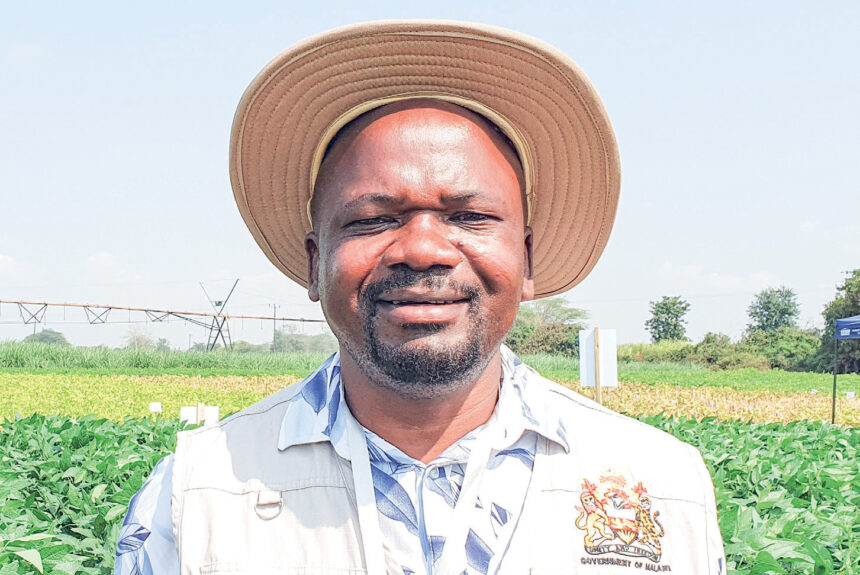

By Thomas Kachere:
Farmers who were once told that legumes such as groundnuts, beans and soybeans cannot grow in the Shire Valley could soon harvest bumper yields under irrigation as new legume technologies are rolled out in the area.
The technologies were showcased on Tuesday during the 2026 Legume Tour Field Day in Chikwawa District, part of a five-year programme funded by the Government of Ireland with €15.5 million.
The initiative focuses on agriculture and climate adaptation at a local level.
Ireland Ambassador to Malawi Kate Brady said the investment is already yielding results.
- Advertisement -
“We have been supporting this programme for the past years. We provided 15.5 Million Euros for the 5 year programme which focuses on Agriculture and adaptation at a local level. I am hopeful that by supporting that important research it will improve the work across all those partners,” Brady said.
Malawi’s agriculture sector remains heavily dependent on rain-fed maize.
But climate change has made rainfall erratic, with longer dry spells and extreme heat.
The Department of Climate Change and Meteorological Services projects more frequent droughts for southern Malawi, posing a threat to food security and household incomes.
- Advertisement -
- Advertisement -
She said that legumes such as pigeon peas, cowpeas, groundnuts and soybeans could provide drought-tolerant and resilient alternatives.
“Legumes are drought-tolerant, mature faster, and fix nitrogen in the soil, reducing the need for expensive fertilizer. They also have strong local and export markets,” Brady said.
“We see absolutely potential for Malawi in a wide range of different legumes. What is interesting is that there is also significant capacity in Malawi already for some of processing legumes.”
Brady said increased legume production could also improve household nutrition and income.
“Soy is for protein and oil which is huge in nutrition and will improve the income of farmers that are associated with it,” she said.
She added that legumes can also improve soil health by fixing nitrogen and supporting other important soil processes.
The field day brought together researchers, government officials and farmers for demonstrations of improved seed varieties, inoculants, spacing, and soil management practices.
Research Manager for Agricane-Sangoa Research and Innovation Hub Wills Munthali said the focus is on improving yields through improved adaptation to climate shocks.
He said maintaining the right balance in crop production helps farmers harness natural interactions that contribute to better yields.
“The first interaction is about pollinators. Over 75 percent of flowering plants need pollinators and if these are not there yields could be reduced drastically. So we do attract these pollinators by planting flowering plants,” Munthali said.
He said maintaining the right balance in crop production could help farmers improve yields.
Deputy Team Leader for Palladium Growth Poles Sothin Ziba said the legume tour took place at a crucial time and place at a crucial time to attract more farmers to join the commercial value chains.
Soybean farmer Elina Chipwa of Chiseka Village in Kasungu District under Kapirinkhunda Cooperative described the tour as impactful. She said the tour had changed her outlook on how crops can be grown even in places with unpredictable weather.
“If followed, this can benefit us and our households like paying school fees, providing food and clothes to our children,” she said.
Programme Manager for Shire Valley Agriculture Development Division Taurayi Mlewah expressed optimism, saying the initiative was bringing together stakeholders to promote legume production in the Shire Valley.
Mlewah said the Ministry, through the Department of Research, was working with partners to inform the nation that legumes could thrive.
“The Shire Valley Transformation Programme is close to 48,000 hectares of land which if well utilised many farmers will be generating more income,” he said.
Mlewah said the legume drive aligns to Malawi 2063’s focus on commercial agriculture and climate resilience, and contributes to Sustainable Development Goals by diversifying diets, boosting food security as well as SDG 13 on climate action through drought tolerant crops and soil restoration.
With two years remaining in the Irish-funded programme, partners said focus would be on seed multiplication, market linkages and training more extension workers.