By Macdonald Thom:
It is March 18 2024. A 14-year-old girl from Blantyre feels excruciating pain in her stomach. She tries to be strong. But as the pain persists, she has no choice but to tell her mother about it.
Like any caring parent, the mother quickly decides to take her to Queen Elizabeth Central Hospital.
While at the hospital, the girl makes a shocking revelation: her 41-year-old biological father has been defiling her since she was ten.
That being a suspected case of incest, the police are instantly involved.
- Advertisement -
“The man has for the past years been sneaking out of his bedroom to his daughter’s room to have sexual intercourse with her,” Soche Police spokesperson Aaron Chilala says.
At the hospital, a further disturbing discovery is made.
“The victim was referred to the One-Stop Centre for examination, which proved that she was indeed defiled, and further results showed that she is two months pregnant,” Chilala says.
As the man is facing trial, there are a number of questions regarding the girl’s pregnancy: Should she keep the pregnancy? What relationship will the girl have with the child that will be born? What will become of the relationship with her father? Will the child call him father or grandfather or both? What will society say?
- Advertisement -
- Advertisement -
Then, another critical question pops up: Is terminating this controversial pregnancy an option?
When news of the young girl became public, a lot of people expressed shock, displeasure and anger.
Yet, when it comes to access to safe and legal abortion, no one thinks how the pregnancy she is carrying is impacting her life.
Access to safe and legal abortion services is one of the key issues in Sexual and Reproductive Health Rights (SRHR) debate in Malawi.
The World Health Organisation (WHO) identifies unsafe abortion as a leading, but preventable, cause of maternal deaths and morbidities.
It says abortion can lead to physical and mental health complications and social and financial burdens for women, communities and health systems.
The current law in Malawi only permits abortion when the life of the woman is at risk, leading to a situation where many women and girls resort to unsafe abortion practices, risking their lives and health.
WHO reveals that six out of 10 of all unintended pregnancies end in an induced abortion. The health agency reveals that around 45 percent of all abortions are unsafe, of which 97 percent take place in developing countries.
The proposed Termination of Pregnancy (Top) Bill, whose tabling in parliament has stagnated since 2021, attempts to give a pathway out of this predicament and help girls like the Blantyre one to choose what they can live with.
The Bill seeks to amend the restrictive laws, by expanding the grounds for access to safe and legal abortion services in certain circumstances, such as rape, incest, severe foetus malformation and physical or mental health.
Another critical issue that has to be explored is the role members of Parliament (MPs) have to address the challenge of unsafe abortion and related complications.
Recently, Centre for Human Rights and Rehabilitation alongside Malawi Human Rights Resource Centre, Malawi SRHR Alliance and Centre for Solutions Journalism, which form a consortium under the ‘Breaking the Barriers’ project, organised a meeting with MPs on the significance of the bill.
The meeting, funded by Amplify Change, targeted the Legal Affairs Committee.
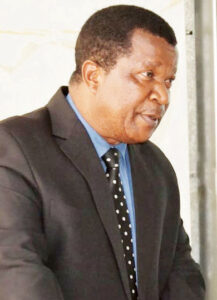
An advocate of the bill MP Matthews Ngwale, who also chairs the Health Committee of Parliament, was among the meeting’s participants.
He said the meeting came up with a roadmap on how the issue of Top can be taken back to Parliament.
“MPs are afraid of voters. They feel that there should be awareness campaigns about it, so that the masses fully know what it is all about. Thereafter, the issue should be taken to Parliament again,” Ngwale said.
He urged advocates to take advantage of what is happening in communities and link that to the issue of pregnancy termination, whenever that happens.
“People are feeling the impact of unsafe abortions. The problem exists, but if a person dies as a result of unsafe abortion, the communities think the person has been bewitched.
“Whenever such deaths occur, they should clearly tell the people about it and explain how the Top law will help prevent them,” Ngwale said.
A medical doctor, Amos Nyaka, who made a presentation during the meeting, reiterated that the law should be less restrictive.
“We have to do what our neighbouring countries, Zambia and Mozambique, are doing. In Zambia, for instance, whatever reasons a woman presents, she just needs two doctors to affirm that the arguments being advanced really necessitate termination of the pregnancy,” Nyaka said.
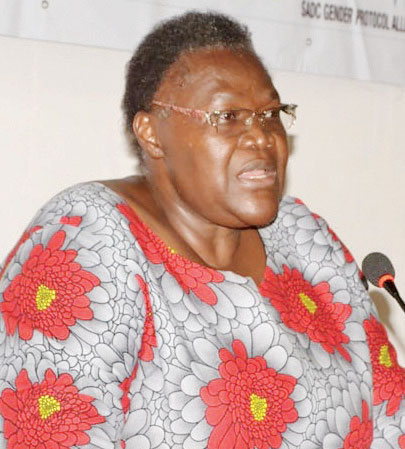
The Coalition for the Prevention of Unsafe Abortion is concerned about the delays in having the law in place. Its chairperson Emma Kaliya says they are aware that MPs are afraid of losing votes if they pass the Bill.
“The MPs feel that it is better for us to start talking to communities. This is regardless that the Special Law Commission already did consultations. That is why we are going out to provide this information for people to understand,” Kaliya said.

She was speaking on the sidelines of an engagement meeting with traditional leaders in Mzimba.
Meanwhile, Legal Affairs Committee Chairperson Peter Dimba feels there is a need to look at the bill “critically”.
“I’m aware the Bill has scientifically proven and research-based merits with regards to the reproductive health of women, particularly the youth.
“However, laws do not apply in a vacuum. They apply in a society with norms and values and I doubt whether our society is ready for such a law,” he said.