By Blessings Tambala:
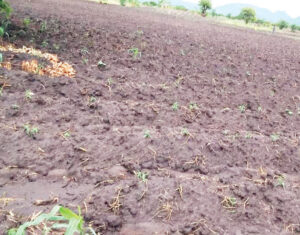
An outbreak of the African Armyworm has culminated in the destruction of over 1,000 hectares of maize fields in Chikweo and Nanyumbu agricultural extension planning areas in Machinga District.
Machinga District Council spokesperson Martin Chiwanda confirmed the development yesterday, describing the situation as dire.
He said the agriculture office had started distributing pesticides to farmers.
“We sent some of our officers to assess the impact of the damage and reports indicate that the damage is so extensive that the issue deserves urgent attention. We have sent agriculture extension workers to affected areas and they have started distributing pesticides. We are doing everything possible to contain the situation and prevent further damage.
- Advertisement -
“The district council is working closely with agriculture extension workers and farmers to ensure that the outbreak is brought under control as quickly as possible,” Chiwanda said.
He urged farmers to exercise caution when using pesticides and report any strange things they experience in their crop fields to the authorities.
“We are asking farmers to follow all the precautions that have been put in place, including spraying chemicals,” he said.
Meanwhile, reports indicate that the district’s agriculture office is facing a shortage of chemical spray materials.
- Advertisement -
- Advertisement -
Mathews Bello Mahuta, a farmer from Traditional Authority Chikweo, appealed for help, saying the outbreak had raised concerns about the attainment of food security goals in the district.
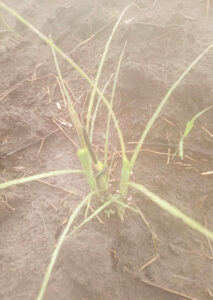
“The armyworms have completely destroyed some fields. We are asking the government and well-wishers to assist farmers with cassava and potato seeds [buds] so that we can recover from this loss,” Mahuta said.
This is happening when, on December 27 2024, the Tobacco Commission (TC) admitted that a dry spell that spanned five days that month had left farmers panicking.
TC spokesperson Telephorus Chigwenembe said the commission had been receiving reports of signs of crop stress owing to prolonged dry spells in all the regions of the country.
But he was quick to say the picture of the actual situation would become clear after an official assessment.
“We are concerned with the status, having received worrisome reports from across all the regions.
“What remains now is to come up with the official assessment which will ascertain the actual situation on the ground,” Chigwenembe said.
The concerns were echoed by Tobacco Association of Malawi Trust President Abiel Kalima Banda, who said some farmers were using desperate measures such as manual irrigation to rescue withering crops.
“Some tobacco farms are not looking good and we are worried, especially for the tobacco that is still in nurseries waiting for rains,” Kaima Banda said.
However, he expressed optimism that if the rains came as expected, the situation could be reversed as tobacco crops had a high rate of survivability.
He has since appealed to the industry, through the TC, to take into consideration the cost being incurred to rescue the crop when they will be setting prices for the next tobacco marketing season.
“Some farmers have to draw water from distant places in ox carts or cars to water their crops and that is not easy. Some don’t even have water sources close enough and are just watching their crop helplessly,” Kaima Banda said.
In the midst of the dry spell, the Department of Climate Change and Meteorological Services assured farmers that the country would start receiving normal rainfall during the last week of December.
The department’s director Lucy Mtilatila said people needed not despair as the situation was bound to improve.
“We are also expecting that the rainfall will normalise. Although we are in the rainfall season, the real rain-bearing system that we rely upon is not well established. So we are hopeful that it will be established towards the end of this month [December],” Mtilatila said at the time.
The country’s rainy season spans from around October to April.
The authorities envisage economic growth of 4 percent in 2025 after a meager 1.8 percent this year, banking on a good agricultural season on account of initially projected good rains.