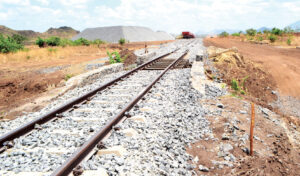
Governments of Malawi and China have signed a Euros 2 billion (about K2.5 trillion) agreement that will facilitate the construction, electrification and signaling of a comprehensive rail network in the country.
Transport and Public Works Minister Jacob Hara signed the deal with China Railway Signal Communication Corporation officials during the 3rd Road and Belt Forum underway in Beijing, China.
The development comes at a time the African Development Bank has cited rail transport as the missing link in the development of some African countries.
Hara told The Daily Times that the deal would bring about the much needed boost to the transport sector, particularly the railway sector.
“This project is a game-changer for the Malawi transport sector. It will enhance transport multimodal complementarity, providing a wide range of connections and choices for users, both domestically and internationally,” he said.
- Advertisement -
Hara said the development may culminate in a significant reduction in transportation costs for both cargo and passengers.
“Furthermore, it plays a crucial role in regional trade integration, positioning Malawi as the connection passage to the Democratic Republic of Congo and Zambia. The project also expedites the realisation of the recently inaugurated Nacala port corridor, bolstering forex earning opportunities for our nation,” he said.
At this year’s forum, China has entered into agreements that relate to over 300 projects with countries around the world, including with four African countries namely Malawi, South Africa, Kenya, and Guinea Conakry.
The Malawi rail project is set to span five years, divided into three distinct phases.
- Advertisement -
- Advertisement -
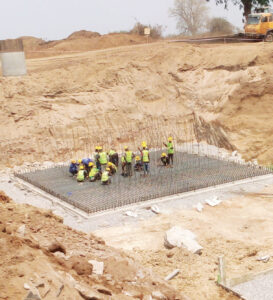
construction works
The first phase will revamp the Bangula to Nkaya rail route, with the second phase focusing on the Nkaya to Mchinji railway, which will traverse Salima and Kanengo.
The final phase will establish a connection from Lilongwe to Mbeya in Tanzania via the Northern Region.
The African Development Bank has recently been backing the idea of putting up railway infrastructure on the continent.
In a report titled ‘Rail Infrastructure in Africa: Financing Policy Options’, it says railway transport is experiencing a remarkable comeback after a period of decline.
“The rediscovered allure of railways is underpinned by its capacity to move huge volumes of freight or passengers in an energy-efficient and environmentally friendly way. Nevertheless, in many countries railways are still struggling to transform themselves from subsidy dependent legacy companies to more efficient commercial undertakings. With a few exceptions— mainly in the RSA [Republic of South Africa] and Northern Africa— African railways clearly lag behind those of most other regions in the world. Rail transport has faced the same constraints and challenges as elsewhere but poor economic, technological and institutional conditions have further aggravated the situation in Africa,” the report indicates.
The Government of Malawi has been struggling to complete the Bangula- Nsanje-Marka railway project, a problem attributed to the unavailability of funds.
Last month, when he visited the project site, Hara and Ministry of Transport and Public Works Principal Secretary responsible for Administration Madalo Nyambose said, while there has been a proposal for the upward adjustment of the project— which was initially pegged at K68.2 billion— the idea remains as such; a proposal.
“We have not reached a decision yet and that remains a proposal. We have to look at the numbers that necessitate the change and, thereafter, decisions will be made,” Nyambose said on the sidelines of a tour of the project site by the Parliamentary Committee on Transport and Public Infrastructure.
The government is funding construction of the 72-kilometre railway line from Bangula to Marka and feeds into Malawi’s and Mozambique’s quest to revive the railway line, which is the short route to Beira port in Mozambique.
The agreement was that Mozambique would work on its stretch from Mutarara to Marka, which it has since completed, with Malawi working on the Bangula- Nsanje section.