



By Deogratias Mmana:
Malawi is just reciting the 2030 Sustainable Development Goals (SDGs) as the truth is that achievement of such goals is far-fetched, details show.
The country needs $238 million (K404 billion) per year which translates into K2.8 trillion up to 2030 to achieve Sustainable Development Goal number six which is to ensure access to clean water and sanitation by all by 2030.
In an exclusive interview, Executive Secretary for African Ministers Council on Water and Rashid Mbaziira told Malawi News that it was clear that all African states are struggling to finance the water sector.
He said it still remains a tall order for them to achieve SDG 6 by 2030.
- Advertisement -
Mbaziira was in the country meeting Minister of Water and Sanitation Abida Mia for Malawi’s input into the post- 2025 Africa water vision.
He urged African countries including Malawi to provide more domestic financing to the water sector and ensure that proper infrastructure is put in place to manage water resources.
He this is important for populations in need of the water to have access to it and are able to use it for economic purposes.
While financing remains a big challenge, Mbaziira said sometimes the systems do not have the right people who can advance water agenda.
- Advertisement -
- Advertisement -
He also said with such wrong people in place, following up on little resources to ensure that they are properly utilized becomes another challenge.
“If you look at the domestic financing to water sector, all the targets, ambitions, budget allocations are not commensurate with the targets.
“Our challenges in Africa are similar. We are facing challenges of meeting targets of ensuring availability of safe water for all. It will be a miracle to achieve that target by 2030,” he said.
Mbaziira noted that sanitation is even worse.
“Provision of sanitation and hygiene services across Africa is something that we need to look into very critically and infuse new approaches,” he said.
Mbaziira added: “We have institutions that were established and if you do not operationalize them, if you don’t put right people in place, right equipment in place, right research or analysis done, again the institutions exist on paper because they are not functioning as required.”
According to WaterAid Malawi Country Programme Strategy 2023-228, Malawi’s progress towards SDG 6 has been low.
“At the current pace, it is unlikely that the SDG target 6.1 and 6.2 will be achieved unless an acceleration plan is developed and implemented,” the report reads.
According to Unicef and the World Bank, Malawi needs an annual capital investment of $238 million (K404.6 billion) for each year up to 2030 if the targets are to be met.
“Currently, less than$100 million is available annually,” reads the report.
It further says eight percent of Malawians do not have basic access to safe water; 60 percent do not have access to improved sanitation; four percent still practise open defecation and this is likely to increase unless significant interventions are deployed; and 91.7 percent do not use soap and water for hand washing.
The report says the provision of water, sanitation and hygiene in healthcare facilities still lags behind and requires significant investments if the quality of care for citizens is to be improved.
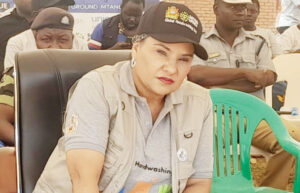
Minister of Water and Sanitation Abida Mia admitted that the country’s envelope is not adequate for the country to meet the water and sanitation goal.
“Malawi needs not less than $238 million every year up to 2030 to meet the SDG 6. As you know, we have a limited resource envelope, our strategy is to use the little resources we have as efficiently as possible,” Mia said.
“We are enhancing operational efficiency across all institutions under the water and sanitation sector, including Water Boards. We are also closely working with Partners to complement efforts and build synergies,” she added.
Mia said the ministry is also working on tariff reforms so that consumers pay rates that are realistic to enable water boards operate and expand services.
“As we do so, we are very conscious of striking a fair balance to still make the water affordable even to the low income earners,” she said.
According to 2022-2023 national water, sanitation and hygiene budget analysis and expenditure tracking by WaterAid, total provision for sector in the 2021-2022 financial year was estimated at only K47 billion down from K91.1 billion.
District councils were allocated only K2.5 billion while Ministry of Health got K745 million down from K1.2 billion and Ministry of Gender got K0.37 billion while Ministry of Education K42 million down from K144 million.