By Isaac Salima & Feston Malekezo:
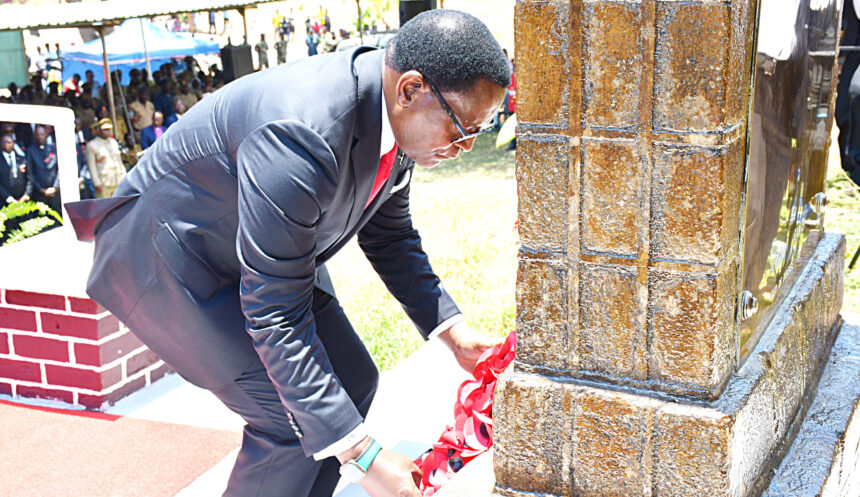
President Lazarus Chakwera Sunday led Malawians in remembering veterans of the first and second world wars at a ceremony held at the Zomba War Memorial Tower.
The tower marks the 100th anniversary of its establishment, commemorating soldiers who sacrificed their lives in the wars.
Chakwera arrived at the venue at 10:58am, after which two loud fireworks, known as maroons, were ignited. These symbolised the maroon sounded at the 11th hour of the 11th month during the First World War.
The President led the wreath-laying ceremony, followed by Commander of the Malawi Defence Force, General Paul Valentino, and the Deputy Inspector General of the Malawi Police Service, responsible for administration, Happy Mkandawire.
- Advertisement -
Other local and foreign dignitaries also paid their respects by laying wreaths.
Various religious leaders took turns praying for the souls of the departed and for surviving soldiers.
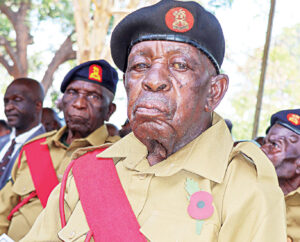
Chairperson for the Veterans and Ex-Service Members League of Malawi, retired MDF commander General Henry Odillo, called on people to always support the surviving soldiers.
“The day is very important because, apart from honouring soldiers who died during the wars, we remember those who died during peacekeeping missions and in other conflicts.
- Advertisement -
- Advertisement -
“When we look back, we always remember the sacrifices made by our soldiers. People should join hands in supporting these soldiers. Currently, we have about nine veterans residing in houses we built in Zomba, but they lack many essentials,” Odillo said.
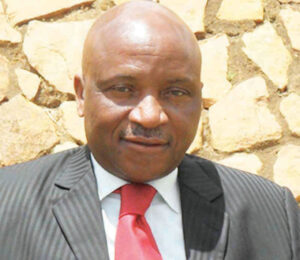
Minister of Defence Harry Mkandawire emphasised the significance of the day to the country.
“The message we have is that we must remember these soldiers. Some are still alive and need our support. We, as a government, have tried to source assistance for them,” Mkandawire said.
In Mzuzu, various religious leaders who prayed at the Remembrance Day service asked God for peace in Malawi and for the protection of Malawian soldiers on peacekeeping missions.
The clergy also prayed for good rains to ensure the country remains food secure.
The military event does not include speeches, except for a brief religious service during which the clergy also prayed for continued peace in communities, which “is vital for development”.
The event commenced at 11:00am, a time that is particularly memorable, as 106 years ago, on November 11 at 11:00 am, warring groups reached a consensus to end World War I, which claimed the lives of over 10 million combatants and wounded 20 million others.
A gunshot was fired at 11:00am in Mzuzu, followed by two minutes of total silence in remembrance of all ex-service men and women who lost their lives in the wars.
Another gunshot of plastic explosives was fired into the air, signifying the end of the silence, and a bugle call known as ‘The Last Post’ was played.
Minister of Agriculture Sam Kawale led the commemoration in the Northern Region city of Mzuzu, where he also laid a wreath.
Other wreath-layers included officials from MDF and Malawi Police Service, the Office of the President and Cabinet, the Judiciary, the National Assembly and Mzuzu City Mayor Kondwani Brian Nyasulu.
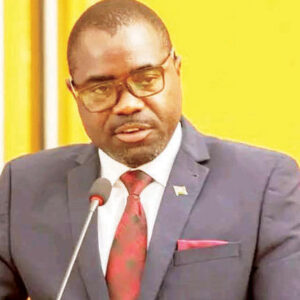
In Lilongwe, Minister of Youth and Sports Uchizi Mkandawire represented Chakwera at the event—which took place at the Area 18 War Memorial Tower.
Mkandawire also led the wreath-laying ceremony.
Other dignitaries who laid wreaths included Member of Parliament Alfred Jia, British High Commissioner Fiona Ritchie, Japanese Ambassador to Malawi Oya Yoichi, German Ambassador Ute König and Mayor of Lilongwe Esther Amina Sagawa.
Poppy Day, also known as Remembrance Day, is observed by Commonwealth countries and other nations to honour those who lost their lives in the world wars.
The day is observed on the second Sunday of November each year, specifically on November 11 or the closest Sunday to it.
World War I took place from 1914 to 1918, involving many of the world’s great powers divided into two opposing alliances: the Allies and the Central Powers.
The war was primarily fought in Europe, resulting in massive loss of life and significant geopolitical changes.
World War II occurred between 1939 and 1945, following the unresolved issues of the first conflict.
It was a more widespread and devastating war, with battles fought across Europe, Africa, Asia and the Pacific.
World War II involved most of the world’s nations, including all of the major powers, and ultimately led to the defeat of the Axis powers (Germany, Italy, and Japan).