
By Zacchaeus Mwase:
There is a strange ritual in Malawian politics. A political party loses power, moves into opposition, and suddenly discovers humility. It remembers the people it hurt. It apologises for the suffering experienced under its rule. It promises that it has learned from its mistakes. Then, somehow, the same party returns to government, and the repentance disappears. This is Malawi’s politics of ‘repentance, but no repentance’.
Malawi’s political parties have perfected the art of apologising for yesterday’s sins while becoming remarkably defensive about today’s. Arguably, our politicians say pepani (sorry) when they need votes, forgiveness or political rehabilitation.
Once they occupy government offices, the apology often disappears faster than fuel at a Malawian filling station. The problem is not that political parties change their minds. The problem is that they often change their principles according to whether they are inside or outside government.
Malawi’s political history since the return to multiparty democracy in 1993 offers enough evidence. Malawi has had governments that apologised after losing power and defended themselves while exercising it.
- Advertisement -
Perhaps the question Malawi must ask is simple: Are our political parties genuinely sorry for the damage associated with their time in power, or are they merely sorry that voters removed them from power?
DPP: Sorry when out, defensive when in
Under Bingu wa Mutharika’s second term in government, the country was experiencing severe fuel and foreign-exchange shortages, rising prices and growing economic distress. Protests erupted across Malawi in 2011.
The government’s response became increasingly confrontational, and at least 18 people were killed during the unrest. Human Rights Watch described the political and human-rights situation as having deteriorated significantly.
- Advertisement -
- Advertisement -
In 2012, DPP went to the opposition due to the sudden death of Bingu. The party did not hesitate to apologise to Malawians for the deaths during the 2011 demonstrations.
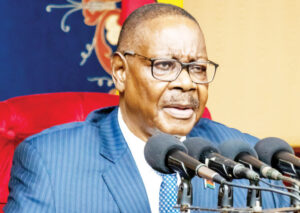
Professor Peter Mutharika, who assumed DPP leadership, publicly apologised for the killings at a rally in Mzuzu City in July 2012.
“Pepani,” he said.
The deaths, he suggested, should not have happened. That was a remarkable moment.
Peter Mutharika even went further in December 2012, asking people in the Northern Region to forgive the government for its “sins” against the region.
He also apologised for mistakes involving the party’s treatment of the media and said that the party had learned from its mistakes. That apology mattered. It was an acknowledgement that something had gone terribly wrong under the DPP administration.
However, the political question is this: What does repentance mean if it lasts only until the next opportunity to exercise power?
The DPP returned to power in 2014 and governed until 2020 under Peter Mutharika. Eventually, the party was accused by its opponents of the very things it had condemned under previous administrations. The issues included political patronage, lawlessness, institutional interference, corruption and intolerance.
Malawi again experienced severe economic difficulties, including foreign-exchange and fuel shortages, rising living costs and growing public frustration.
The 2019 presidential election was eventually nullified by the Constitutional Court because of widespread irregularities, leading to the historic 2020 Presidential Election, and DPP returned to the opposition bench after it lost the presidential election to the Malawi Congress Party (Tonse Alliance) under Lazarus Chakwera.
DPP subsequently spent five years in opposition, attacking the Malawi Congress Party government over economic hardship, fuel shortages, nepotism, corruption and poor governance.
Again, DPP apologized for the suffering and governance failures Malawi experienced under its 2014-2020 reign.
For instance, in November 2021, DPP, through the-then party vice president for Northern Region, Goodall Gondwe, apologised to the people of the north, saying it did not do well during its 10-year tenure of office (2004–2014 and 2014–2020), but it had learnt lessons and planned on bouncing back better in 2025.
The contrast was striking. In opposition, the DPP could speak the language of suffering and repentance.
In government, it increasingly spoke the language of defending its record and blaming circumstances, opponents or external factors. This is precisely where political repentance becomes suspect.
In 2025, DPP, which spent five years in opposition attacking the Chakwera administration over economic hardship, corruption and governance failures, returned to power after the September 16, 2025 election.
The DPP now faces precisely the test that MCP faced after 2020. Malawians who voted for change did not vote merely for another party to occupy government offices. They voted because they were suffering. The DPP, therefore, cannot afford to become the very government it spent years condemning.
MCP: Apologising for the past, defending the present
The MCP presents an even more complicated case because its political history stretches back to the one-party era.
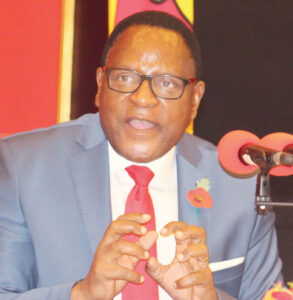
In 2016, the-then MCP President Lazarus Chakwera issued an “unreserved and unconditional” apology to Malawians forced into exile during the MCP’s one-party rule.
In 2021, now President, Chakwera again apologised for MCP’s historical atrocities, asking Malawians for forgiveness and arguing that the country could not move forward without confronting its past. The MCP was effectively saying: We were wrong. People suffered under our rule. We accept responsibility. This was a significant gesture.
Nevertheless, such an apology sets a higher standard for the party. If a political party believes that governments must accept responsibility for the suffering they presided over, then that principle cannot disappear when the party itself returns to power.
In 2020, after the historic fresh election, Chakwera became President at the head of the MCP. The party that had spent years criticising the DPP’s economic failures, corruption and governance record now had responsibility for running the country.
Suddenly, the political language changed. The government inherited serious economic problems, certainly. But wasn’t that precisely what previous governments had done?
It should be noted that political responsibility also comes with inheritance. A government cannot campaign on the promise that it will fix people’s suffering and then spend its entire term explaining why the suffering is somebody else’s fault.
By the end of the Chakwera administration, Malawi was facing severe economic difficulties, including high inflation, fuel shortages, foreign-exchange shortages and food insecurity.
At the height of the campaign period, in September 2025, Chakwera himself apologised to Malawians over the persistent fuel crisis and the long queues at filling stations and promised the masses that he would fix the problem after the election.
There is something almost poetic about this. A political party whose leader had once apologised for suffering associated with the party’s historical rule eventually found itself in government apologising for suffering under its own administration.
UTM: The coalition partner that wanted the credit without the blame
UTM provides perhaps the most entertaining example of political repentance.
In 2024, the-then UTM secretary general Patricia Kaliati and other UTM officials publicly apologised to Malawians for failed campaign promises, including promises concerning cheaper fertiliser, mega-farms, one million jobs, and improved livelihoods.
But there was a catch. UTM argued that it had not controlled the Tonse Alliance [made up of political parties that backed the Malawi Congress Party in the 2020 Presidential Election] government. That defence may be politically convenient, but it exposes the problem.
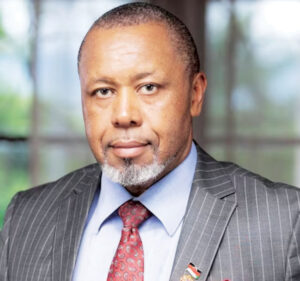
The late Saulos Chilima was Vice-President. UTM participated in the Malawi Congress Party government. Its leaders occupied Cabinet positions. Yet when the government became unpopular, UTM increasingly attempted to separate itself from the government’s failures.
That is the ultimate opposition trick: Take credit when things work; disclaim responsibility when they don’t. Critics rightly pointed out that Chilima and UTM were participants in the administration and, therefore, could not simply wash their hands off its record.
UTM’s apology raises a broader question: If you participated in government, how much of the government’s failure belongs to you? Coalition politics cannot become a mechanism for sharing credit while outsourcing blame. If you are part of the government when things go well, you cannot suddenly become an innocent bystander when things go badly.
This is where the politics of apology becomes important. The DPP had apologised for past suffering. MCP had apologised for past suffering, and UTM apologised for failed campaign promises. But will either party establish a political culture in which an apology is followed by institutional reform rather than simply a change of political circumstances?
An apology without institutional change is merely political theatre.
Ultimately, we need a “political repentance test”. Malawians should introduce a simple test for every political party seeking power: Tell us what you did wrong when you last governed? Not what your opponents did; not what you inherited; not what Covid-19 did; not what donors did; and not what forex shortages did; but what did you do wrong? Then tell us what you have changed.
If a party cannot answer these two questions, it has not repented. It has merely rebranded. Because genuine repentance is not saying pepani before an election. It is accepting responsibility after winning one. It is allowing your own ministers to be investigated. It is accepting oversight from Parliament. It is respecting independent institutions even when they inconvenience you. It is refusing to defend corruption because the accused happens to wear your party colours. It is accepting that when you control government, the buck stops with you.
Malawi deserves politicians who remember their apologies. Perhaps Malawians should start keeping a political “book of apologies”. Whenever a political party apologises, voters should record what it apologised for. Then, when that party returns to power, citizens should ask: What did you do to ensure that the same thing does not happen again? This would transform apologies from political theatre into measurable commitments.
Malawi does not need more political apologies. It needs political consistency. It needs leaders who do not need to lose an election before they discover humility. Malawi does not need politicians who discover God when they lose power. It needs politicians who remember God, or, at the very least, remember their principles, when they have power.
Pepani has become politically inexpensive. What remains expensive is changing the behaviour that made the apology necessary.
Otherwise, Malawi will remain trapped in an endless political cycle: Lose power → apologise → promise change → return to power → defend the new government → blame circumstances → lose power → apologise again.
In the end, the ordinary Malawian continues to suffer. That is not repentance. That is simply politics changing seats while the suffering remains the same.
Malawi’s greatest political problem may, therefore, not be that its politicians never repent. It is that they repent just long enough to get back into power, and then forget what they were sorry for. That is repentance without repentance, and Malawi has suffered enough from it.
*Mwase is a Member of the Political Science Association of Malawi