Agriculture Minister Roza Mbilizi has lamented financial and operational abuses within the Mega Farms Support Unit of her ministry.
Presenting a ministerial statement to Parliament Monday, Mbilizi said the unit had engaged in irresponsible lending practices and failed to recover substantial amounts of money that was loaned out to farmers.
She said during the 2023- 24 farming season, the unit, through Malawi Agriculture and Industrial Investment Corporation (MAIIC), disbursed loans worth K6.4 billion, but that only K2 billion was repaid.
Mbilizi further revealed that in the 2024-25 season, the unit exceeded its lending capacity by more than threefold, issuing K48.9 billion in loans against an available resource base of only K14.8 billion.
According to the minister, this was a direct result of over-issuance of redemption vouchers by the previous administration.
- Advertisement -
“During the 2024-25 farming season, mega farms did not receive additional budgetary allocations. However, a total of K48.9 billion worth of farm inputs was disbursed to over 900 farmers against available resources of the K14.8 billion balance from the previous year.

“The programme projected a yield of 220,000 metric tonnes (mt) of maize, enough to fill up our grain reserves—which require about 217,000 metric tonnes. Out of the 47,627 hectares, about 44,000 hectares performed relatively well,” Mbilizi said.
She, however, said the programme ended up with an estimated output of 88,000mt due to adverse weather conditions and grave mismanagement of the programme.
The minister disclosed that the maize output was meant to be delivered to the National Food Reserve Agency (NFRA), Agricultural Development and Marketing Corporation (Admarc) and Agriculture Commodity Exchange warehouses.
- Advertisement -
- Advertisement -
However, by October 2025, only 5,471mt had been delivered.
“However, it is very sad and disheartening that, as of October 2025, only 5,471 metric tonnes had been supplied. Most of the farmers sold this maize to NFRA as private farmers.
“This meant that they got all the money and nothing was given to MAIIC. My ministry is keenly monitoring the situation as this money has to be aid by the end of December 2025. I urge, implore and beg those involved to make sure that they do so; otherwise, they will face the law,” Mbilizi said.
She also blamed the previous administration for failing to fund NFRA and Admarc adequately, which, Mbilizi said, led to the suspension of maize purchases in August 2025.
This, she said, forced many farmers to withhold their produce, exacerbating food insecurity.
“The previous government created hunger,” she said noting that the tobacco sector under the same programme also suffered market disruptions that delayed loan repayments.
Speaker of Parliament Sameer Suleman described the revelations as sad, saying Parliament has a duty to exercise its oversight role.
He proposed the formation of an ad-hoc committee to investigate the matter, a suggestion Mbilizi welcomed.
Salima Central West legislator Enock Phale urged the minister to consider restructuring farmers’ loans, citing climate-related shocks that affected many mega farmers.
Lilongwe Phirilanjuzi lawmaker Peter Dimba, while agreeing with Mbilizi on the need for repayment discipline, cautioned that it was too early to declare farmers as defaulters before the December 31 deadline.
Meanwhile, Mbilizi has announced that the government would launch the 2025-26 Farm Inputs Subsidy Programme (FISP) tomorrow in Traditional Authority Mavwere, Mchinji District.
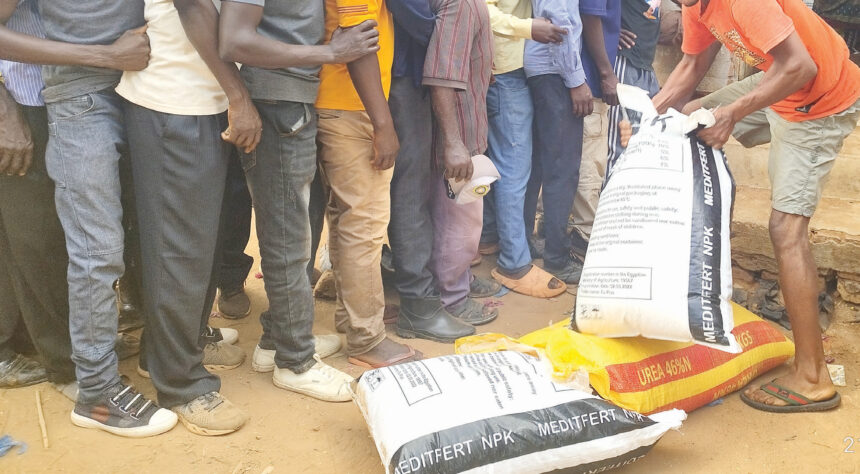
The programme will target 1.1 million farmers, each receiving two 50-kilogramme (kg) bags of fertiliser, one of NPK and one of Urea, and a 5-kg pack of cereal seed or, alternatively, five goats under a pass-on arrangement.
Farmers accessing fertiliser are expected to be paying K10,000 per bag.