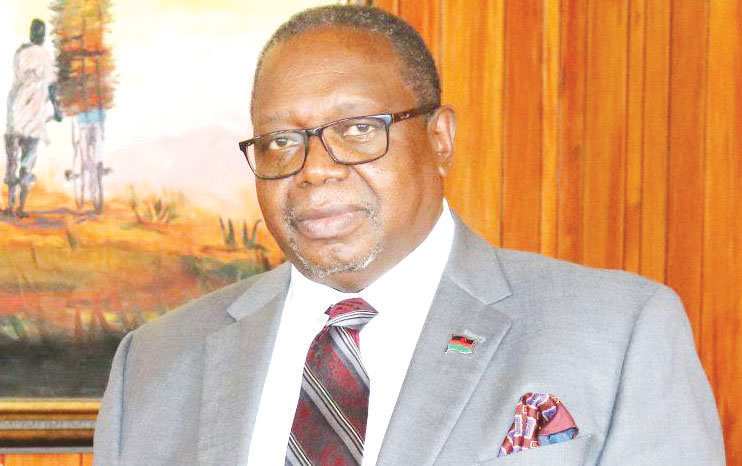

By Donasius Pathera, contributor:
Developing countries have been grappling to access aid and debt to support their national budgets in order to offer their citizens better lives.
However, the outcry has shown that management of resources in most developing countries remains a problem and, in some instances, creates a dangerous scope for the next generation. There are many ways these developing countries can manage aid and extended credit facilities.
It is very important that developing countries are responsible for identifying their own development priorities based on their specific needs and challenges. They play a key role in setting the agenda for aid and credit facilities, ensuring that resources are directed towards areas that will have the greatest impact on their development.
For some reasons some countries fail to formulate better plans, therefore, developing countries are responsible for formulating their own development plans that outline strategies and policies to achieve their development goals. These plans serve as the basis for aid and credit facilities, as they provide a roadmap for how resources will be utilized effectively.
- Advertisement -
A very critical path is for developing countries to negotiate aid and credit agreements with international organisations, donor countries, and financial institutions. They play an active role in determining the terms and conditions of these agreements, ensuring that they align with their development priorities and are beneficial for their long-term growth.
Developing countries need to be responsible for implementing and monitoring projects funded through aid and credit facilities. They need to oversee the execution of projects, ensuring that resources are used efficiently and effectively. They also need to monitor project outcomes and evaluate their impact, making adjustments as necessary to achieve desired results.
For reasons better known to developing countries, capacity development has been a problem. Investing in building own institutional and human capacity to effectively manage aid and credit facilities.
They need to strengthen their administrative and financial systems, improve governance and transparency, and enhance the skills and knowledge of their workforce. This enables them to better manage and utilize aid and credit resources for sustainable development.
- Advertisement -
- Advertisement -
The issue of transparency and accountability remains a problem to most developing countries as many reports have shown that corruption has been taking a tall order in the government system paralysing the development agenda. Developing countries have a responsibility to ensure accountability and transparency in the management of aid and credit facilities.
They are expected to establish mechanisms to track and report on the use of resources, prevent corruption and mismanagement, and promote transparency in financial transactions. Overall, developing countries are active participants in managing aid and extended credit facilities, taking ownership of their development agenda and working towards achieving sustainable development goals.
In terms of debt which continues to be a significant problem for developing countries, even when they have access to aid and credit, there is a need to reinvent the wheel on how the debt management should be done. The unsustainability of debt in most developing countries including Africa remains a worrisome situation.
It has been established that developing countries often have to pay high-interest rates on their borrowed money, making it difficult for them to repay the debt. These high rates can result in a debt trap, where countries struggle to make payments and end up accumulating more debt.
Developing countries may borrow more than they can realistically repay, leading to a cycle of increasing debt. They may use borrowed money for projects that don’t generate sufficient returns or fail to invest in sectors that can contribute to economic growth and debt repayment.
Developing countries are prone to economic shocks, such as fluctuations in commodity prices or natural disasters.
These shocks can disrupt their ability to generate revenue and repay debts, further exacerbating the debt problem. In the same vein, corruption and mismanagement of funds can result in borrowed money being misused or siphoned off, leading to a lack of economic development and an inability to repay debts.
Aid and credit often come with conditions attached, such as implementing specific economic policies or structural reforms. These conditions can be challenging to meet and may not always align with the priorities and needs of the borrowing country, leading to difficulties in utilizing the aid effectively and generating sufficient returns for debt repayment.
It is obvious that African countries vary in terms of their capacity to save themselves from creditors. Some countries have been successful in managing their debt burdens and implementing effective economic policies, while others continue to struggle with high levels of debt and limited resources. Some African countries have been asking creditors for debt cancellation.
Reflecting the combination of debt cancellation under the Enhanced Heavily Indebted Poor Countries (Hipc) Initiative and the Multilateral Debt Relief Initiative, plus prudent fiscal policies and improved management of public finances, Africa’s debt declined dramatically from a peak of 100 percent of GDP in 2000 to a thirty-year record low of 38 percent of GDP in 2010. Since then, this trend has reversed at high speed.
Total debt to GDP increased by more than 24 percentage points in less than a decade, from 38.4 percent in 2010 to 62.5 percent in 2019. For North Africa and sub- Saharan Africa, debt more than doubled in a decade.
The underlying causes of this new wave of indebtedness are procyclical fiscal policies in the context of a commodity price super-cycle, large flows of private resources, and an abundance of Chinese financing. In the changing Structure of the Debt, there have been several notable developments in the changing structure of debt in this current wave of indebtedness.
First, the debt has shifted away from financing via traditional multilateral and Paris Club creditors, which until 2010 were Africa’s main creditors. The share of multilateral debt in Africa’s total external debt has remained relatively stable over the past two decades. In 2019, 31 percent of Africa’s external debt obligations was owed to multilateral creditors, almost the same as the level in 2000. The share of bilateral debt in total external debt, on the other hand, has fallen by almost half in the last two decades. In 2000, bilateral lenders, mostly Paris Club members, accounted for 52 percent of Africa’s external debt stock, but by the end of 2019, this had fallen to 27 percent.
China—a non-Paris club creditor—has become the second single largest creditor to African economies, ranking only behind capital-market bondholders, who themselves have taken on a much larger financing role than they did historically. Second, while debt owed to public-sector creditors dominated the first wave of African indebtedness, private-sector debt has become the dominant component of African debt. The share of commercial creditors (bondholders and commercial banks) has more than doubled in the last two decades. In 2000, only 17 percent of Africa’s external debt was owed to commercial banks and private bondholders. This share has grown quickly since and now accounts for 40 percent of total debt. Third and perhaps most dramatic is the change in the key role of bond financing.
By the end of August 2020, 21 African countries had gained access to international capital markets and had issued more than 125 Eurobonds valued at over $155 billion.
Effective public finance management is crucial for African countries in managing aid and debt. It ensures efficient resource allocation, accountability, debt sustainability, institutional strengthening, domestic revenue mobilisation, and long-term development planning.
By prioritizing and managing aid and debt effectively, African countries can accelerate their development and achieve sustainable economic growth.