
Imagine being invited to offer a service to a government agency. You arrive before the scheduled time and find that they are not ready for you.
They offer you a seat and as you wait, you wander around the chambers of your mind. A thought pops up in your mind; there are no deliberate efforts to promote rural development through industrialisation in your country.
There is only one problem to the three factors of production; that is, capital—as you are assured of cheap labour and plenty of land.
You then begin to mobilise like-minded individuals through WhatsApp.
Later on, a physical meeting is arranged and boom! a company is registered to focus on rural development through investments.
- Advertisement -
This is the story of Rural Development Investment Initiatives Trust (Rudevit).
As he narrates the story, the vigour and passion in Rudevit Chairperson Hastings Bofomo Nyirenda’s voice demonstrate the pride for the feat achieved thus far.
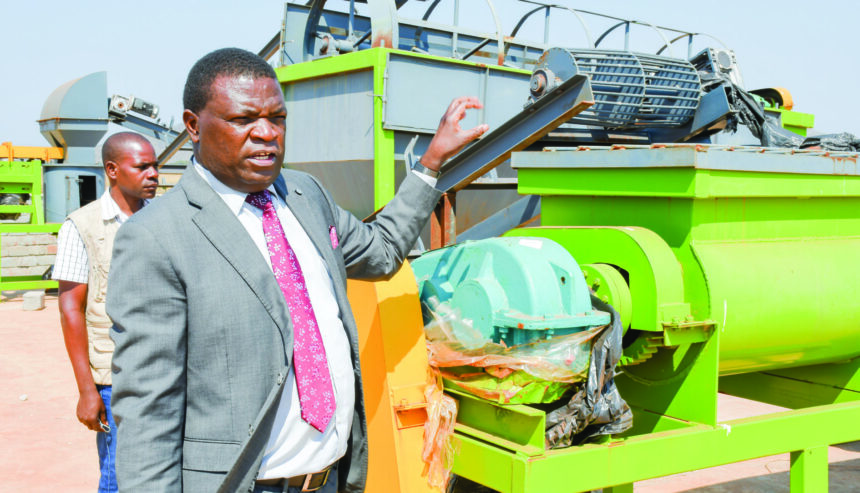
Construction of an organic fertiliser manufacturing plant in Chileka, Blantyre, has taken shape and is at 50 percent completion rate.
Nyirenda says since 2020, when the idea was hatched, capital financing has remained a challenge despite mobilising some funds through membership fees and equity sales.
- Advertisement -
- Advertisement -
At first, not even commercial banks were willing to finance the project and when one did, the economy suffered the blow of devaluation of the local currency.
Then came the Financial Inclusion and Entrepreneurship Scaling (FiNes) Project. The project not only provided additional capital to them so that they could realise the dream; it also provided cheap and patient capital financing.
Nyirenda said at 11 percent interest rate against over 31 percent in the market, and over three months before repayment commences, the FiNes loan breathed life into an otherwise dying project that is set to transform the Malawi agriculture sector forever.
“The bank initially gave us around K262 million to finance the procurement [process] but you remember that our Kwacha has not behaved well over the past years, with all these devaluations. So, the K262 million from nowhere collapsed with the initial 25 percent devaluation. Thereafter, FiNes came in; they gave us K129 million to top up, hence we are where we are today,” Nyirenda said.
He said at the end of July this year, they expect to have completed installing all the machinery and that, by December, production should commence.
“[The] production [date] for this site, following the last revision that we’ve actually had, is somewhere around December, all things being equal. That is to say, all the funds are being made available as we require them,” Nyirenda added.
Once completed, the project is expected to supply the Malawi market with fertiliser, reducing the price from the current price of above K80, 000 per 50 kilogramme bag to about K25, 000 and save the much-needed foreign exchange used in importing the same.
Similarly, a local private hospital that specialises in chemical pathology, Alidziwa Health Clinic, got a loan of K70 million under FiNes project to procure a laboratory machine.
The impact has been astronomical as, despite reducing the number of patients that were referred abroad for treatment, it has aided the country to save over $6,000 a month from the same.
“It took us some time to get the machine because we could not go to commercial banks for fear of having high interest rates, among other unfavourable conditions, imposed on us. The loan we got from FiNes was fair because the loan was cheap. We were actually given some time before we could start repaying the loan.
“This is a win-win situation for Malawi because many people used to travel abroad to access this specialised treatment. In so doing, they could spend foreign exchange on the treatment services.
“Now Malawians do not have to travel abroad or spend more time in the course of seeking chemical pathology services,” its administrator Charlotte Chingwanda said.
Apart from providing finances, the FiNes project had a component of training small-scale businesses in how to manage their businesses.
One of the beneficiaries of the training, Godfrey Chatungwa, from Mwanza District said he has been able to grow his business from the expertise he got during training.
“The training we had was an eye-opener because we know best practices of book keeping, diversifying our business portfolio and re-investing in the business for gwoth,” Chatungwa said.
FiNes project manager Ralph Tseka described the project as a success, stressing the loans have made a big impact.
“It is because we started offering these loans at lower interest rates than the banks’ interest rates. One of the aims of the project was to assist the entrepreneurs in the aftermath of the Covid pandemic and I think the project has really managed to do that.
“We have dispensed about $58 million from the target of $60 million. We had a few targets under the project.
“For example, our target was to reach out to about 20 percent of the youth and to reach about 40 percent of the women. So far, we have reached to about 14 percent of the youth and about 37 percent of women; so, we have really made an impact,” Tseka said.
He added that beneficiaries of the project are paying back the loans such that non-performing loans are at about 3 .7 percent below the threshold of 5 percent.
Such tales suffice in amplifying the need to channel loans from similar government projects to the right minds in entrepreneurship if the country is to register economic transformation.