





By Anneleen Kenis & Barbara Van Dyck:
The European Commission launched a proposal in July 2023 to deregulate a large number of plants manufactured using new genetic techniques.
Despite extraordinary attempts by the Spanish presidency to force a breakthrough, EU members have not yet reached a consensus on this plan.
But if the proposal were to be approved, these plants would be treated the same as conventional plants, eliminating the need for safety tests and the labelling of genetically modified food products.
- Advertisement -

The European public has refused to blindly accept genetically modified food from the moment the technology was developed, largely due to concerns about corporate control, health and the environment.
- Advertisement -
Biotech firms have been trying to sell genetically modified crops to Europeans for decades.
But most European citizens remain convinced that crops made with both old and new genetic techniques should be tested and labelled.
So, where has this proposal come from? Biotech firms seem to have succeeded in convincing the European Commission that we need new genetically modified crops to tackle climate change.
They argue that by enhancing crops’ resistance to drought or improving their ability to capture carbon, climate change may no longer seem such a daunting challenge.
- Advertisement -
If this seems too good to be true, unfortunately, it is. Biotech firms have taken advantage of growing concerns about climate change to influence the European Commission with an orchestrated lobbying campaign.
In 2018, the European Court ruled that plants made with new genetic techniques have to be regulated like any other genetically modified organism.
Biotech firms and their allies within biotech research centres have since set out to convince the European Commission of the need for an entirely new legislation.
The first step was to rebrand the techniques they are using, aiming to distance themselves from the bad reputation of genetic modification. Biotech firms started to use more innocent terms like gene editing and precision breeding instead.
They then argued that their processes are not really any different from what happens in nature, portraying them as an advanced version of natural processes.
Biotech firms need this argument to eliminate the requirement for labelling, which serves as a barrier for selling their products in a climate of public disapproval.
In a third step, they leveraged the urgency of the climate crisis to argue that we cannot afford time-consuming safety tests.
They contended that such tests would hinder innovation in a period of accelerating climate change.
There are several flaws in this approach. The terms “gene editing” or “precision breeding” may sound more reassuring, but we argue they are essentially marketing terms and say nothing about the accuracy of the techniques used or their potentially negative effects.
Studies have shown that new genetic techniques can alter the traits of a species “to an extent that would be impossible, or at least very unlikely, using conventional breeding”. They can also trigger substantial unintended changes in the genetic material of plants.
But, perhaps most importantly, genetically modified plants aren’t the solution to the climate crisis. They are a false solution that starts from the wrong question.
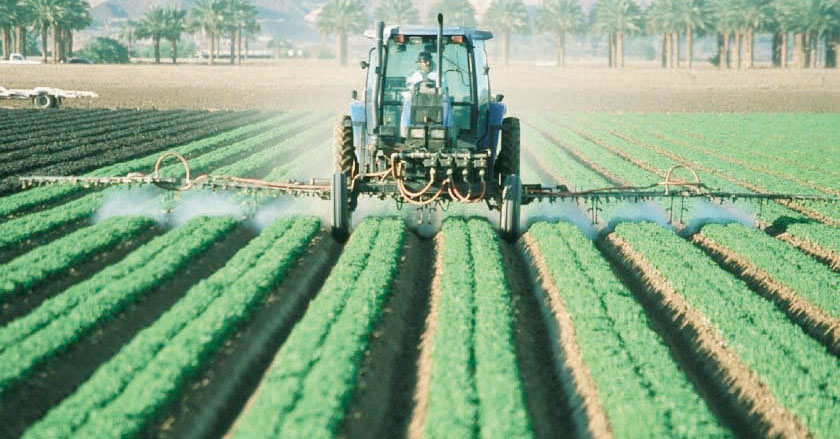
It is well known that our current agricultural model contributes significantly to climate change. The development of genetically modified crops is being steered largely by the very same agro-chemical giants that established and control this form of agriculture.
Companies like Corteva and Bayer (which acquired United States agrochemical company Monsanto in 2018) are leading the race to secure patents on new genetic techniques and their products.
Typical examples include patents for soybeans with increased protein content, waxy corn, or rice that is tolerant to herbicides.
These crops are designed for an agricultural model centred on the large-scale cultivation of single crop varieties destined for the global market.
This agricultural model relies on staggering amounts of fuel for distribution and places farmers in a state of dependence on heavy machinery and farm inputs (like artificial fertilisers and pesticides) derived from fossil fuels.
Research has found that farming in this way causes soil depletion and biodiversity loss. It also increases vulnerability to pests and diseases, necessitating the development of different and potentially more toxic pesticides and herbicides.
Although biotech firms are playing the climate card, only a small proportion of the genetically modified crops being developed deal with concerns related to the climate. In fact, the climate credentials of many of these crops are questionable.
Modifications such as an increased shelf life, or being better able to withstand being transported are merely intended to smooth the operation of our unsustainable food system.
Rather than strengthening our unsustainable agricultural model, the focus should be on restoring what industrial agriculture has destroyed: farmers’ livelihoods, biodiversity and soil health.
Only then will farmers be able to cultivate local climates that naturally store carbon and provide optimal conditions for food production without placing so much pressure on the environment.
Biotech firms advocate a no-testing policy as they argue that new genetically modified crops would be safe. But there is a problem. The legislation proposed by the European Commission eliminates the possibility of ever finding out if these claims are correct.
Health and environmental problems are often the result of complex, interacting and largely invisible causes. As tracing and labelling won’t be mandatory, it will be very difficult to trace any adverse outcomes back to their causes.
Ultimately, people and the planet will pay the price when untested genetically modified crops penetrate our environments and the food chain.