Parliament Wednesday passed the Appropriation Bill of 2024, which authorises Minister of Finance Simplex Chithyola Banda to use K5.998 trillion in the 2024-25 fiscal year to procure goods and services for the use of Malawi up to March 31 2025.
This follows the passing of the 2024-25 national budget on Tuesday afternoon.

Opposition Democratic Progressive Party (DPP), through its spokesperson on the matter Shadric Namalomba, has since urged Chithyola Banda to spend the money prudently to improve the lives of Malawians.
The august House also passed three taxation bills which seek to facilitate tax administration.
The three tax bills include Bill Number 5 of 2024 Value Added Tax (Amendment) Bill which seeks to amend the Value Added Tax Act (Cap. 42:02) to remove the requirement for mandatory registration for importers of services and provides for an electronic tax invoicing system which is replacing the electronic fiscal devices one.
- Advertisement -
The bill also extends the requirement for issuance of a tax invoice to all supplies and introduces value added tax on the supply of electric motor vehicles.
The House also passed Bill Number 4 of 2024, namely Customs and Excise (Amendment) Bill, which seeks to amend the Customs and Excise Act in order to provide for usage of electronic certificates of origin.
But Namalomba, while supporting the bill, said the legislation demands reliable internet connectivity as well as capacity by the Malawi Revenue Authority (MRA) to detect fake certificates of origin.
On his part, United Democratic Front spokesperson on the matter Ned Poya concurred with Namalomba.
- Advertisement -
- Advertisement -
He said the bill requires robust internet connectivity, adding that it also requires MRA officers to be on guard against forged certificates.
The House has also passed Bill Number 3 of 2024, namely the Taxation (Amendment) Bill, which seeks to amend the Taxation Act (Cap. 41:01) in order to, among other things, extend the 40 percent tax rate on taxable income above K10 billion to all companies.
It also provides for allowable deductions for monetary donations into the Disaster Risk Management Trust Fund, in addition to providing for allowable deductions for construction of a borehole, water kiosk and other water supply facilities.
The bill also provides new rates for presumptive tax of K5,000 per seat per year for commercial passenger-carrying vehicles.
Further, the bill amends rates for Pay As You Earn, with the tax free bracket jumping from K100,000 to K150,000.
The bill also extends the final withholding tax rate of 1 percent, which applies to commissions for insurance agents and individual banking agents, to also apply to individual agents recruited by an e-money service provider.
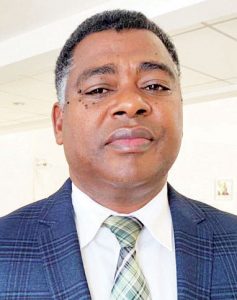
Commenting on the bill, DPP spokesperson on the bill Ralph Jooma said the legislation needed to have a provision where taxation could exclude days when vehicles break down.
Jooma gave the example of insurance, saying it would be ideal that when an insurer deposits an insurance disk with an insurance company for days that a vehicle has broken down, the insurer must get it back when the vehicle is back on the road.
This, Jooma said, would help businesspersons avoid paying tax for being idle.
On the hike in the tax free bracket, Jooma said the move would not benefit many poor Malawians as most of them earn below K100,000 per month.
According to Jooma, the best way of ensuring that the move benefits the poor would have been to increase the minimum wage or to hike the 25 percent tax bracket, which, he said, would have freed some resources from their employers— who would have later been compelled to increase salaries of low earners.
But Chithyola Banda said “government has already increased the minimum wage”.