By Elia Chibwe:
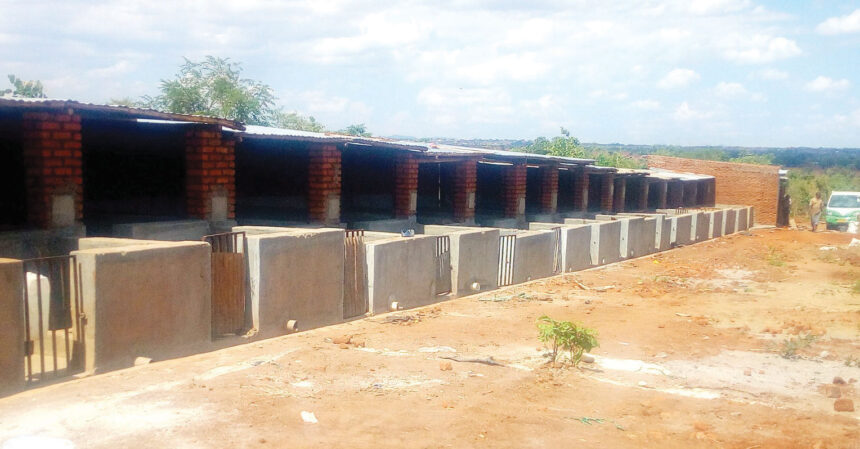
Andrew Msope, 35, from Chimbalanga Village, Traditional Authority (TA) Kadewere in Chiradzulu, decided to invest the capital he earned from his salary into livestock farming, including raising rabbits, ducks and pigs, after facing numerous challenges over several years.
Married with two children, Msope struggled to meet his family’s basic needs despite his employment as an Accountant at the Agricultural Research and Extension Trust.
He realised that his salary was insufficient to meet his family’s needs and pay for his children’s school fees.
“Starting pig farming was a means of increasing income. When I realised that my salary alone was inadequate to cover school fees and other needs, pig farming became a side hustle to boost my income,” he explains.
- Advertisement -
As Msope invested more capital in piggery, he observed that the venture was a game changer and highly profitable, as each pig could produce more than 10 piglets.
Since starting his pig farming business in 2019, he has achieved considerable success. He has managed to purchase three cars, a motorbike and has built shops in various locations within Lilongwe.
He has also constructed a house and established a large farm known as Msope Farmstead.
Through pig farming, Msope has employed 10 permanent workers and hires other casual workers to work on his fields where he grows maize, cabbage and soya beans within Lilongwe district.
- Advertisement -
- Advertisement -
The accountant-turned-farmer reveals that farming has also enabled him to build strong relationships with buyers and identify good markets.
“We sell piglets to upcoming farmers and organisations and also engage in value addition. We supply pork to hotels and Chinese and Nigerian restaurants,” Msope says.
Despite the strides taken in piggery, Msope aims to raise 1,000 pigs at various stages and expand his capacity to meet customer demand.
Msope Farmstead Marketing Officer Jimmy Simfukwe praises the job opportunity, which he says has improved the livelihoods of his family.
Simfukwe recalls struggling to find employment since completing his studies at Mzuzu University in 2022.
The job opportunity has not only addressed Simfukwe’s economic needs but has also equipped him with valuable skills.
“I have learned marketing skills and how to design good pig kraals for improved yield. I have also learned veterinary services from veterinary officers who attend to the pigs’ medical needs,” he says.
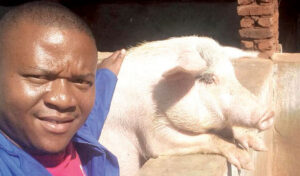
Msope’s venture aligns with the government’s efforts to promote animal husbandry in the country through various interventions.
Director of Animal Health and Livestock Development, Julius Chiwanga Chulu, stated in a response to a questionnaire that, besides conducting regular farmer training sessions, the government has established livestock multiplication centres to enhance livestock husbandry, including pig farming.
“Government-run livestock multiplication centres offer breeding stock, including pigs, at affordable prices. These centres also serve as demonstration sites where farmers can learn best practices in animal husbandry,” Chulu said.
He also revealed that the government is reviewing legislation to address emerging and re-emerging issues.
According to the director, the government has implemented numerous investment programmes to support livestock development, including piggery.
“The Agriculture Commercialisation Project (Agcom 1) provided matching grants to producer organisations to venture into various enterprises, including piggery,” he said.
Chulu recommended pig farming as a highly profitable venture and encouraged people to engage in the business or apply for loans from the National Economic Empowerment Fund if they are unable to start on their own.
Agriculture policy expert Tamani Nkhono Mvula commended the government for its livestock policies but urged it to provide more support to pig farmers.
“What we may need is initial capital investment to start the programme. Once started, it is a highly profitable business capable of sustaining itself in the long run.
“There needs to be greater effort from policymakers to support pig production, including providing information on the enterprise,” he said.
According to the National Livestock Development Policy for 2021-2026, Malawi aims to increase the livestock sector’s contribution to overall agricultural production by 50 percent by 2026 through effective interventions in animal production, health and value chains.
The policy also targets a 10 percent increase in the value of livestock exports and a 60 percent increase in the adoption of new livestock technologies.
It further notes that meeting the growing demand for livestock and livestock products in both domestic and export markets requires strategies that promote growth in numbers and productivity.—Mana