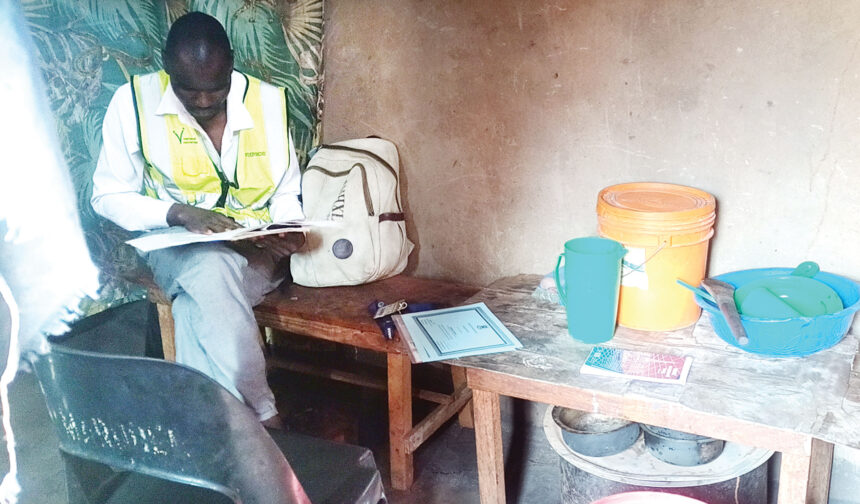
When Emmanuel Mbewe completes his bachelor’s degree at Luanar in May, it will be the culmination of a stop-start quest for higher education that started in the mid-2000s. As CHACHACHA MUNTHALI writes, along that arc of the journey Emmanuel has sat twice for MSCE exams, sold rice porridge and operated a kabaza.
Emmanuel Mbewe was on cloud nine in 2005 when the Malawi College of Health Sciences (MCHS) offered him a place to study as a midwife technician. His ecstasy would soon turn into despair when his father dropped a bombshell.
His elder brother, the first born in a family of 10, had just been selected to Chancellor College, but the academic success of the two brothers was a financial burden on their struggling father.
“Our father summoned us both and said, ‘look, I can’t afford to support both of you, so I want you to agree who I should assist in his education, even though I might struggle to do that as well’,” Emmanuel recalls.
To Emmanuel, it was a no-brainer; his elder brother’s education would take precedence. As it turned out, his father’s words proved prescient as the elder brother dropped out of college after a few semesters due to lack of support from their father who was struggling to keep body and soul together.
- Advertisement -
Even though Emmanuel had sacrificed his own educational ambitions, the fire for academic pursuit still burned in him just as brightly.
The 35-year-old was born in Phalombe, but the family relocated to Mpherembe in Mzimba following his father who had sought greener pastures in the tobacco estates in the 1990s.
His formative education was at Mangombera Primary School at Mpherembe from where he was selected to Mpherembe Community Day Secondary School (CDSS). A benefactor then paid for his school fees to learn at Luwinga Private Secondary School in Mzuzu, where he sat for MSCE exams in 2005. He obtained 21 points, but it wasn’t good enough for selection to a public university, but it was sufficient for consideration to the MCHS.
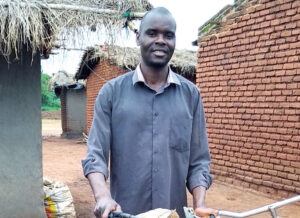
Having failed to go to college, I joined a cooperative, which provided us with maize seed and fertiliser. I grew maize on a piece of land, sold it and repaid my loan. I used the proceeds to do some odds and ends of small businesses,” he says.
- Advertisement -
- Advertisement -
He married in 2016 — and he has two children — but his thirst for further education remained unquenched. In 2017, he joined his elder brother who was doing odd jobs in Blantyre to make ends meet after dropping out of college. Emmanuel enrolled at Chichiri Intensive Secondary School, but sat for MSCE exams at St Kizito CDSS in Blantyre where he got 14 points in 2018.
He subsequently applied to the Lilongwe University of Agriculture and Natural Resources (Luanar) to pursue a BSc degree in Seed Systems.
“When I enrolled at Bunda, my elder brother was doing odd jobs in Ndirande. From what he earned, he would provide me with a reasonable upkeep in college,” Emmanuel states.
As he was about to start his second year in college, the Covid-19 pandemic upended his brother’s livelihood as opportunities were far and between. His brother left Blantyre and found himself back home at Mpherembe where the family has settled permanently.
It left Emmanuel in a pickle. Despite that the Higher Education Students Loans and Grants Board was paying his tuition fees, the K75,000 which the board was granting to students as living expenses was barely enough to last him a semester, some of which are as long as four to five months.
“Life was difficult. I knocked on so many doors, but I hit a blank wall,” he says.
A thought crossed his mind to reserve his place, drop out of school, do some piece works and raise enough money to enable him return at a later date. But he had come a long way to give up when the ultimate prize of academic excellence was within grasp. He needed a plan to ensure his survival in college.
“I decided to start selling rice porridge to fellow students. I invited my wife over from Mzimba to be preparing and selling the porridge to students at the college,” he recalls.
But it wasn’t long before the business collapsed, which piled problems on his shoulders as he now had to take of himself, his wife and their two children.
He came up with money to send his wife and children back home to Mzimba. It seemed like he had solved one problem, but there was the second semester coming up, and he still hadn’t laid his hands on a workable solution. His light bulb moment, which he calls Plan B, was to buy a bicycle and start a kabaza business.
Barely weeks into the business, however, the affliction that has brought down so many an entrepreneur — lack of integrity — struck Emmanuel.
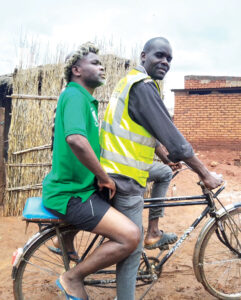
“As soon as I received my upkeep from the Loans Board, I bought a bicycle and employed someone to run it. I told the boy to be bringing me K1,000 a day. But he had one excuse after another why he couldn’t bring the cash on a particular day, and there was little care to the bicycle. After two months, I got fed up and made the tough decision to start operating it myself. After all, I have grown up in the village where riding bicycles is a run-of-the-mill activity,” he says.
“The bicycle eased some of the challenges I faced. It is difficult for me to apportion my time, but I have peace of mind because I know I will earn money to buy food and other necessities.”
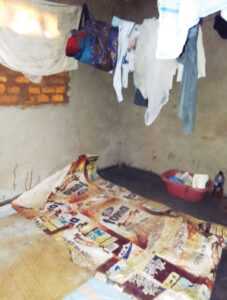
He stays in a ramshackle affair that has seen better days, for which he pays K8,000 a month.
He adheres to a tight schedule. On school days, he wakes up around 3am to study. From 6am until 6pm all he does is school related. He operates the kabaza from 6pm until 10pm, after which he goes to sleep.
“It leaves me exhausted. Sometimes I am too exhausted to wake up to study. At other times, I lack concentration in class due to fatigue. But if I listen to my body, I won’t make it because I have few options to survive,” he says.
While some students understand what and why does it, others consider it beneath his status.
His academic results speak volumes about his determination and they belie the narrative that he is too tired to focus on his education. Twice he has appeared on the Faculty of Agriculture’s Dean’s Honor Roll for achieving outstanding GPA results.
Emmanuel hasn’t gone home for two years — he says he cannot afford it — and operates his kabaza during the holidays, even though business is slow. But he is looking forward to uniting with his family when he completes his studies in May. He should have been out of college, but closures due to Covid-19 have extended his stay.
He has grand visions for the future. He wants to secure a job when he completes his studies, but he wants to use it as a stepping stone to his grand plans by harnessing the skills he has learnt in college.
“My vision is to open a banana plantation. I believe if I implement the ideas I have gained in my studies, I can make a difference. I also want to engage in rearing of local chicken on a large scale because I have already done it before on a small scale,” Emmanuel explains.
Knowing his determination to succeed in the face of adversity, it would be hard to doubt him.