Dance, long perceived as a pastime, is slowly taking a reputable place on the local scene.
This marks a departure from past trends, when dancing was not even regarded as a career path.
Today, some youths have embraced it, even using it to make ends meet.
This is despite that the country is devoid of dance schools.
It could be that the work of those who have been breathing life into dance is beginning to bear fruit.
- Advertisement -
Take Lilongwe Dance Programme, for instance.
Under the programme, countless dancers have made their way to local platforms, with others trekking outside the country to upgrade their skills.
Yamikani Matupa Phiri from Lilongwe Dance Programme describes dance as one of the art disciplines that could put the country on the map.
“For instance, dance can, apart from entertaining people, play a huge role in therapy. In fact, just like other art fields such as music, theatre and visual art, dance offers people a chance to express themselves.
- Advertisement -
- Advertisement -
“So, there is more to dance, which is why we came out as Lilongwe Dance Programme just to show the country what it means to dance,” Matupa Phiri said.
She said since they started, they have made remarkable progress.
No wonder, they sent three more students on a scholarship to the United States of America.
“Mica Palamuleni went to The Washington School of Ballet while Gabriella Robertson and Skyler Robertson went to Houston Ballet Academy.
“They were there for a month, when they were taking intensive summer classes. All this means we have been laying a foundation with the aim of keeping dance flourishing,” Matupa Phiri said.
Recently, contemporary dancer Robert Magasa, who has also been in the limelight for teaching dance, said he would like to see Malawi having graduates in the discipline.
“Dance is something we are born with and this just tells you that it is part of our lives. We, as Africans, we are good at dancing but there is a need to add value and this is where dance schools are needed. I am happy that there are platforms that are coming out and many youths have jumped into the ship,” Magasa said.
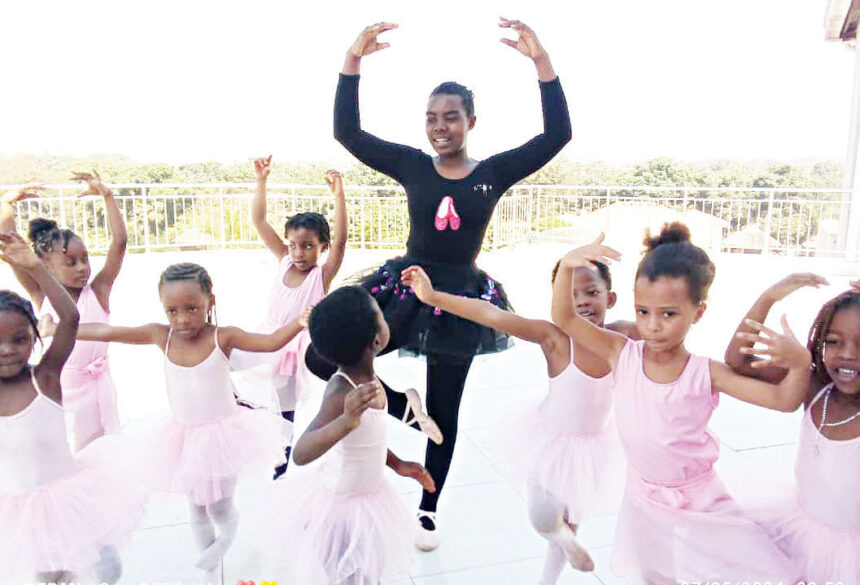
Going the ballet stretch
Matupa said there were not many ballet dancers in the country in the past years.
Now things have changed, with some Malawian ballet students going outside the country to represent the country on the international stage.
“We want to have dancers from Malawi competing with other at the international stage, as is the case with other disciplines such as netball, football and athletics,” she said.
Matupa Phiri said currently they have two schools—ABC Blue Gym in Lilongwe and Jacaranda Cultural Centre in Blantyre—that have taken that route.
“We have put up proper foundations to drive this concept because we want people in Malawi to understand that dance is a career and that one can make a living through this discipline.
“We want Malawi to understand that dance is not a wayward field but, rather, a top career,” she said.
Matupa Phiri said they have, in recent years, managed to secure funds for the project and that they are looking forward to expanding and reaching out to government schools.
“It is not easy but we believe we can do it. We are happy with the way young people are doing on the ground, in terms of dance. You see that in music videos but we need to do more and even create more dances fused with our own traditional dances,” she said.

Matupa Phiri added that dance connects with other elements.
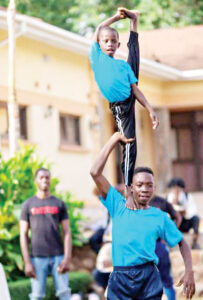
That is why, Matupa Phiri said, they have stretched themselves to gymnastics.
“Our goal is to train good gymnastics to represent Malawi in the next region five competition. Ballet, for instance, is not just a dance; it teaches children good posture, good manners and discipline. It is a dance that needs them to follow specific techniques and remember all position names—which helps the children to be well disciplined,” she said.
Lilongwe Dance Programme Malawian teachers, who were trained in teaching young people.
“It is a project that has properly laid the foundation and it is not a one-off thing. We are building an empire that will give Malawi the fruits in years to come and, at the same time, show that dance is a career worth pursuing.
“Currently, we have trained over 10 teachers,” she said.
Matupa Phiri said with the issue of mental health being a top priority in the country, dance stands out as one of the therapies that can be used in the fight.
“Dance is good for mental health. Children have a safe space where they can be themselves and be creative and put all their frustrations in dance. This is a field that is good for physical health and is an exercise on its own,” she said.
Matupa Phiri further said the country needs to fight the issue of minimizing risk of drug and substance abuse and early pregnancies and that young people need to be kept busy with education.
“After school, young people can partake in dance classes. We, as Lilongwe Dance Programme, have also taken it upon ourselves to lead in counselling young people on the importance of education and well-being in general.
“While we talk about dance, we also look at the other area of wellbeing,” she said.
Matupa Phiri said there is more to dance, such that they have connected the programme to areas such as education, where they want young people to dance and keep working hard in their studies.
“Some of our older students are now going to top universities in the country such as the University of Malawi in Zomba. So, dance is not only for those who have nothing to do; dance is for everyone. Our dance teachers are university graduates, which indicates that this is a huge programme,” she said.
It is as if, all of a sudden, dance has become the sought after prize on the local scene.