By Ousman Kaliati:
Ruth Kande Kashoni, a 47-year-old woman from Khombedza area in Salima District, is sure that she is still alive by the grace of God.
“My mother died the night I was born. For your information, I was born at Salima District Hospital on June 7 exactly 47 years ago.
“That [my mother’s death] meant I had no chance to have breastmilk in my life. My father Panganani, to whom I am the second child, could only watch at me helplessly, so I am told. He did not know what to do,” she says, tears streaming down her cheeks.
Fortunately for her, the father—who had three shops in the district—found solace in powdered milk, a well-known brand that has, for years, served as a substitute for breastmilk in Malawi.
- Advertisement -
And that is how she found her footing in life.
“Had it been that my father was poor, so poor that he could not afford the powdered milk, I would not be here today,” Kande Kashoni said.
Today, she is a mother of three.
What makes her proud is not the fact that she is a mother of three; far from it.
- Advertisement -
- Advertisement -
“I am a proud mum because I was able to give my children that great gift from the mother, namely breast milk.
“All my children got the best nutrients they needed after they were born. I thank my husband, too, for providing all the necessities to me, which enabled me to be in good health and give my children healthy milk,” the secretary said.
Breastmilk is regarded as a must-have thing in life, with the World Health Organisation (WHO), United Nations Children’s Emergency Fund, the Ministry of Health, among others, promoting its provision during the first days of a child’s life.
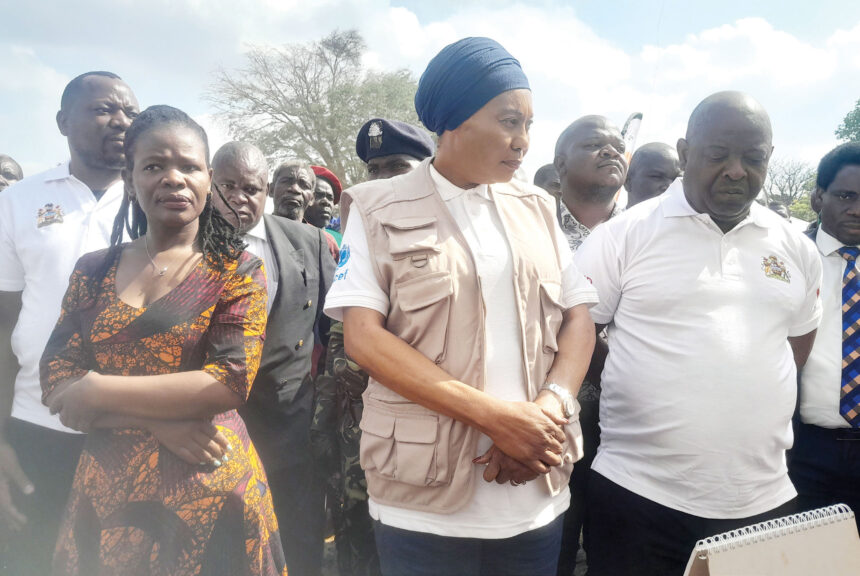
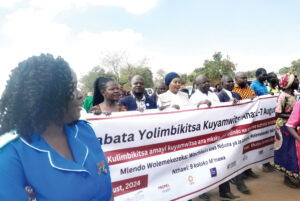
At events marking breastfeeding week—which took place in Salima District on Thursday—Deputy Minister of Health Halima Daudi urged healthcare workers, policymakers in the private and public sectors, non-governmental organisations, traditional and religious leaders, entrepreneurs, among others, to support and create an enabling environment for breastfeeding mothers in the country.
Addressing people that gathered at Khudzu Community Ground, Senior Chief Kalonga, in Salima District, she said humanity does not subscribe to the idea of creating barriers for breastfeeding mothers.

She said any barrier could, in the worst case scenario, serve as a death sentence on the child, nipping the future of people who would otherwise become community and national leaders in the bud.
“We have to create a good environment for a mother as well as the born child.
“This can be achieved through the provision of support and removal of obstacles to successful breastfeeding,’ Daudi emphasised.
She, therefore, commended non-governmental organisations for supporting the government in its endeavour to create a favourable environment for breastfeeding in the country.
The deputy minister cited breastfeeding programmes that some organisations are implementing in the country.
Her comments were not without a basis.
Take, for instance, Bring It Up non-governmental organisation, which has been distributing soya flour, powdered milk, cassava tubers and livestock to lactating mothers in the country.
In a statement, the organisation indicates that through the programme, lactating mothers— including widows—have been put in a position to obtain nutrients they require in their bodies, putting them in a better position to give their children healthy milk.
“Our action is premised on the fact that some breastfeeding mothers do not have the resources, namely money and even highly nutritious foods that may enable them to supply enough and healthy milk to their babies.
“We realise that when a child gets quality breastmilk, they may have a good head start in life. Good health enables their brains to function at maximum capacity, putting them in a better position to learn quickly and have that strong start to life. Denying children quality breast milk is like denying children access to early child development services. Both breastmilk and early childhood development services give children a solid foundation in life and that is what we are promoting,” Bring It Up says in the statement which was released on Thursday this week.
Back at Khudzu Community Ground, Unicef Chief of Nutrition in Malawi, Dr Charity Zvandaziva, said community members can play a key role in creating a conducive environment for breastfeeding mothers.
She said supporting breastfeeding mothers ensures that children are brought up healthily.
She, however, observed that Malawi faces a challenge when it comes to promoting access to diversified diets.
Zvandaziva emphasised that when children are six months old, they can continue feasting on breastmilk while taking diversified diets.
“Children in the country are eating very little, like the percentages are below 10 percent. Out of 10 children, only one is eating diversified foods, an issue which needs to be addressed,” Zvandaziva pointed out.
One of the patrons to the event, Luckson Biziwick, said he has been encouraging his wife to breastfeed whenever she has fallen pregnant, a development he attributes to the good health of his children.
“I have two children, aged 10 and 20, both of whom are healthy, a factor I attribute to healthy breastmilk they were exposed to while young.
“I assure you that breastmilk does wonders in the body of a child,” explained Biziwick, whose confidence in breastmilk could be attributed to the fact that he once served as a health surveillance assistant in Makanjira, Mangochi District.
He later abandoned the job for farming, specialising in cotton and groundnuts farming in Bitchayi area in the lakeshore district.
On his part, parliamentarian for Salima Central Constituency Gerald Kapiseni Phiri called for men’s participation in breastfeeding programmes.
“For that to happen, though, men have to be sensitised to the issue of how important it is to encourage their wives to be breastfeeding. Public awareness is key to success in this area,” Phiri emphasised.
World Breastfeeding Week started in 1990 following the Innocent Declaration signed by member states and leaders of the World Health Organisation and Unicef.
The week is premised on raising awareness among decision makers, workplaces and the wider community about the importance of breastfeeding and its benefits. It also seeks to improve the health of babies while promoting, protecting and supporting the rights of women to breastfeed anywhere at any time.
That way, Malawi could prevent diseases that arise due to poor uptake of breastmilk somewhere along a child’s life path.
Meanwhile, Unicef indicates that Malawi is not among countries with the highest breastfeeding rates.
Instead, it is Rwanda (86.9 percent), Burundi (82.3 percent), Sri Lanka (82 percent), Solomon Islands (76.2 percent) and Vanuatu (72.6 percent) that are credited.
It could be upon the realisation that Malawi has ground to cover that this year’s theme is ‘Closing the Gap: Breastfeeding Support for All’.