Dumbani Mzale, contributor:
On Wednesday, April 3 2024, President Lazarus Chakwera met face-to-face with Malawi tobacco buyers led by the Tobacco Processors Association (TPA).
From the onset, the meeting exuded a pacific atmosphere, characterising the mutual relationship between government and tobacco buyers.
TPA key members are Limbe Leaf, Alliance One and JTI, as they have their own processing factories in the country.

Other tobacco buying companies, which do not own processing factories in Malawi but also formed part of the meeting with Chakwera, include Premium Tobacco Company, Hail & Cotton, African Tobacco Services, Associated Central African Limited, Watergen, Nyasa Tobacco and Voedsel.
- Advertisement -
Listening to the tone of both Chakwera and representatives from Malawi tobacco buying companies on this particular day, one concludes that the two parties are up to cherish and protect a crop which on average has been fetching 75 percent of Malawi’s total foreign exchange earnings and employs, directly or indirectly, more than 80 percent of Malawians.
The same cash crop has for many years been contributing up to 30 percent of the country’s Gross Domestic Product and has also offered the public coffer an estimated 23 percent of all tax collection.
The meeting between Chakwera and the tobacco buyers signalled a significant departure from the past as both government officials as well as tobacco buyers spoke one language such that unity and harmony was evident in the room in Kamuzu Palace.
In the past, September 2009 in particular, some tobacco buyers were expelled for offering Malawians low prices and were also accused of sabotaging the Malawi economy.
- Advertisement -
- Advertisement -
Former president, the late Bingu wa Mutharika ordered the expulsion of a South African and three British buyers.
But 15 years down the line, the story is different when one puts under the microscope the working relationship between the government and tobacco merchants.
In fact, TPA Chairperson Limbani Kakhome, in his preamble, did not mince words but recalled that in the past “it was them [government] against us,” a direct inference to the fact that previous governments used to be at loggerheads with tobacco buyers.
“But today, we thank government for the leadership in terms of facilitating key reforms in the industry which are already bearing fruits,” Kakhome said.
He added that tobacco buyers are also rejoicing over the enactment of a new Tobacco Industry law and “we believe this piece of legislation will resolve some of the issues which have been sticky.”
“We look forward to regulations to support the Act so that the industry remains robust and takes care of everyone,” Kakhome said.
He added that tobacco buyers also would like to prevent the country from overproducing the leaf, going forward, stating that the oversupply situation usually “destabilises livelihoods of tobacco growers.”
Tobacco Commission (TC) Acting Chief Executive Officer Evans Chilumpha described the interface as “an illustration of the kind of relationship between the industry and government.”
Chilumpha said TC is enjoying a cordial relationship with industry stakeholders including tobacco buyers.
“Last year, was one of the best seasons in history as we saw an average price of $2.35 and there has been a long time since we last witnessed such a price in this industry,” Chilumpha said.
According to the TC boss, it is expected that this year, despite drought, the country will produce about 140 million kilogrammes of tobacco, a figure which represents a 17 percent increase over the 120 million kg produced in the 2023 growing season.
Chilumpha said the increase is due to corresponding increase in sponsorship by tobacco companies as well as increasing hectarage by growers.
Winding up the meeting was Chakwera, who first advanced an assertion that his government will always discuss with buyers because “we are together than against each other in an industry which is not closing shop despite anti-tobacco campaigns.”
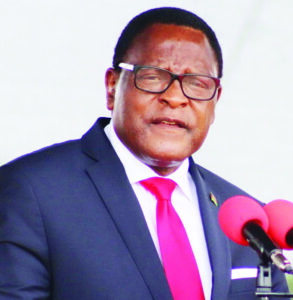
Chakwera insisted before the buyers that Malawi can no longer afford to have an industry which is replete with low prices as well as gross indiscipline.
“We need to move together as comrades in arms rather than people against each other. There is no need for a President to stand on the podium and castigate anyone. Let us just get the country away from subsistence farming to an industry which is prospering,” the Malawi leader said.
According to Chakwera, looking ahead to the 2024 tobacco season, which he is expected to open on April 10, 2024, it is imperative that the country consolidates all gains accrued from last season.
“Let us not retrogress but progress,” he directed the buyers and his own government officials present in the room.
The President’s tone and that of tobacco industry stakeholders spoke volumes of a strong quest for reclaiming the lost glory of an industry which was once buoyant.