By Innocent Chunga:
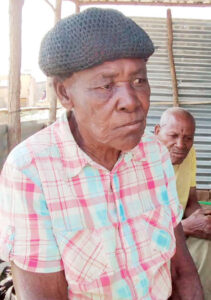
In the bustling business hub of Dwangwa in Nkhotakota District, February 28, 2024, is a day etched in the memories of many, worse so for 72-year-old Elizabeth Tambala and her husband from Mbuna Village, traditional Authority Chief Kanyenda.
That night, Elizabeth was awakened by an ominous crashing sound emanating from the nearby Dwangwa River.
“It was around midnight when I heard the sound—a loud crash. Then came the shouting and crying from outside. People were calling for help,” she recounts.
Elizabeth’s instincts told her something was terribly wrong.
- Advertisement -
“I shook my husband awake, but before we could act, part of the house collapsed. We couldn’t even locate the door to escape,” she says.
Fortunately, both Elizabeth and her husband survived uninjured.
However, their home and belongings were swept away by the floods. They sought refuge at an Anglican Church building, located 500 metres away.
Elizabeth described the chaotic scenes at the church as dozens of people huddled together, frightened and unsure of what lay ahead.
- Advertisement -
- Advertisement -
The floods displaced over 21,000 people in the district and claimed eight lives in the areas of Senior Chief Kanyenda and Senior Chief Mphonde.
Survivors clung to mango trees and sought higher ground as raging floodwaters swept away homes, livestock and crops.
The heavy rains that night caused a fierce runoff, flooding the Kaombe, Dwangwa and Mkoma rivers. Entire villages were left in ruins, roads rendered impassable and critical infrastructure destroyed.
The M5 road was washed away in five places, cutting off vital transport routes and isolating communities.
The first cut was at Kaombe River, followed by Walemera, Dwangwa, and Mkoma, about 87 kilometres from Nkhotakota town. It was a logistical nightmare.

Even the nearby Illovo Sugar Company, a key employer in the region, suffered massive losses as its sugarcane fields were submerged.
Now the rainy season for 2024-2025 sets in, the National Water Resources Authority has issued fresh warnings. Public Relations Officer Masozi Kasambala urges people in the district to prepare and take precautions as the Dwangwa River is expected to flood again this season.
Local ward councillor Watson Mkute voices his concerns over the lack of progress in rebuilding lives.
“Some of us can’t even buy land upland because we don’t have the money. Without proper support, we’re stuck in this dangerous cycle,” he says.
Mkute also highlights how the river’s course has changed due to the floods, creating new risks for the upcoming rainy season.
He has repeatedly called for the construction of dykes to protect the area, but little action has been taken.
Despite receiving initial support from government agencies, NGOs and the Red Cross Society, many survivors feel abandoned.
In March 2024, the Department of Disaster Management Affairs (Dodma) promised to allocate new land for those who had completely lost their homes.
“Those that have been affected and do not have land to reconstruct—it is now the responsibility of the district council with support from Dodma to find a location site to assist them,” said Chief Disaster Preparedness Officer Natasha Mbengo.
Ten months later, survivors are still waiting for chiefs to provide land in upper areas for permanent settlement.
Senior Chiefs Mphonde admit that there have been no discussions with the District Council on land issues since February.
Nkhotakota District Council did not comment on the matter.
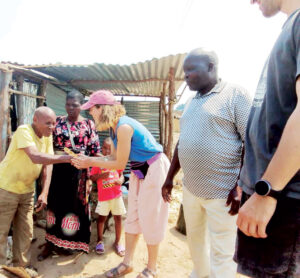
The disaster caught international attention, attracting a visit from United Kingdom based musician, Rachael Dadd in September 2024.
After witnessing the devastation firsthand in Mbuna Village, Dadd pledged to use her platform to raise awareness and coordinate fundraising efforts for victims.
Following Dadd’s visit, the International Centre for Climate Change and Development (Icccad) also visited the district.
They emphasised the importance of addressing loss and damage in developing countries like Malawi at global forums such as the Conference of Parties (COP).
At COP29 in Baku City- Azerbaijan, Vice President Michael Usi, advocated for better climate financing mechanisms to address disasters in developing countries including Malawi like the Dwangwa floods and C yclone Freddy that hit the country in 2021.
However, many Malawians are still awaiting concrete outcomes from the summit.
Village leaders, including those from Mbuna, Denja, and other heavily impacted communities, have expressed frustration over the slow pace of recovery efforts.
“We need to act now before the 2024-2025 rainy season begins. Otherwise, we risk repeating the same tragedy,” says Village Head Mbuna.
The Ministry of Water and Sanitation announced plans to construct dykes in the district under the Regional Climate Resilience Project 2.
“Assessment for the site will begin soon,” a ministry official said.
For families like Elizabeth’s, the road to recovery remains uncertain. Their resilience is a testament to the human spirit, but without sustained support and infrastructure improvements, the cycle of destruction could continue.
As Elizabeth put it: “We have lived here all our lives. Each rainy season brings fear now, but where can we go?”