Finance Minister Sosten Gwengwe has said the sharp growth in population, which surpasses economic growth, is posing a serious threat to the country’s development.
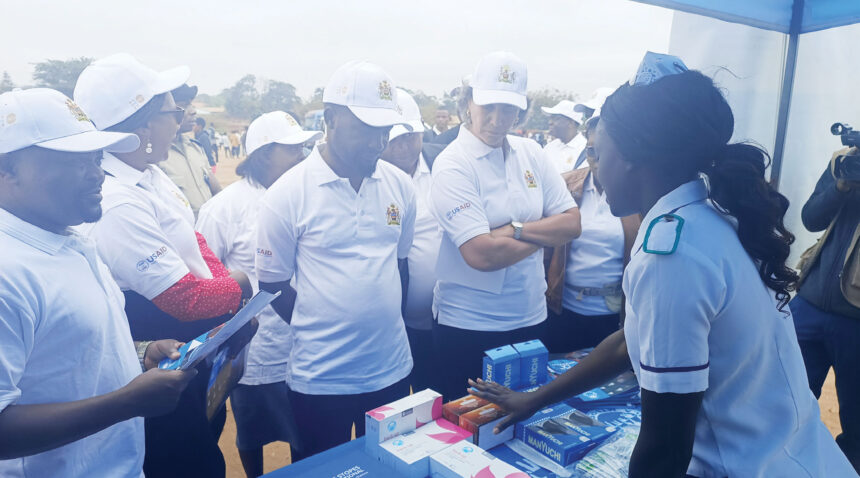
Gwengwe was speaking at Masintha Ground in Lilongwe on Tuesday when Malawi celebrated World Population Day.
Gwengwe said what is happening in Malawi is not normal because, mostly, people would expect the rate of economic growth to be above that of population growth.
The Finance Minister said, in an environment where population growth is higher than economic growth, it means that whatever opportunities created in the economy may not be enough for the citizenry.
Malawi’s population growth stands at 2.65 percent per annum with economic growth expected at around 1.7 percent, according to the Reserve Bank of Malawi.
- Advertisement -
“This is a time bomb which will likely explode in our face if we don’t do something. We need to ensure that our population growth is reduced and does not go beyond economic growth,” Gwengwe said.
Malawi’s population is estimated at 20,959,238 and is projected to increase to 21,298,322 by the beginning of 2024.
Statistics further show that 45 percent of the population is below the age of 15-years while about three percent is above the age of 65-years.
Natural Resources Minister Michael Usi urged traditional and community leaders to stop exerting pressure on newlyweds to have children.
- Advertisement -
- Advertisement -
According to Usi, there is a tendency among Malawians to be exerting pressure on newlyweds some six months to one year after marriage, to have a child.
Usi said there is no crime to have one or two children so long as one can take care of them.
Globally, the World Population Day was commemorated under the theme ‘Unleashing the Power of Gender Equality: Uplifting the Voices of Women and Girls to Unlock our World’s Infinite Possibilities.
United Nations Population Fund Country Representative Nelida Rodrigues underscored the need to advance gender equality to help realise the dreams of the almost 21 million people in Malawi.
According to Rodrigues, what women and girls want matters both in development and marriage settings.
“Advancing gender equality requires listening to the voices of women, girls and other marginalised groups to understand their challenges in realising their dreams and potential.
“It requires inclusive laws and policies that enable them to enjoy their rights and make meaningful choices in ensuring access to essential services,” Rodrigues said.