


An arrest is made, charges pronounced. And Malawian public waits for the judicial process to run its course because that is how things should be.
Through such process, the innocent are proven innocent; the guilty are proven guilty and get their punishment; and the Malawi society gets corrected.
At least that is the public expectation of how governance should work.
But Malawi is increasingly walking on the perilous path of dropped cases and potentially hidden wrongdoing whose exposure would have helped fix the country.
And analysts have expressed worry that the law is giving the public a raw deal on the scales of accountability.
- Advertisement -
At issue is the growing practice by the office of Director of Public Prosecutions (DPP) to drop cases.
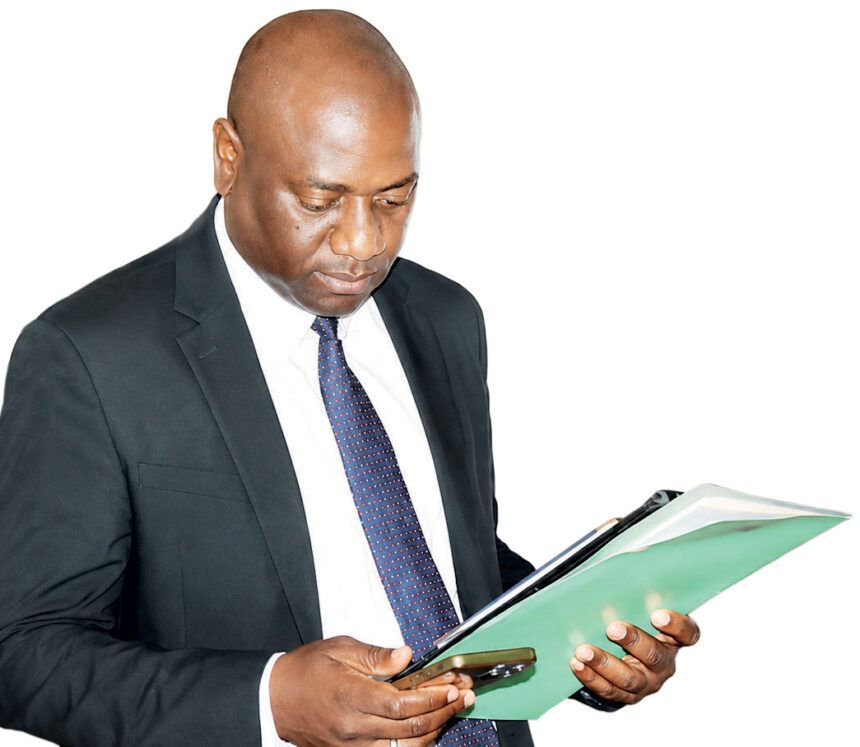
The DPP is using the law to discontinue the cases but his powers are now increasingly coming under spotlight as they are seen to go unchecked and not executed in public interest.
In a latest case, the Anti- Corruption Bureau (ACB), applied at the High Court in Lilongwe to discontinue the corruption case involving Chinese national, Lin Yunhua, who Malawi jailed in September 2021 following his conviction in a wildlife trafficking case.
ACB made the application to drop the case following the directive from DPP Fostino Maele.
- Advertisement -
- Advertisement -
In the seven months that he has been in the office, Maele has dropped several other cases, including the following:
- Criminal case number 3 of 2023 involving Minister of Energy Jean Mathanga and three others
- Criminal case number 19 of 2023 involving the now Deputy Reserve Bank of Malawi Governor Henry Mathanga, Dalitso Kabambe who was RBM governor during the DPP regime and the current Secretary to Treasury Cliff Chiunda.
- Criminal case number 12 of 2024 against the Deputy Minister of Homeland Security Norman Chisale
- Criminal case number 2 of 2025 involving Finance Minister Joseph Mwanamvekha and five others.
- Criminal case number 3 of 2025 involving Henry Mathanga and Kabambe.
- A case against former Anti- Corruption Bureau Director General Rayneck Matemba.
The DPP is discontinuing the cases on the basis of law.
Section 99 (2) of the Constitution grants the DPP the powers to discontinue a criminal case at any stage before judgement is delivered.
And in what is seen to be some check on those powers, the DPP has to, within 10 days of making the decision to discontinue a case, furnish the Legal Affairs Committee of Parliament with the reasons for deciding to drop a case.
Analysts find a weakness in this law, that it allows the DPP to wield power without limit.
UK-based legal frameworks expert, Laws Kanda, said the law creates a constitutional accountability gap for establishing a reporting obligation on the part of the DPP but providing no effective mechanism for oversight, review or corrective action.
“Malawi’s Constitutional Court should clarify the constitutional meaning and scope of Section 99(3), particularly the role of the Legal Affairs Committee and the extent to which decisions of the DPP to discontinue criminal proceedings may be reviewed,” he said.
Kanda said such clarification would strengthen constitutional accountability, enhance transparency and reinforce public confidence in the criminal justice system.
Public accountability advocate Benedicto Kondowe said while DPP is free to make prosecutorial decisions without external direction, the challenge is his reporting obligation is in retrospect – the discontinuance has already taken legal effect before Parliament receives the report.
He also cited a Constitutional gap on the specific action the committee may take after receiving the report.
“While the Legal Affairs Committee of Parliament cannot direct the DPP to prosecute or reverse a discontinuance, effective oversight demands timely scrutiny, transparency and, where necessary, recommendations for legal or institutional reforms.
“Public confidence depends not only on prosecutorial independence but also on visible accountability,” he said.
In response to Malawi News, DPP Maele said the law articulates what the committee should do once it receives a report from the DPP’s office.
“The law is not silent. These committees are given specific powers and the Standing Orders of Parliament have provisions too.
“The question that you should be asking is: What does the committee do with those reports which they receive?” He said.
We contacted chairperson of the Legal Affairs Committee of Parliament, Gilbert Khonyongwa, to understand what decisions his committee makes on cases the DPP discontinues. He asked for questions, which he promised to respond to. He had not yet done so by the time we went to press.